


In my previous article about the theoretical limits of LLMs, I explored why scaling next-token prediction might never be enough to achieve genuine intelligence. Stanford researchers have now proposed an interesting architectural alternative: Next-Concept Modeling (NCM), a way to generate text much faster by predicting hierarchical representations instead of individual tokens.
The idea could also reduce the memory-bandwidth demands that make modern AI infrastructure so expensive. But does it bring us closer to actual machine comprehension, or simply make language models more efficient? TechTalks recently published an interesting report and interview with co-author Hermann Kumbong.
Three different ways of generating text
Traditional autoregressive LLMs predict one token at a time. Each new token depends on the preceding sequence, so generating 1,000 tokens requires 1,000 sequential decoding steps. The GPU repeatedly accesses model weights and updates its attention cache (KV cache), making memory bandwidth a major inference bottleneck, particularly at low batch sizes.
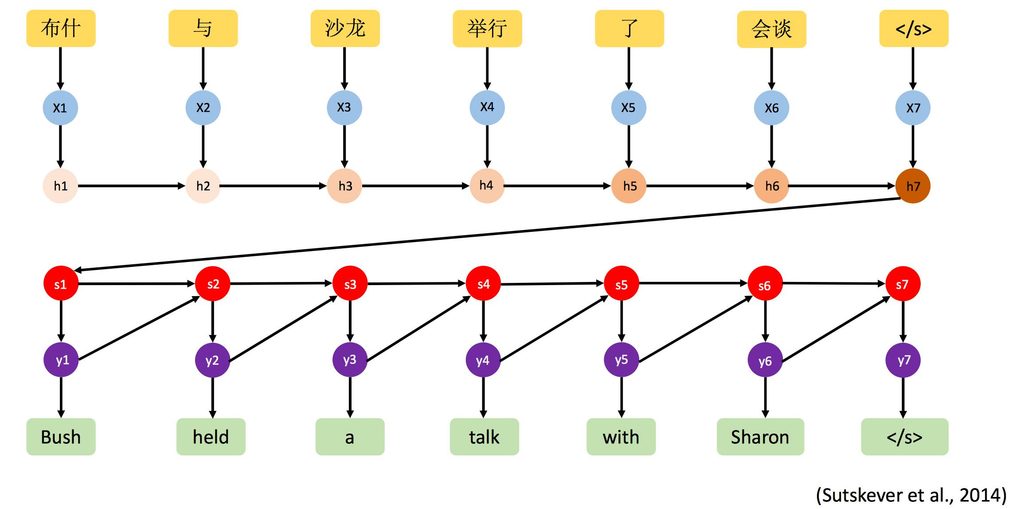
Diffusion language models take a different approach. They predict multiple positions simultaneously, starting from masked or noisy representations and progressively refining the entire sequence. However, each refinement step processes the sequence again, and reducing the number of steps can significantly damage output quality.
NCM changes the unit of prediction. Instead of predicting individual tokens or repeatedly refining an entire sequence, it generates a hierarchy of increasingly detailed representations, predicting all the codes within each level in parallel.
| Architecture | What happens at each step? |
|---|---|
| Autoregressive LLM | Predicts the next token, sequentially |
| Diffusion LM | Refines multiple positions across the entire sequence |
| NCM | Predicts an entire level of representations in parallel, then moves to the next level |
How Next-Concept Modeling actually works
NCM uses two separate training stages.
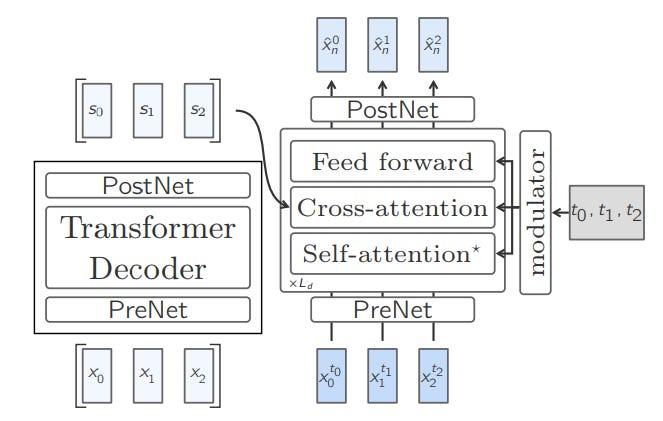
Stage 1: Multiscale residual VQ-VAE. A vector-quantized variational autoencoder converts the original text into a hierarchy of discrete numerical codes. The first levels capture broad information about the sequence, while subsequent levels add residual information that progressively reconstructs the finer details. The final decoder converts the accumulated representation back into ordinary text.
The researchers use nested dropout during training, randomly removing the finer levels and forcing the remaining codes to preserve enough information for reconstruction. This encourages the early levels to capture useful global structure rather than depending entirely on the details added later.
Stage 2: The concept transformer. Once the tokenizer is trained and frozen, a separate transformer learns to predict the codes at every level. During training, it predicts all levels in one forward pass. During actual generation, however, it produces them sequentially, conditioning each new level on the accumulated representation from earlier levels.
The researchers also introduce conditioning corruption: randomly replacing some input codes during training while retaining the correct targets. This exposes the transformer to imperfect intermediate representations and helps prevent early mistakes from cascading through the entire output.
The distinction is important: NCM does not generate an entire answer in one pass. It still requires multiple passes, but the number depends on the hierarchy rather than the number of output tokens. For example, the paper uses 12 levels for LM1B, 8 for XSum summarization and 32 for 1,024-token OpenWebText generation.
The performance results
The Stanford team reports some impressive results against existing diffusion-model baselines:
- 21× faster on the One Billion Word benchmark, with better generative perplexity than the DUO baseline.
- 10× faster on OpenWebText, with comparable generation quality.
- 31× faster on XSum summarization, matching the strongest diffusion baseline’s ROUGE-L score.
These are measured wall-clock speedups on a single NVIDIA H100 80GB GPU, with batches of 16. The generators generally contain around 88–120 million parameters, although the researchers also tested scaling up to 725 million parameters.
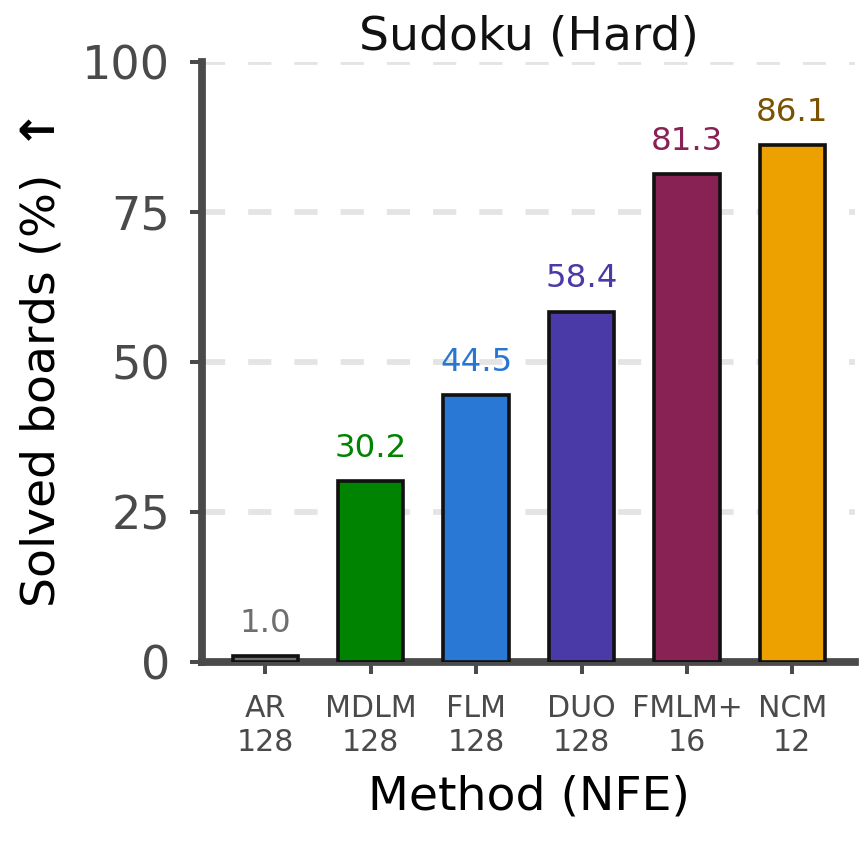
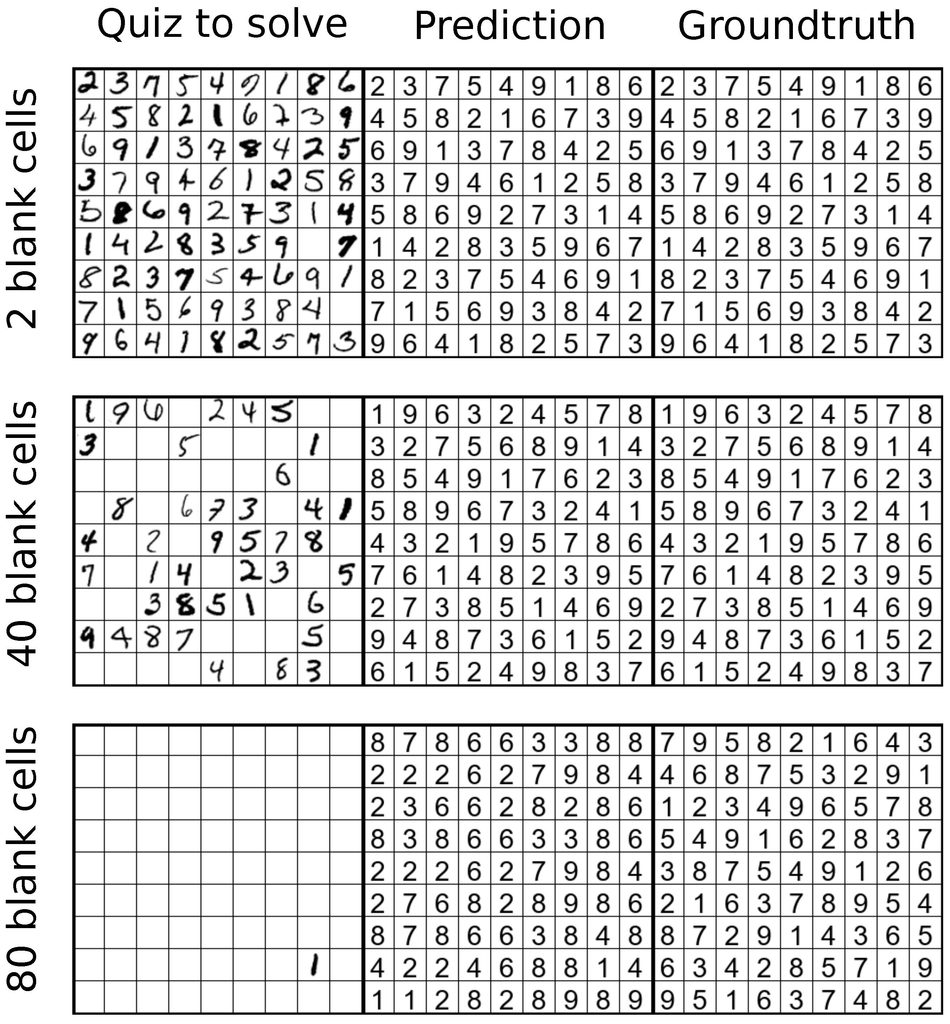
NCM also achieved 86.1% accuracy on difficult Sudoku boards using a roughly 25-million-parameter model, compared with 81.3% for the strongest competing diffusion baseline. Its hierarchical generation allows later levels to revise earlier representations, which is useful when an entire solution must satisfy multiple constraints.
Another interesting technique is Minimum Bayes Risk (MBR) decoding. Instead of accepting the first response, the system generates multiple candidates and selects the one with the highest average similarity to the others. On XSum, selecting among 16 candidates improved NCM’s ROUGE-L score from 28.0 to 29.6. This uses the saved inference budget to improve output quality, although consensus is not the same as independent verification.
One important qualification: the headline 21× and 31× speedups compare NCM with diffusion models, not directly with today’s large commercial LLMs. The paper also shows mixed results against autoregressive baselines: NCM scores better on XSum summarization, but its translation BLEU score is lower.
Could this make Nvidia’s memory chips less important?
The hardware argument is interesting. Autoregressive decoding repeatedly executes the model for every new token, making weight transfers and memory bandwidth expensive. NCM reduces the number of sequential generation steps, potentially reducing repeated memory traffic.
There is a trade-off, however. Later hierarchy levels contain progressively more codes, increasing the amount of parallel computation. The architecture shifts the balance between memory traffic and compute rather than eliminating hardware requirements.
More importantly, the paper benchmarks generation speed. It does not demonstrate that NCM eliminates the need for High Bandwidth Memory, nor does it establish that consumer GPUs can replace expensive datacenter hardware. Scaling to frontier-sized models remains an open question.
Faster generation is not necessarily better intelligence
This is where I find NCM particularly interesting, although its terminology deserves some caution. The word concept refers to information encoded in learned numerical representations. These codes are not human-readable ideas, and their existence does not establish that the model understands their meaning.
NCM remains a transformer-based language model trained to predict learned representations. It has no demonstrated independent understanding of the world, causal reasoning or grounded knowledge simply because it generates a global representation before refining the words.
Nevertheless, there is a potentially important difference. Traditional autoregressive models commit to individual tokens from left to right, while NCM can establish a broader representation of the entire response and refine it progressively. That could make it better at maintaining global structure and solving problems with interdependent constraints.
Perhaps this is a step toward architectures that represent information more abstractly before expressing it in language. But the Sudoku results and improved generation efficiency are not proof of general intelligence.
My take: NCM could make language models substantially faster and cheaper, and its hierarchical representation is worth exploring as a possible improvement in how they process information. However, it does not solve the fundamental question raised by the theoretical limits of LLMs: whether predicting increasingly sophisticated representations is enough to produce genuine comprehension.