

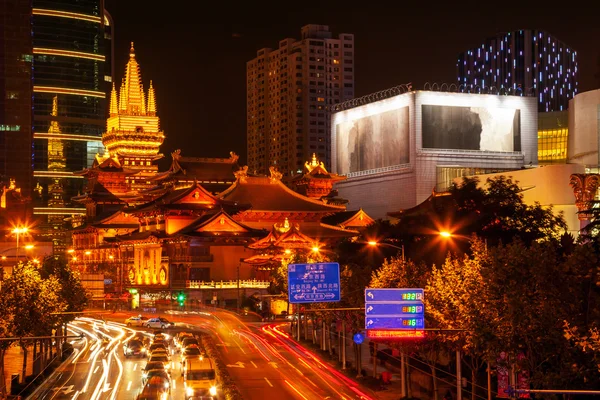
In the heart of bustling Shanghai, Jing’an Temple stands as a glaring symbol of how ancient Buddhist sites in China have morphed into commercial enterprises, blending sacred traditions with profit-driven ventures that often clash with core Buddhist values of simplicity and detachment from material wealth. As a Buddhist, it’s disheartening to see these revered spaces prioritize lavish displays and fundraising over spiritual practice.
Reports and rumors paint a troubling picture: Jing’an’s abbot has faced accusations of operating like a “CEO monk,” with the temple engaging in aggressive commercial branding, sales of branded merchandise, and fundraising tactics that blur the line between devotion and commerce. The temple anchors a high-end business district, generating tax revenue from surrounding luxury developments like Plaza 66, while reportedly owning retail shops along its walls—functioning more as a landlord than a monastery. Entry fees can hit 50 RMB or more during festivals, with visitors bombarded by upselling for expensive incense, “blessing” items, and WeChat QR code donations at altars—practices that, from a Buddhist lens, disqualify it as a true temple.

Apple Store Jing’an / Foster + Partners | ArchDaily
Government-required financial reports remain opaque, shrouded in state secrecy, suggesting tight CCP control where transparency only emerges when a monk crosses authorities.
This isn’t isolated; much of what’s known stems from leaks and speculation, as the full truth about temple operations is often a state secret in China. For instance, the CCP recently reinforced bans on stock trading by Buddhist temples—implying such activities were occurring—amid a broader “decommercialization” push following scandals. Examples abound: Mount Emei, a sacred Buddhist mountain, was linked to a publicly traded tourism company in 1997, sparking debates over profit motives. Shaolin Temple, famed for kung fu, became a global brand under its abbot Shi Yongxin, dubbed the “CEO monk,” with ventures in tourism, merchandise, and real estate—until his 2025 downfall. In July 2025, Shi was investigated for embezzlement, misappropriating funds, and violating precepts through improper relationships with women, fathering at least one child. By November, his arrest was approved, leading to his defrocking and a temple overhaul. These sites increasingly prioritize revenue over authentic Buddhist practices like meditation and humility.

Ultimately, this commercialization erodes spiritual integrity, and it’s not limited to Buddhism: Muslim sites, especially in Xinjiang and beyond, have been taken over by government interests, with mosques demolished, domes and minarets removed for “Sinicization,” and many repurposed as tourist attractions with entry fees—replacing religious symbols with state-controlled commerce.
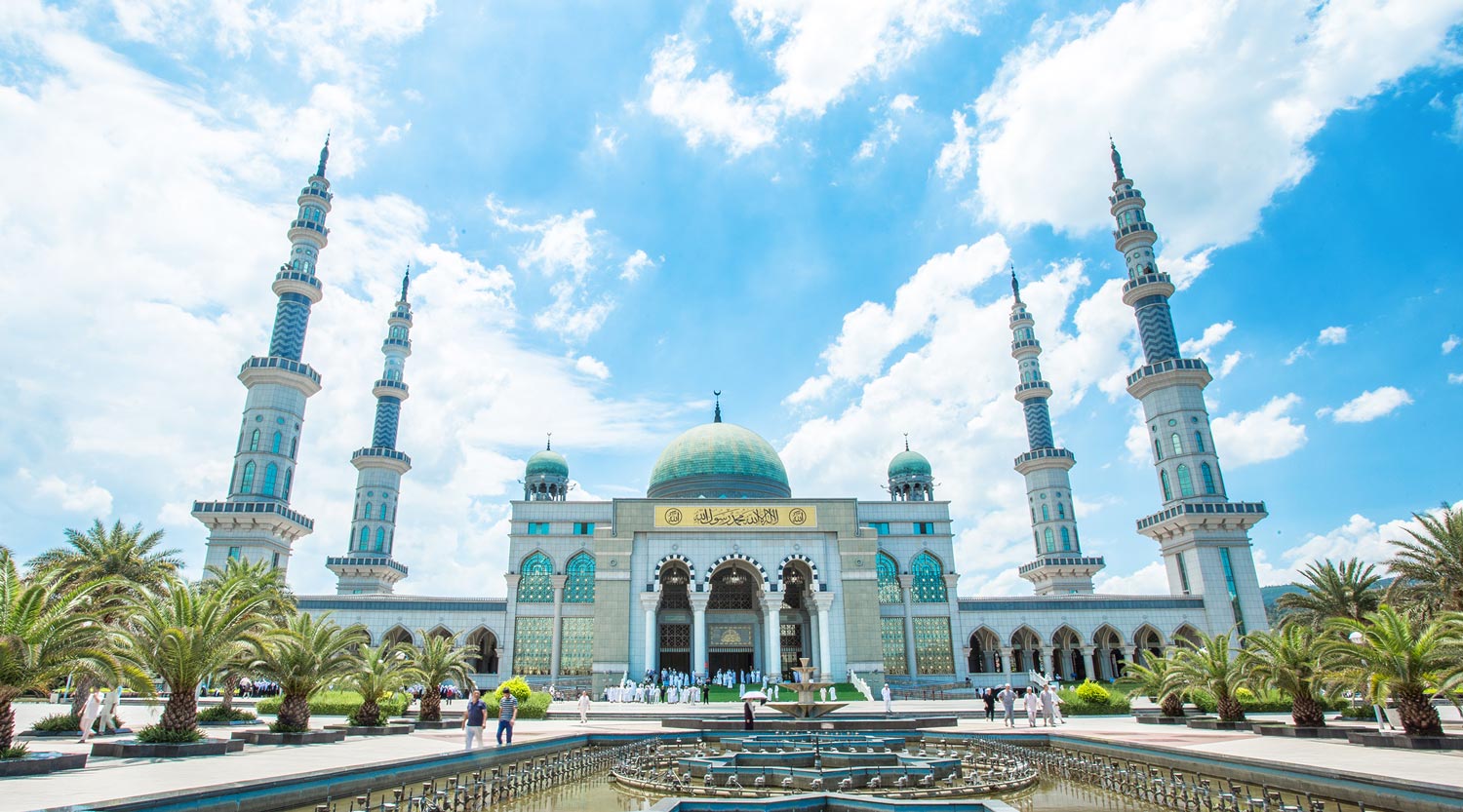
The flashy images of tourist sites, with religious labels easily mislead unsavvy tourists. They might be lead to believe China has a rich culture and religious freedom – which would be a disservice to victims of persecution and true followers of Buddha.

 EN
EN  FR
FR