

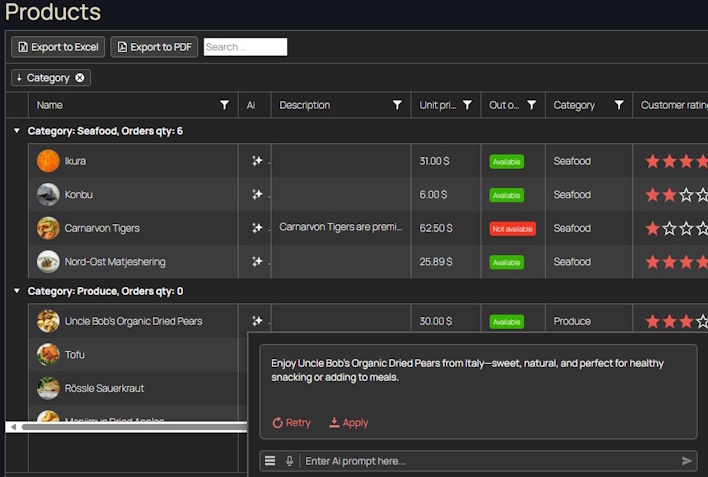
In today’s fast-paced business world, the idea of building a custom web-based software solution might conjure images of massive budgets, endless development cycles, and teams of expensive coders. But what if I told you that you could launch a robust, scalable system for as little as $10,000—one that handles the core operations of a multi-million dollar company? And that’s just the starting point. By leveraging AI assistants during development and embedding AI capabilities directly into the app, we’re not just cutting costs; we’re future-proofing your business. As a software consultant and partner, I’m here to show you how this approach keeps things lean, iterative, and incredibly powerful.
Let me be perfectly clear: The solution can’t be built by AI from the ground up. I made my framework after 15 years of Microsoft.Net experience and best practices training and certifications. AI-only solutions tend to be hard to maintain. Amateur. AI is like your junior developer: very astute learner and tireless performer.
The Foundation: Building a Strong Backbone on a Shoestring Budget
Let’s start with the basics. A custom web-based software solution doesn’t have to be a bloated, over-engineered beast. By focusing on a “strong backbone”—think modular architecture using proven frameworks like React for the frontend, Node.js or Python for the backend, and cloud services like AWS or Google Cloud—you can create a system that supports essential operations right out of the gate. This includes inventory management, customer relationship tracking, financial reporting, and workflow automation.
The secret sauce? Incorporating AI assistants into the development phase. Tools like GitHub Copilot or custom-tuned models help developers generate code snippets, debug issues, and even suggest optimizations in real-time. This slashes development time by up to 50%, reducing the need for a large team. For a mid-sized project, this means your initial investment can stay as low as $10,000. That’s not a typo—it’s achievable by prioritizing MVP (Minimum Viable Product) features and iterating based on real user feedback.
And here’s where it gets smart: It’s okay to start cheap. As your business partner, we’ll treat this as a living product. As your company grows—hitting new revenue milestones or expanding markets—we’ll scale the software alongside it. No big upfront commitments; just continuous improvement that aligns with your success. This model turns software from a sunk cost into a strategic asset, ensuring you’re never overpaying for features you don’t yet need.
Taking It Further: Embedding AI for Repetitive, “Uncodable” Tasks
Once the core system is up and running, the real magic happens when we integrate an AI API directly into the app. Not every task can be solved with traditional coding—some are too variable, context-dependent, or human-like. That’s where AI shines, automating repetitive processes that would otherwise require manual intervention.
Consider a common pain point: processing incoming quote demands. Businesses receive these in all sorts of formats—emails with attached PDFs, scanned images, handwritten notes, or even spreadsheets with inconsistent grids. Manually sorting through them is time-consuming and error-prone. But with an AI-powered API (like those from OpenAI), we can automate the extraction and analysis.
In one recent case study, we implemented this for a manufacturing client handling hundreds of quote requests weekly. The AI reads emails, performs OCR on images, and parses grids to pull out key details like quantities, specifications, and pricing. The costs? Astonishingly low:
- For a standard email: As little as $0.0006 per process (based on token usage in models like GPT-4o mini).
- For complex images requiring OCR: Around $0.04 per item, factoring in vision capabilities.
These figures include API calls and minimal cloud compute—far cheaper than hiring a dedicated admin or outsourcing to a service. The result? Faster response times, fewer errors, and freed-up staff for higher-value work. This isn’t futuristic; it’s deployable today, with immediate ROI.
Why Wait? AI Is Ready Now—And So Are We
The beauty of this approach is that you don’t need to wait for AI to “improve further.” Current models are already sophisticated enough to handle real-world variability in tasks like quote processing. Delaying means missing out on efficiency gains that compound over time. As a software consultant, I can make this happen now: from initial scoping to deployment and ongoing enhancements.
Whether you’re a startup eyeing multi-million status or an established firm looking to optimize, starting with a $10,000 custom solution backed by AI is a game-changer. It’s affordable, scalable, and positions you for growth without the bloat.
Ready to build? Let’s chat about how we can tailor this to your operations. Drop a comment or reach out—your next efficiency boost is closer (and cheaper) than you think.

 EN
EN  FR
FR