

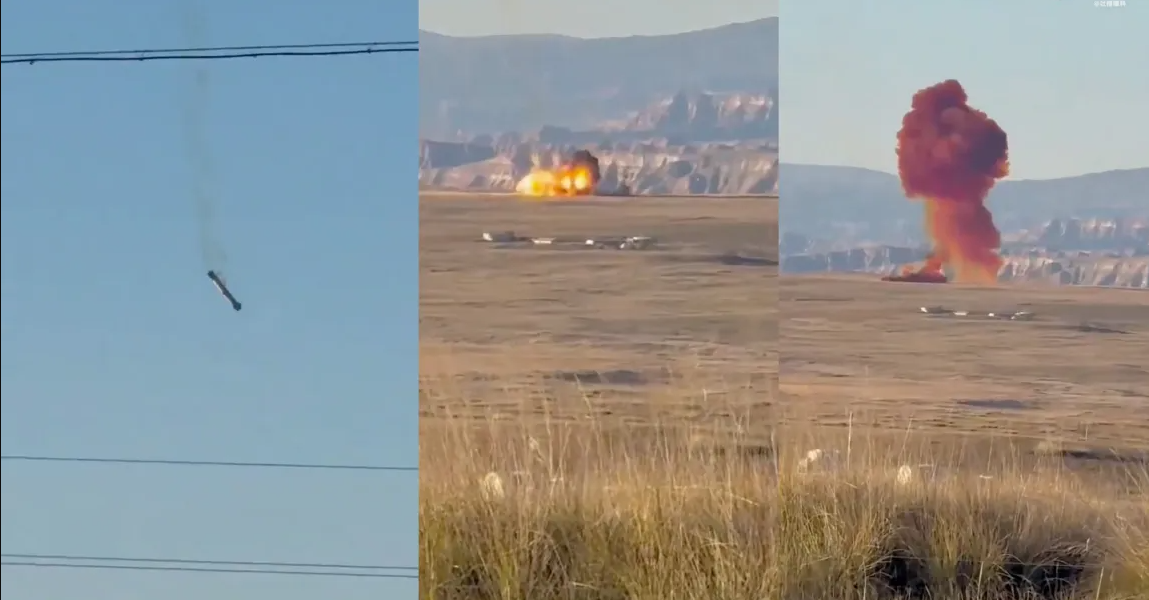
China’s space program has made incredible strides. The China National Space Administration (CNSA) operates the Tiangong space station, returned lunar samples, and launches more rockets than any other nation in recent years. But this rapid expansion comes with a visible downside: uncontrolled rocket debris raining down on populated areas far more often than in Western programs — and sometimes bringing highly toxic propellant with it.
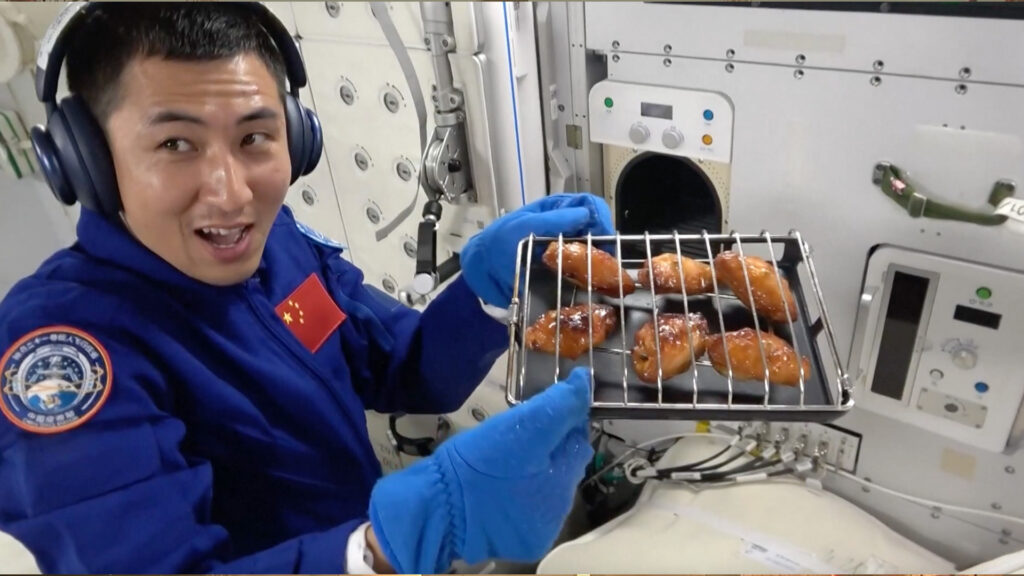
Even China’s proudest ‘achievements’ get inflated for propaganda value. Take the widely celebrated ‘first ever space BBQ’ on the Tiangong space station — Chinese astronauts proudly shared videos of grilling chicken wings and steak in a brand-new convection oven (not BBQ btw), hailed by state media as a landmark breakthrough for space cuisine. In reality, it was essentially an air fryer at best, adapted for microgravity. Meanwhile, NASA had already baked chocolate chip cookies aboard the ISS a decade earlier using a similar experimental oven — but without turning it into national headlines. Shows how the real prowess of the CCP is in controlling news narrative…
Why Debris Falls So Often
Many Chinese Long March rockets (especially older models like the Long March 2C, 2D, and 3 series) use a simple, reliable design. Their first-stage boosters are not designed for controlled landing or precise de-orbit burns like SpaceX Falcon boosters. Instead, they follow a ballistic path and come down in large “drop zones” over land.
Because China’s main launch sites (Xichang in Sichuan, Jiuquan in the northwest, Taiyuan) are inland for security reasons, these zones often overlap with villages, farmland, or remote grasslands. Warnings go out via local notices or aviation alerts, but people still end up filming dramatic falls — or worse, living with the consequences.
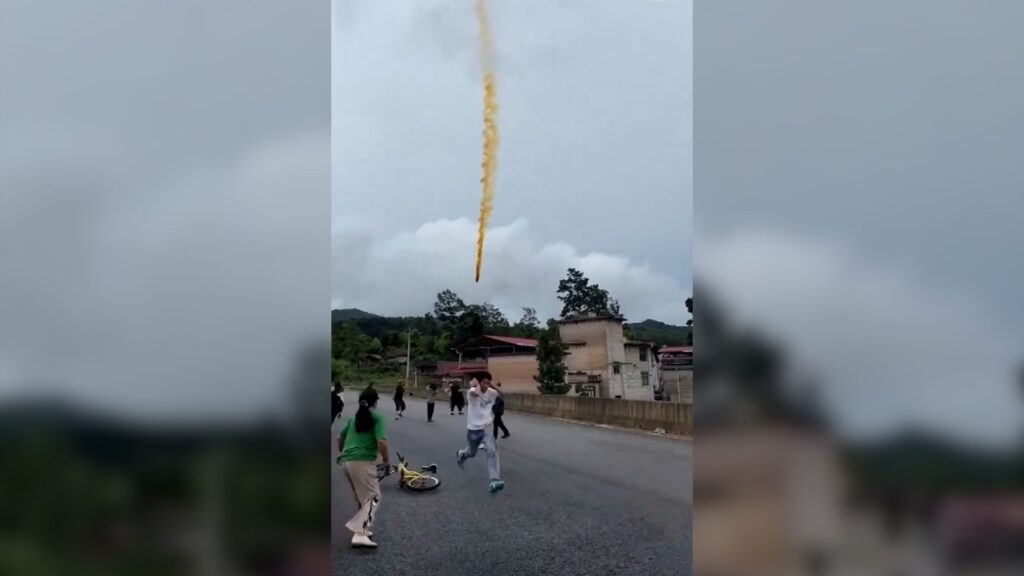
The Signature “Weird Color Smoke” Incidents
The most striking examples involve leftover hypergolic propellants — nitrogen tetroxide (N2O4) as the oxidizer and unsymmetrical dimethylhydrazine (UDMH) as the fuel. These are storable, ignite on contact (no spark needed), but they are extremely toxic and carcinogenic.
When a booster crashes or leaks, the chemicals react or burn, producing the bright yellow-orange or reddish smoke people describe as “weird.” It’s not just visually alarming — it’s dangerous to breathe, touch, or let settle on soil/water.
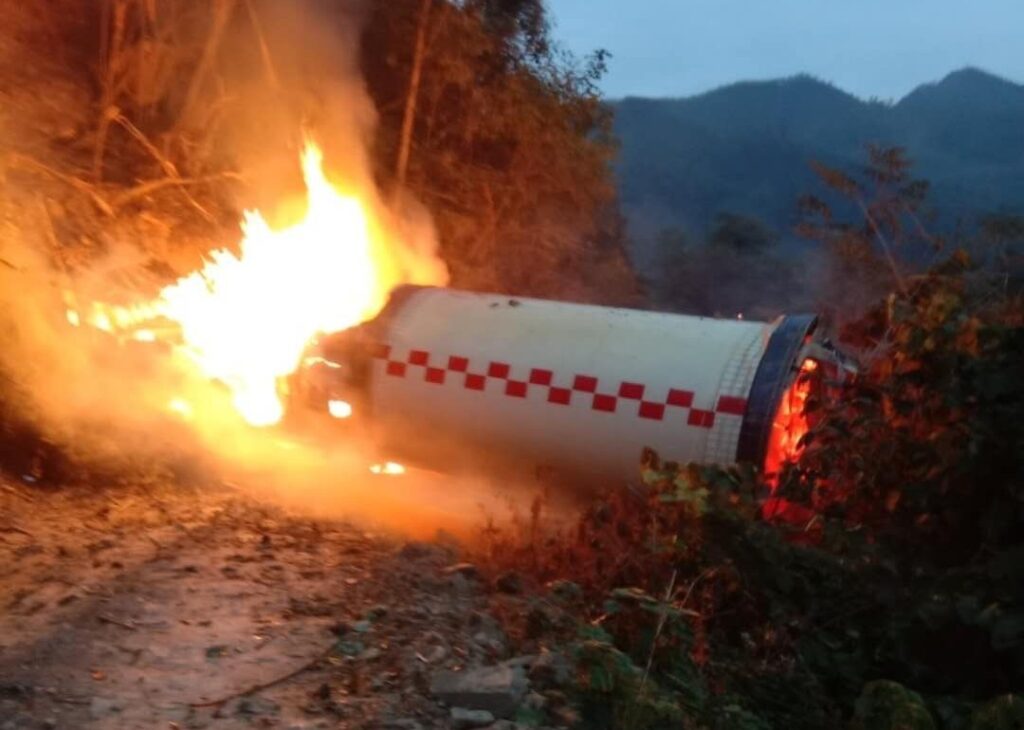
- June 22, 2024 – Xianqiao village, Guizhou Province A Long March 2C booster (launched from Xichang carrying the SVOM satellite) tumbled down near a hill. Residents heard a loud explosion and saw thick yellow-orange smoke trails. Villagers, including children, ran for cover. A local government notice warned everyone to stay away from the debris because of “toxic gas and explosion” risk and even banned filming or sharing videos. Rocket expert Markus Schiller confirmed it was classic N2O4/UDMH residue: “This combination always creates these orange smoke trails. It’s extremely toxic and carcinogenic.”
- October 2025 – Mangra County, Tibet (Amdo region) Debris from a Long March 2D (after launching the Shiyan-31 satellite) slammed into grasslands. Flaming fragments sparked a large fire and billowed thick toxic orange-yellow smoke. Videos captured locals shouting “Oh my God, rocket debris is falling!” Authorities did not publicly confirm the link, but the smoke color matched the same hypergolic signature. Similar fires and panic happened in the same region in December 2023.
Other recent cases (Qinghai province in 2025, earlier drops in Hunan) show the same pattern: uncontrolled booster, impact, colorful toxic plume, and residents scrambling.
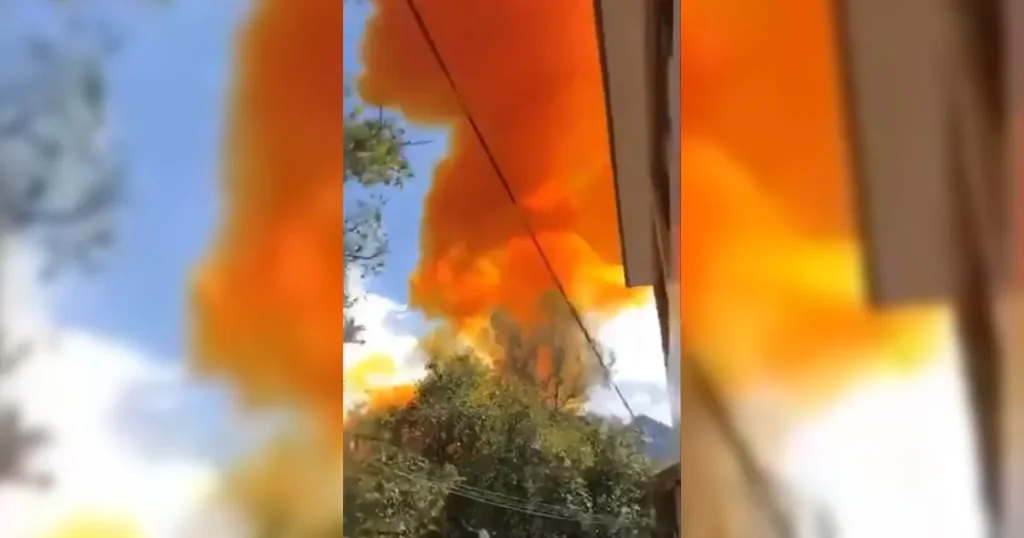
Why the Color and Toxicity?
Chemically, N2O4 turns into reddish-brown nitrogen dioxide (NO2) when heated or released. Mixed with UDMH, the reaction is exothermic and produces the distinctive rusty-orange/yellow clouds seen in videos. These compounds can cause severe burns, respiratory damage, and long-term cancer risks. China still relies on them in many older rockets because they are simple and storable (a holdover from early Soviet-influenced designs). Newer rockets (Long March 5, 7, 8 series) are switching to cleaner kerosene/liquid oxygen or hydrogen fuels, but the legacy fleet keeps launching.
The Bigger Picture
These incidents are not total launch failures — most missions succeed and deliver satellites. But the debris practice has drawn international criticism (NASA called out China’s 2021 Long March 5B re-entry as “irresponsible”). Russia uses similar toxic fuels too, but China’s high launch cadence and inland geography make the problem more visible.
However, the lax attitude and lack of accountability from the public is concerning for the international space community. Even a minor accident could trigger a devastating https://en.wikipedia.org/wiki/Kessler_syndrome effect that would ruin space exploration, satellite communications for generations…
China is improving: newer rockets have better control, and some drop zones are being adjusted. Still, as long as older hypergolic boosters fly over populated areas, villagers will keep seeing fiery debris and strange-colored smoke.
The space race is impressive, but these repeated ground-level reminders show that speed sometimes comes at a human and environmental cost. Safety upgrades can’t come fast enough — for the people on the ground and for the planet below.

 EN
EN  FR
FR