

The United States and Israel have launched military strikes on Iran. No one disputes that America and its allies are active combatants in the escalating Middle East conflict. But let’s not pretend China is a passive bystander. While Washington focuses on direct kinetic warfare, Beijing is waging a quieter, more insidious campaign inside the American homeland: espionage, technology theft, biological smuggling, and outright terror plots. These aren’t isolated crimes. They’re patterns that, in any other era or against any other adversary, would be treated as acts of war. Yet because of our deep economic entanglement with China, we downplay them. The question we must confront: Are we already in a world war — one fought in the shadows while we pretend it’s still “peace”?
The Bomb Plot at MacDill Air Force Base — And the Flight to China
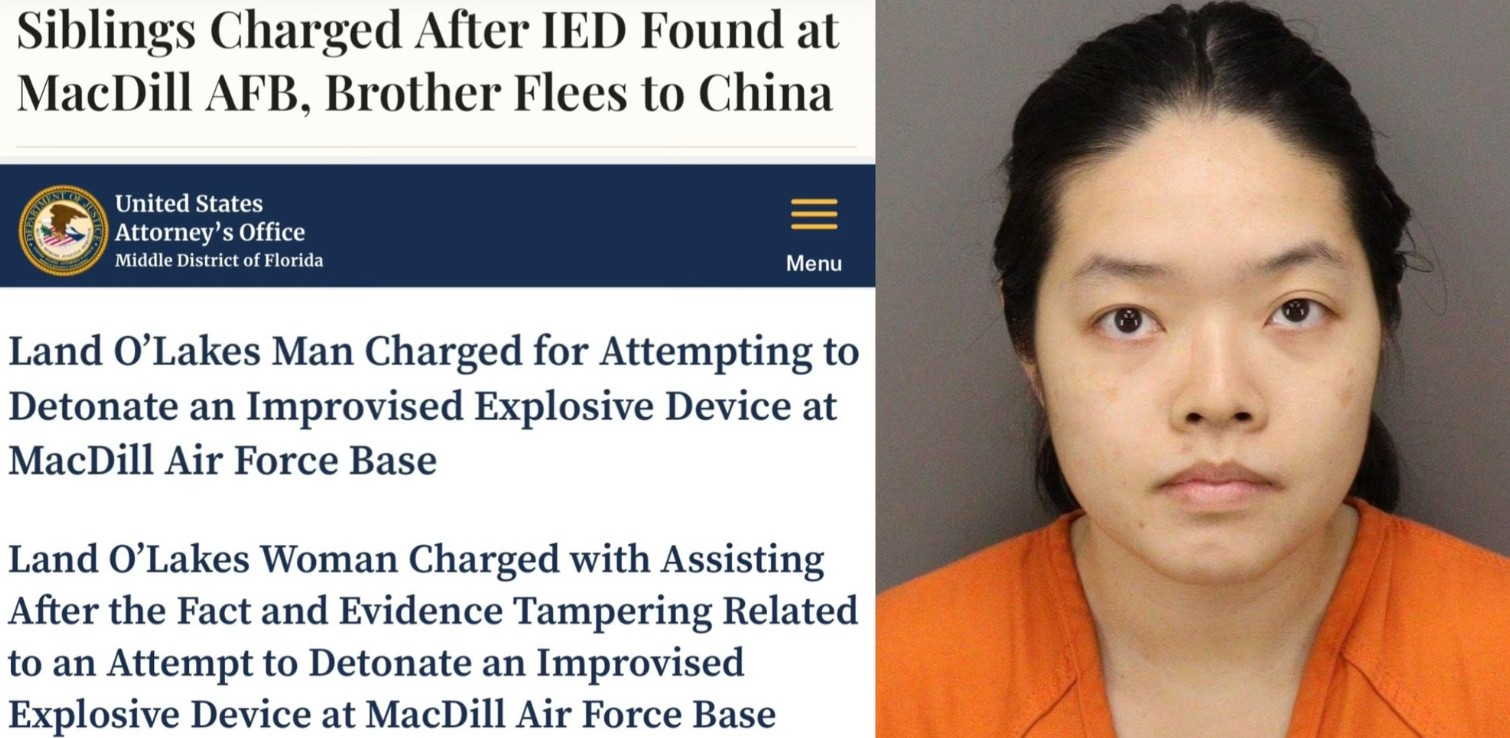
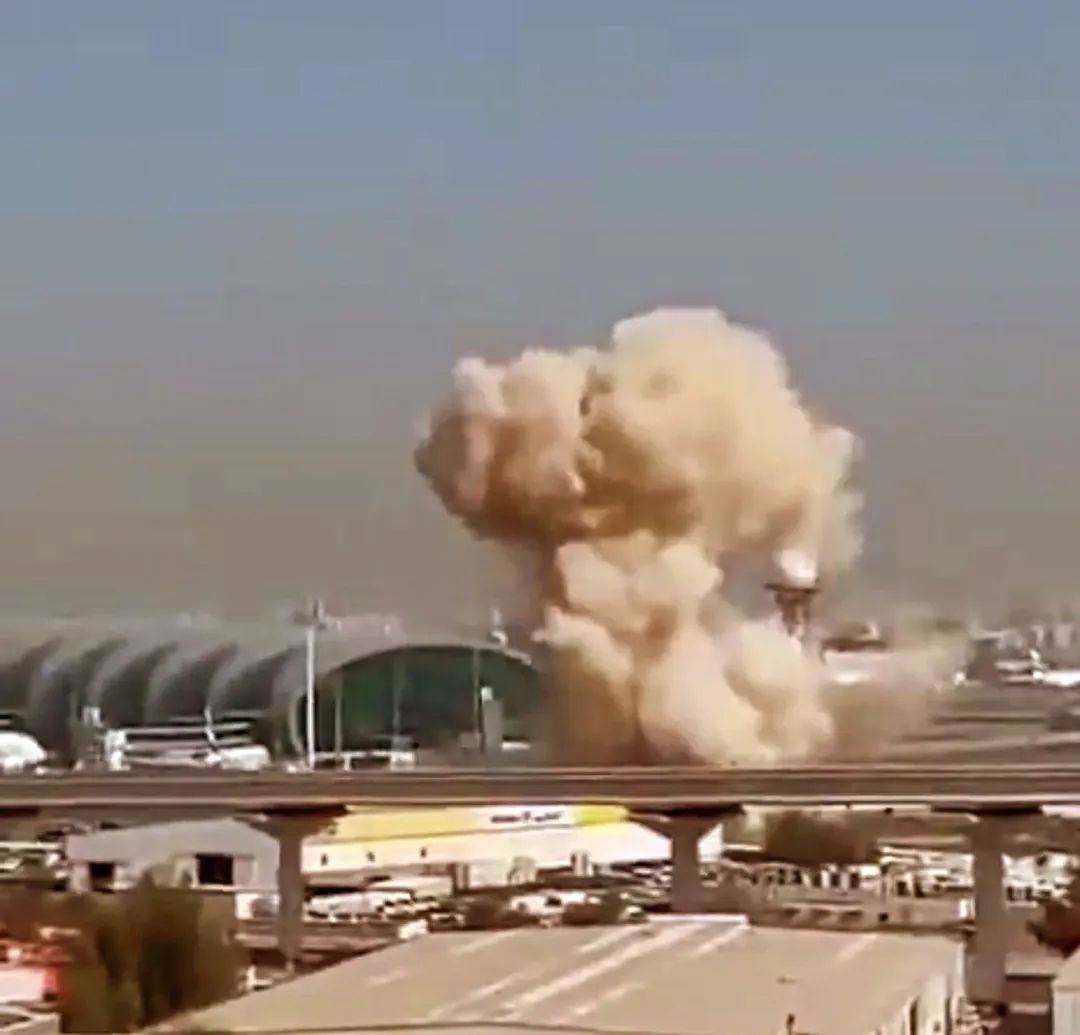
Start with the news that broke just days ago. On March 10, 2026, an explosive device was planted outside the gates of MacDill Air Force Base in Tampa, Florida — headquarters of U.S. Central Command (CENTCOM), the nerve center coordinating American operations tied to the Iran conflict. The perpetrator: 20-year-old Alen Zheng. His sister, 27-year-old Ann Mary Zheng, allegedly helped him cover it up, tamper with evidence, and flee. The pair sold their SUV, bought tickets, and flew to China on March 12. Alen remains in China; Ann Mary returned and was arrested. Their mother is now in ICE custody for visa violations after reportedly telling investigators her son confessed.
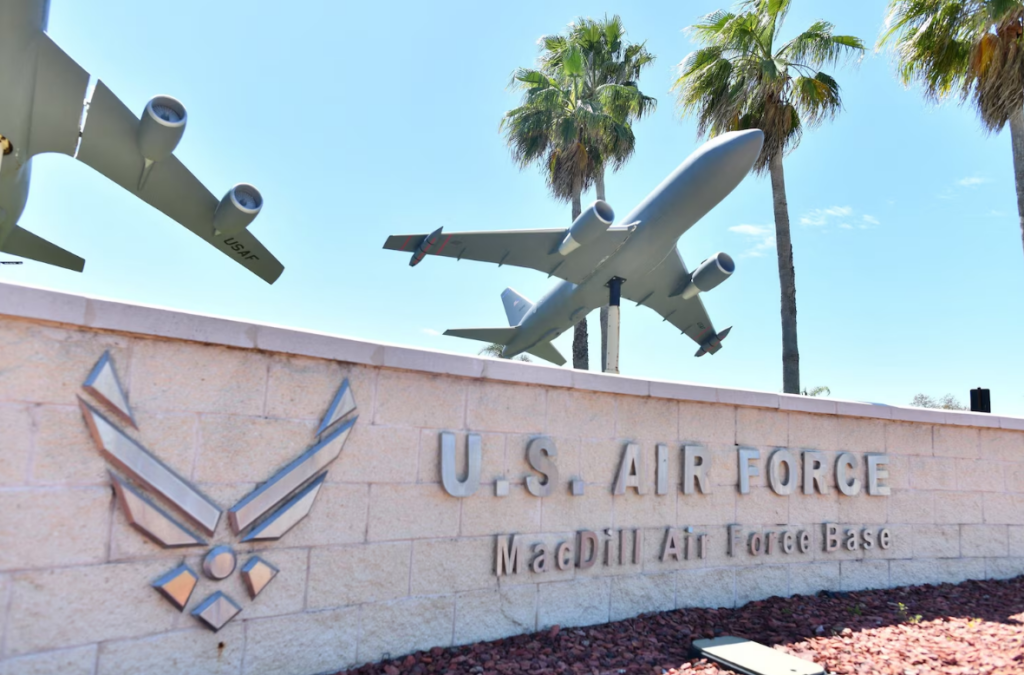
Federal prosecutors charged both siblings with serious offenses that could carry decades in prison. Will Alen Zheng be extradited? China almost never extradites its own nationals — especially not in cases involving U.S. military targets during an active Iran-related conflict. The suspect has clear ties to China. His rapid escape to the People’s Republic, combined with the timing at a base central to U.S. operations against Iran, raises the obvious question: Was this a lone act of domestic extremism, or the work of someone acting with foreign support? In any conventional war, planting a bomb at a command headquarters would be an act of war. Here, it’s just another federal indictment.
Biological Sabotage: Smuggling a “Potential Agroterrorism Weapon”
This wasn’t the first Chinese-linked threat to U.S. security. In June 2025, two Chinese nationals — Yunqing Jian (a researcher at the University of Michigan) and her boyfriend Zunyong Liu — were charged with smuggling Fusarium graminearum, a highly destructive fungus classified in scientific literature as a potential agroterrorism weapon. The fungus devastates wheat, barley, maize, and rice crops and is toxic to humans and animals. They hid samples in a backpack and a book, intending to study (and potentially weaponize) it in a U.S. university lab. One was arrested; the other fled back to China.

U.S. Attorney Jerome F. Gorgon called it exactly what it was: an attempt to bring a “potential agroterrorism weapon” into the heartland of America. This isn’t academic research gone wrong. It’s a direct threat to American food security — the kind of hybrid warfare Russia or North Korea would be accused of starting World War III over. Yet because it came from China, it barely made headlines beyond the initial arrest.
AI Chip Espionage: Stealing the Future of American Technology
Just this week, another Zheng — Stanley Yi Zheng, a Chinese national — along with two American citizens, Matthew Kelly and Tommy Shad English, were charged with conspiring to smuggle millions of dollars’ worth (up to $170 million in one order) of restricted U.S.-made AI computer chips to China. They routed the servers through fake Thailand-based buyers to bypass export controls, all while discussing “fake corporate niceties,” the premium value of the chips in China, and recruiting more participants. The FBI’s Counterintelligence Division called it a brazen scheme to fuel China’s AI dominance at America’s expense.
This isn’t traditional spying with briefcases and dead drops. It’s economic and technological warfare designed to erode U.S. military and economic superiority. AI chips power everything from autonomous weapons to advanced surveillance. Handing them to China is the modern equivalent of selling nuclear secrets.
China’s Open Siding With Iran
These incidents don’t exist in a vacuum. China has repeatedly chosen Iran’s side:
- A 25-year strategic cooperation agreement (2021) promises up to $400 billion in Chinese investment for guaranteed Iranian oil.
- China buys 80-90% of Iran’s oil exports (often via shadow fleets and relabeling as Malaysian), keeping Tehran’s regime afloat despite U.S. sanctions.
- Beijing has provided surveillance tech, components for ballistic missiles, and training — while publicly denying direct arms sales.
- Diplomatic cover: China condemned U.S./Israeli strikes on Iran, blocked stronger UN action, and welcomed Iran into BRICS and the Shanghai Cooperation Organization.
- Joint naval drills with Iran and Russia, and mediation efforts that always seem to favor Tehran’s axis.
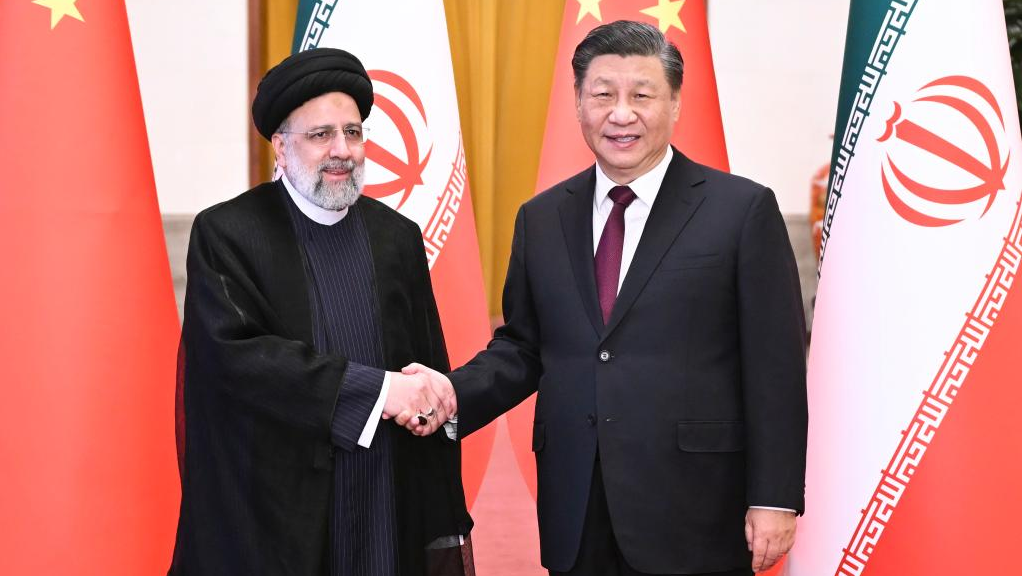
China isn’t sending troops, but it is funding, shielding, and equipping the very adversary the U.S. and Israel are fighting. That is alliance behavior — just not the kind that triggers Article 5.
Other Incidents Fit the Same Pattern
We’ve seen Chinese nationals probing U.S. military bases, cyber intrusions, intellectual property theft on an industrial scale, and balloon surveillance flights. Each time, officials call it “concerning” or “espionage.” Rarely do they call it what it would be if Russia or Iran did the same: hybrid warfare.
The Economic Ties That Bind — And Blind Us
Here’s the uncomfortable truth: These would be unambiguous acts of war if committed by almost any other nation. Imagine Russia planting a bomb at CENTCOM, smuggling crop-destroying pathogens, or orchestrating the theft of AI chips worth hundreds of millions. Congress would demand retaliation. Markets would panic. Yet with China — our largest trading partner, the factory of the world, and holder of trillions in U.S. debt — we hesitate. We fear supply-chain collapse, stock-market crashes, and higher prices at Walmart. So we treat sabotage as “law enforcement matters” and espionage as “unfair competition.”
That hesitation is exactly why the shadow war continues. Economic interdependence has become our greatest vulnerability. We are already in a world war — just one where one side fights with bombs, pathogens, and stolen chips while the other side fights with sanctions, tariffs, and strongly worded statements.
The Zheng siblings’ bomb plot, the Fusarium smuggling, the AI chip conspiracy, and China’s lifeline to Iran aren’t random crimes. They are pieces of a larger strategy: weaken America from within while backing its adversaries abroad. Until we acknowledge that we are already engaged in conflict — not just with Iran, but with the power enabling and exploiting it — we will keep losing ground in a war we refuse to name.
What do you think? Is this hybrid warfare already World War III, or are these still just “incidents”? The bombs, the bugs, and the chips don’t lie. Neither should we.

 EN
EN  FR
FR