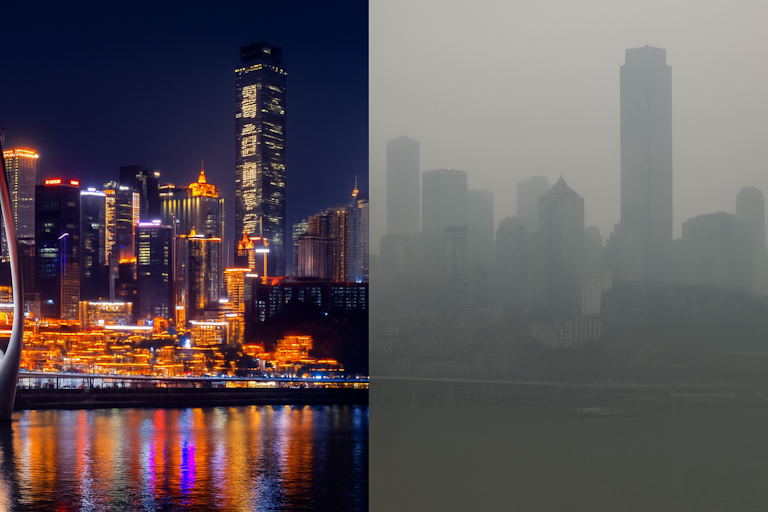

China’s infrastructure really is impressive. But the social-media presentation of it has become almost comically selective: a handful of spectacular railway stations, futuristic districts and enormous LED-covered skylines are presented as though they are representative of everyday China. They aren’t.
The EV problem
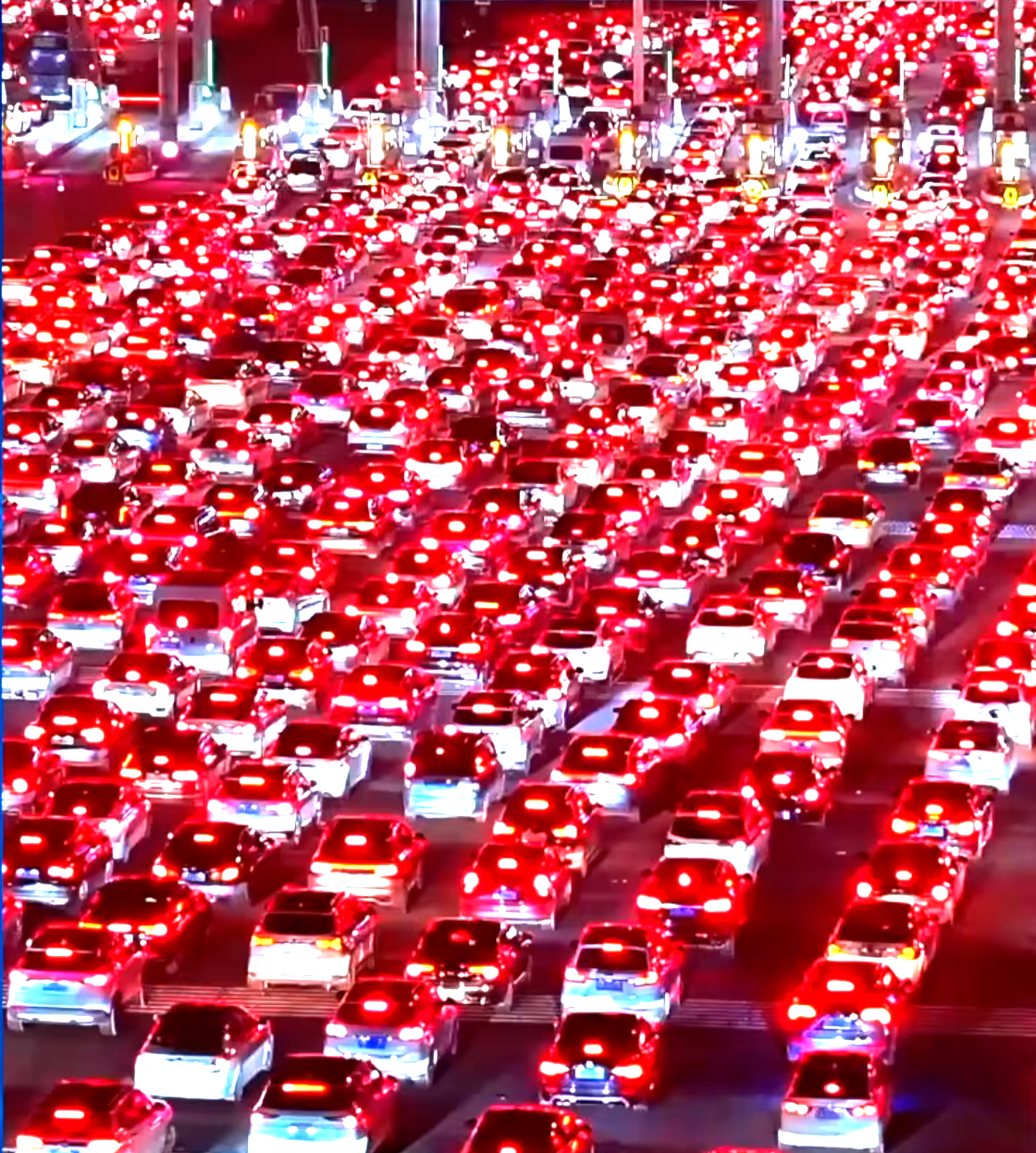
China’s EV miracle has a rather less impressive side when you actually have to take the car somewhere. In October 2026, Chinese drivers again found themselves queuing for hours at highway chargers during the National Day holiday — in some cases more than five hours. One vehicle reportedly arrived with 1% battery remaining and still had dozens of cars ahead of it. This was not happening because China lacks charging infrastructure: the country already had 23 million charging facilities by June. It was happening because millions of EVs were trying to use a finite number of highway chargers at precisely the same time.
The irony is difficult to miss. China’s car industry is racing toward 1.5-megawatt and even 2.25-megawatt charging, advertising the end of traditional “charging anxiety”, while the actual holiday experience can still involve taking a queue number and waiting five hours. The technology is spectacular; the system it operates in is not.
The number of chargers is impressive until you consider how many EVs exist in China. Also when counting 71 million vehicles make a long trip home on the Golden week holidays.
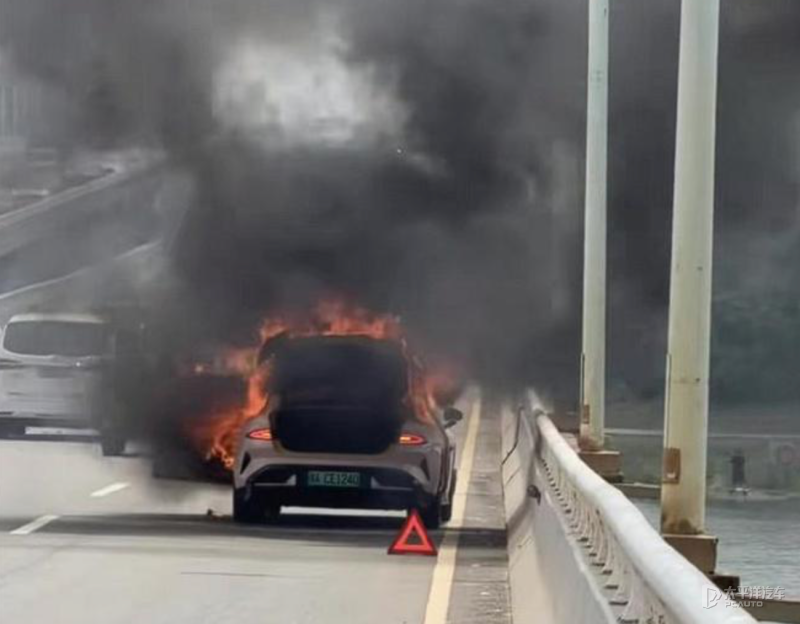
Fires are another part of the story that rarely makes the promotional videos. 2026 has produced documented Chinese EV fires involving Wuling, Xiaomi and BYD vehicles, including vehicles that were parked and not charging. These cases do not establish that EVs are inherently more fire-prone than petrol cars, and several remain under investigation. What they do establish is that the safety problem is real enough to generate repeated incidents, investigations, recalls and a new mandatory battery-safety regime.
The governance problem
That EV problem should not be confused with the separate question of why these enormous peak demands exist in the first place.
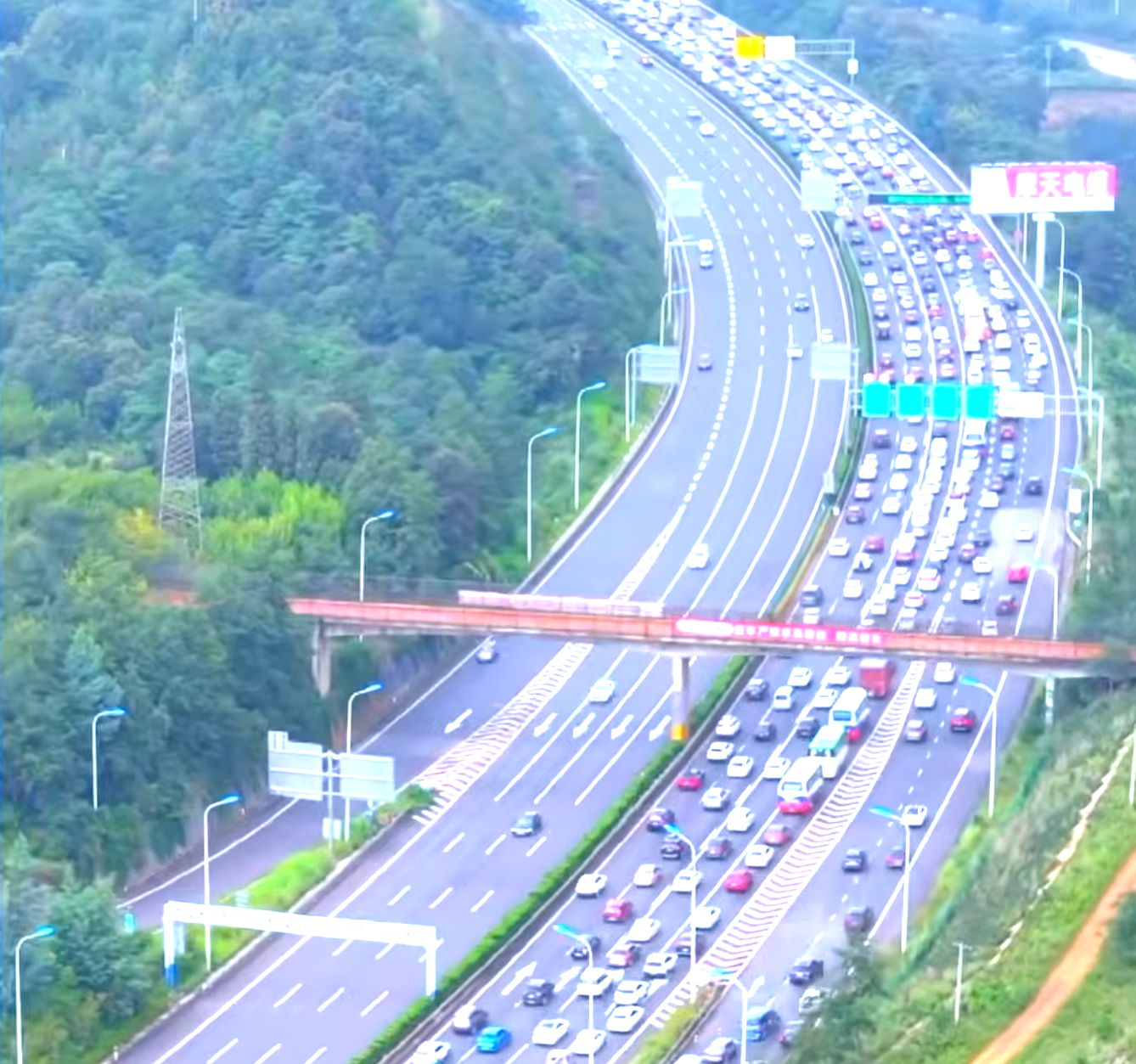
China’s Spring Festival and Golden Week migrations are not natural disasters that planners suddenly discover. They are predictable, recurring movements produced by the country’s economic and social organisation. China had about 301 million migrant workers in 2025, many of whom work away from their hometowns. During the Spring Festival, enormous numbers return home and then travel back again. Chinese transport authorities expected 7.2 billion self-driving trips during the 2025 travel rush, roughly 80% of the expected total journeys.
People continue taking cars because the train doesn’t solve the whole journey. The high-speed railway can take someone to a major city; it doesn’t take them to the family house in the countryside, and once they’re there they still need a vehicle for relatives, shopping and local travel. So the car remains necessary even when its owner knows the holiday journey may become an exhausting charging-and-traffic marathon.
The state has enormous power to build another highway, another railway and another charging station, but that is not the same as organizing the country so that hundreds of millions of people don’t have to make the same journeys at the same time. The concentration of employment in major cities, the separation of work from family and hometown life, and rigid national holiday patterns create enormous recurring transport peaks.
It’s mind-boggling western liberal influencers and politicians want to emulate China – when we can easily observe these crushing errors infringing on human conditions.
And that is expensive. Infrastructure built to survive a few extreme demand periods has to exist and be maintained throughout the year. Then, when the predictable peak arrives, it can still be overwhelmed. Mobile charging trucks and temporary capacity are brought in; more railway services are scheduled; roads are subjected to extraordinary congestion management. This isn’t evidence of some miraculous ability to overcome physical constraints. It is evidence of an immense system repeatedly spending money to manage bottlenecks that were entirely predictable.

“Two-tank cars”
There’s a saying to call these cars that are abandoned most of the year, gathering dust. The owners only take them out for the mandatory public holidays to drive to their home town. These cars, sometimes with a cover, sometimes covered with dust and leaves get surrounded with trash and weeds on side roads. It’s a huge phenomenon.
We all know these “sunday drivers” in the west but imagine if it’s only twice a year. “Two-tank drivers” is what more experienced drivers call bad drivers who make the traffic worse on public holidays.
The image problem
Then there is the completely separate issue of what foreigners are shown.
A visitor can spend three days in Shanghai and see more futuristic infrastructure than most Westerners will encounter in a year. Ride the high-speed train, walk through a spectacular station, see the autonomous taxis, photograph the electric cars and stand beneath a skyline covered in LEDs. The experience can be completely genuine.
What isn’t genuine is the implication that this tiny selection is China.
China is enormous. Its showcase districts are concentrated in a small number of cities and often in small, heavily redeveloped sections of those cities. Outside the tourist corridor, the picture is much more ordinary: vast amounts of conventional apartment construction, sprawling suburbs, industrial areas, villages, ageing buildings and unfinished development. China has also accumulated a huge stock of vacant and unfinished housing through its extraordinary construction boom; estimates published in 2026 put vacant or unfinished residences at roughly 90 million.
So when a video spends five minutes showing neon skylines and automated trains, the natural reaction is not “China is fake.” The correct reaction is “show me what you deliberately didn’t film.”
That question matters even more because the foreign-influencer ecosystem is not purely organic. Research published in 2026 documents the Chinese state actively cultivating foreign influencers through sponsored competitions, media tours, financial rewards and privileged access, specifically to promote favourable narratives about China. There is also recent congressional and parliamentary reporting putting China’s spending on international information operations above $1 billion annually, although estimates vary substantially depending on what is counted.
So no, this does not mean every foreigner who says “China is amazing” has secretly been paid. It means that there is an organised state-backed machinery whose purpose is to amplify exactly this kind of content, and infrastructure is one of its easiest products to market.
That is why the recurring vocabulary matters: infrastructure, high-speed rail, EVs, futuristic cities, convenience, technology. They are all real. They are also exactly the things that make spectacular propaganda.
The uncomfortable part is that the Chinese super-project state really can build magnificent things. The railway really does work. The EV technology really is advanced. The stations really are enormous.
But none of that proves that the system underneath them is efficient, sustainable or well governed.
A country can simultaneously build a 600 kW charger and leave drivers waiting three hours to use it; build the world’s largest high-speed rail system while hundreds of millions of people still make enormous holiday road journeys; and construct futuristic city districts while accumulating vast amounts of vacant and unfinished property.
The propaganda doesn’t need to invent a fake China.
It only needs to show you the five square kilometres that look spectacular and never show you the other five million.
And that is the real trick behind the “look how futuristic China is” narrative: the impressive things are real. The representative picture is not.