
Kerbal Space Program 2 should have been the easiest sequel to sell in gaming history. The original taught a generation of engineers how orbital mechanics works, NASA partnered with its makers, and the audience was loyal enough to pre-order the sequel unseen. Four years, two studios and one very public implosion later, it became a textbook example of how a software project fail for reasons that have little to do with code.
The asset: a beloved product built by a tiny team
The original game came out of Squad, a Mexico City marketing agency whose day job was selling Samsung phones and Nissan cars. A multimedia hire, Felipe Falanghe, built it on the side and was told by his bosses that if he stayed, they would let him make his dream game. The first compile of the software project was in January 2011. Early access followed that June.
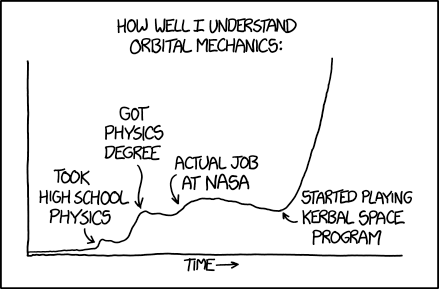
The game’s value was its honesty about physics. NASA’s Asteroid Redirect Mission team announced an educational partnership in 2014. Rocket company founders played it. Scott Manley built a YouTube channel teaching real orbital mechanics through it, and an education edition was sold to schools and universities.
Problem 1: Buying a product without buying the team
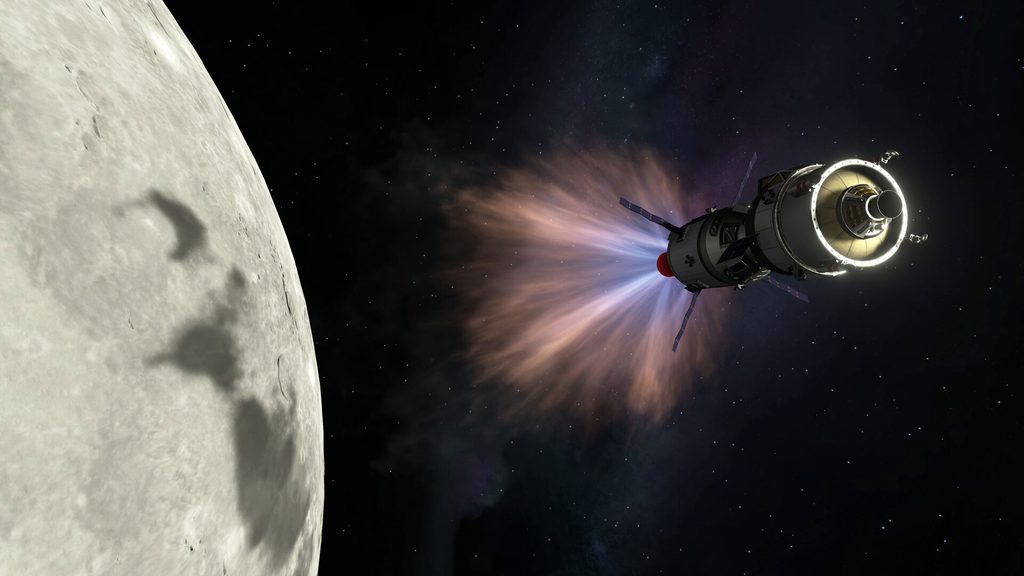
By the time Take-Two bought the franchise in May 2017, Squad had already lost its star designer (Falanghe left in May 2016) and, five months later, eight more developers at once. Take-Two acquired the IP and the brand but not the people who knew why the game worked. In software project terms, it bought the repository and left the maintainers behind. Squad shipped its last major patch, version 1.12, on the game’s tenth anniversary in June 2021 and then stepped away entirely.
Lesson: Institutional knowledge is part of the asset. When it walks out, you inherit code you cannot reason about.
Problem 2: Treating your contractor as a disposable dependency
Take-Two announced KSP2 at Gamescom in August 2019, with a small Bellevue studio, Star Theory, doing the development. Late that year, Take-Two tried to acquire Star Theory outright, and per Bloomberg’s reporting the talks collapsed over price. Within days, Private Division, Star Theory’s own publisher, began recruiting Star Theory’s staff on LinkedIn for a new in-house studio that became Intercept Games. Take-Two had reportedly just asked Star Theory for a six-month contract extension, and Star Theory agreed. By February 2020 roughly 12 of its 30 employees had moved, including the creative director. Star Theory closed in March 2020.
Take-Two’s stated reason was that business circumstances might compromise the game’s “integrity.” The practical result was a mid-project handover, a rebuilt team and a lost year of continuity.
Lesson: Switching teams mid-flight is a rewrite in disguise. Every handover loses context, and the cost shows up later as delays and defects.
Problem 3: Promises that outran the engine
The 2019 announcement promised interstellar travel, colony building, multiplayer and a modernized engine, all at a $50 price tag. The developers themselves were candid about limits. Creative director Nate Simpson told Edge that applying full N-body physics to the Kerbal system would make the solar system disassemble and start firing moons at planets. The original game survived on a deliberate simplification, patched conics. The roadmap ignored that kind of constraint.
Lesson: Marketing can set a direction, but only a software project expert can set the scope. A roadmap that never passes through feasibility review is a liability.
Problem 4: Shipping an unfinished foundation
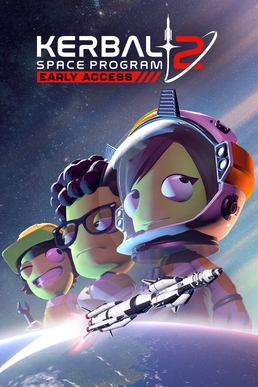
KSP2 reached Steam early access on February 24, 2023 at $49.99, Windows only. None of the four headline promises had arrived. Reviewers on top-end GPUs reported single-digit frame rates in a game with cartoon-style graphics, and large rockets flexed like noodles on the pad, the very “wobbly rockets” problem the sequel was meant to cure. Scott Manley’s first-week verdict was to play the original with mods instead. The Steam rating settled at “mostly negative” and, per this blog, sits around 25 percent positive on 22,000 reviews.
A December 2023 update, For Science, added a tech tree, career mode and mission goals. Players came back, reviews improved, and fans thanked the developers for finally listening.
Lesson: Early access is not a license to skip fundamentals. Performance and core physics are not features you can add later without rewriting everything built on top of them.
Problem 5: Communication that collapsed trust
On February 8, 2024, Take-Two’s CEO told IGN there were no current layoff plans. On April 16, Take-Two filed an SEC 8-K announcing a cost reduction program that eliminated several projects. On April 25, the publisher announced a new KSP2 patch. On April 29, a WARN notice covering 70 Seattle positions was filed. On May 1, Bloomberg confirmed that Intercept Games would close. On May 16, the CEO said, “We haven’t shuttered anything.” The final patch shipped on June 11, and the team was laid off on June 28.
Lesson: Users and developers are the same people, often in the same community. Statements that are true only under a narrow reading cost more trust than the bad news they were meant to soften.
Problem 6: Orphaned software project that is still on sale
Take-Two sold Private Division to private equity firm Haveli Investments in November 2024. The label was later renamed Fictions Incorporated. KSP2 had gone 23 months without a patch, had no public roadmap, and was still for sale on Steam with a stale-update warning on its store page.
Lesson: Ownership chains matter. If nobody is accountable for maintaining a product, selling it is a decision with consequences, not a neutral default.
The community fills the vacuum
Fans began archiving the original game, mods and wikis. A volunteer team built a mod pack that re-creates the promised multiplayer, interstellar travel and colonies inside the original game, and named it the community lifeboat. A spiritual successor, Kitten Space Agency, is in development at Rocket Works, a studio Take-Two had evaluated and passed over in 2019. On April 19, 2026, nine days after Artemis II splashed down, the original game hit a new all-time peak of 23,459 concurrent players while KSP2 peaked at 516 that week.
Takeaways for engineers and leaders
- Keep the people with the knowledge. Acquiring an IP is not acquiring its expertise.
- Run promises through feasibility. Scope is set by constraints, and the best simulation is one that knows its limits.
- Protect continuity. Mid-project team swaps carry hidden rewrite costs.
- Ship the foundation first. Performance and core mechanics cannot be bolted on later.
- Be straight with your users. Trust is an software project resource, and it is much harder to rebuild than a codebase.
- Own what you sell. Selling an unmaintained product is a choice you answer for.
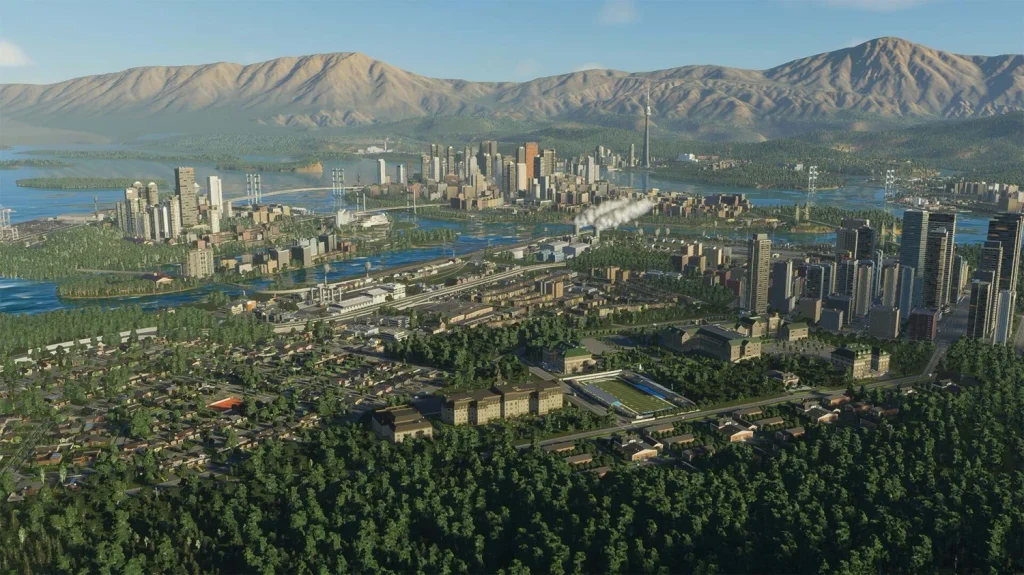
This is not unique to Take-Two. Cities: Skylines II was another highly anticipated sequel that launched in a troubled state, with publicly acknowledged performance problems the developers chose to ship through.
The original game kept flying because it knew its limits. You cannot market your way past an empty tank.
Source: my gaming and software project management experience ^_^