
Piling on overfishing, the largest carbon emissions and nuclear waste dumping behind a veil of propaganda; Chinese mining pollution has become a growing environmental concern across Southeast Asia, Africa, South America and other mineral-producing regions. Mining operations connected to Chinese state-owned enterprises and private conglomerates have been involved in repeated incidents involving acidic wastewater, cyanide, heavy metals and tailings entering rivers and coastal ecosystems.
The most concerning cases are not simply accidental spills. They include repeated failures at the same operations, reports of companies continuing production despite suspension orders, incomplete environmental assessments, inadequate containment systems and communities left without reliable information about remediation.
Consider all these disasters occur in the already destructive industry – fueling the throwaway gadgets and EV production of China – and hopefully you can resist the greenwashing impressions.
1. Laos: A rare-earth operation with repeated environmental failures
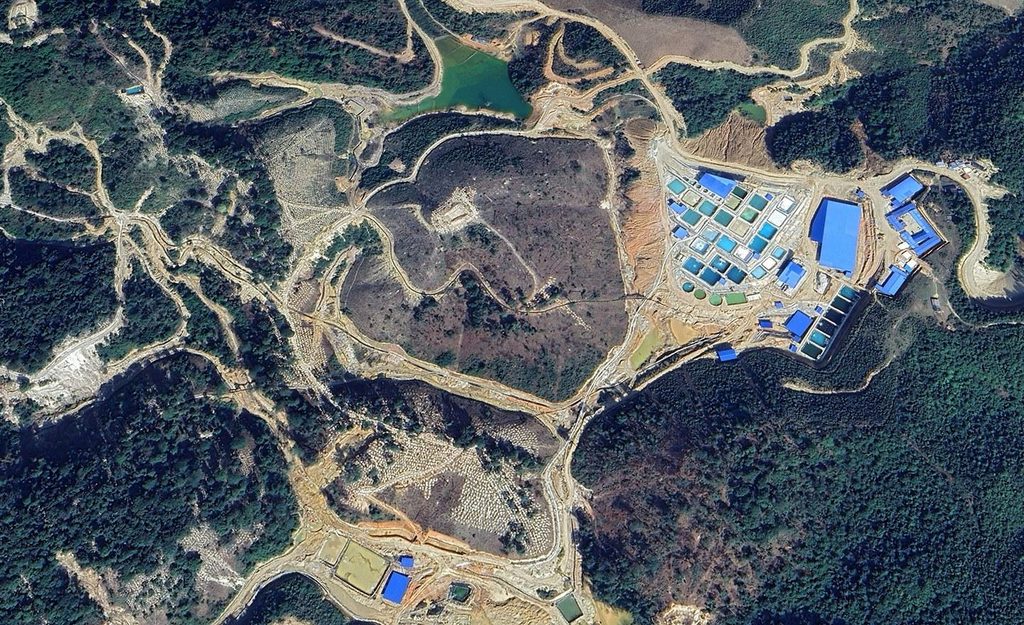
Operator: Lao-China Northern Rare Earth Development (2) Co., Ltd., also reported as Laos-China Rare Mineral Development Company North 2 Ltd.
Location: Houaphanh Province, northeastern Laos
Chinese majority shareholder: Beijing Platinum World Technology Development
The Houaphanh operation is particularly concerning because it has been associated with several pollution incidents within a relatively short period.
Who actually owns the mine?
The ownership chain leads directly to one of China’s major state-owned rare-earth groups.
- China Rare Earth Group (REGCC): ultimate parent.
- Southern Rare Earth International Trade Company: Chinese state-owned subsidiary.
- Beijing Platinum World Technology Development: 55% shareholder in the Lao joint venture.
- Phadang Hungheuang Huaphan Mining Sole Company: Lao state-enterprise partner holding 45%.
This is therefore not simply a Chinese private investor operating independently through a local company. The majority investor belongs to a Chinese state-owned corporate structure.
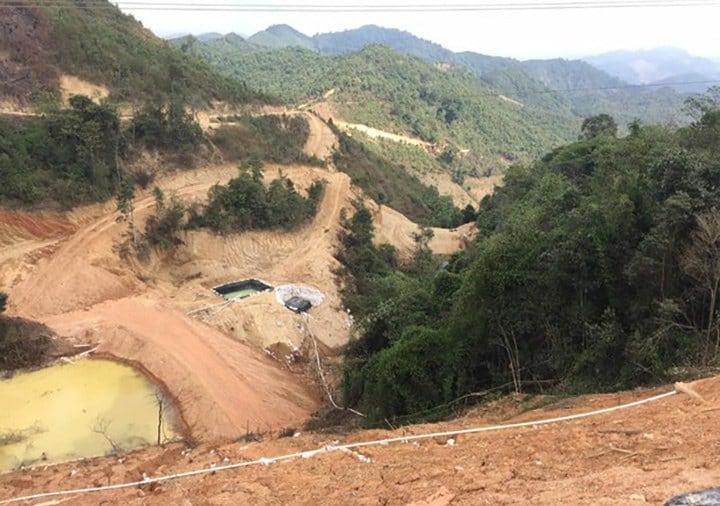
The Business & Human Rights Resource Centre contacted Beijing Platinum, Southern Rare Earth and China Rare Earth Group following the 2024 pollution incident. None provided a response to its request for comment.
The companies had previously promised compensation for affected communities and construction of a rockfill dam to prevent future leakage. Villagers continued to question the effectiveness of the cleanup, and details of the promised prevention measures were not publicly disclosed.
February 2024: Cyanide and heavy metals enter the rivers
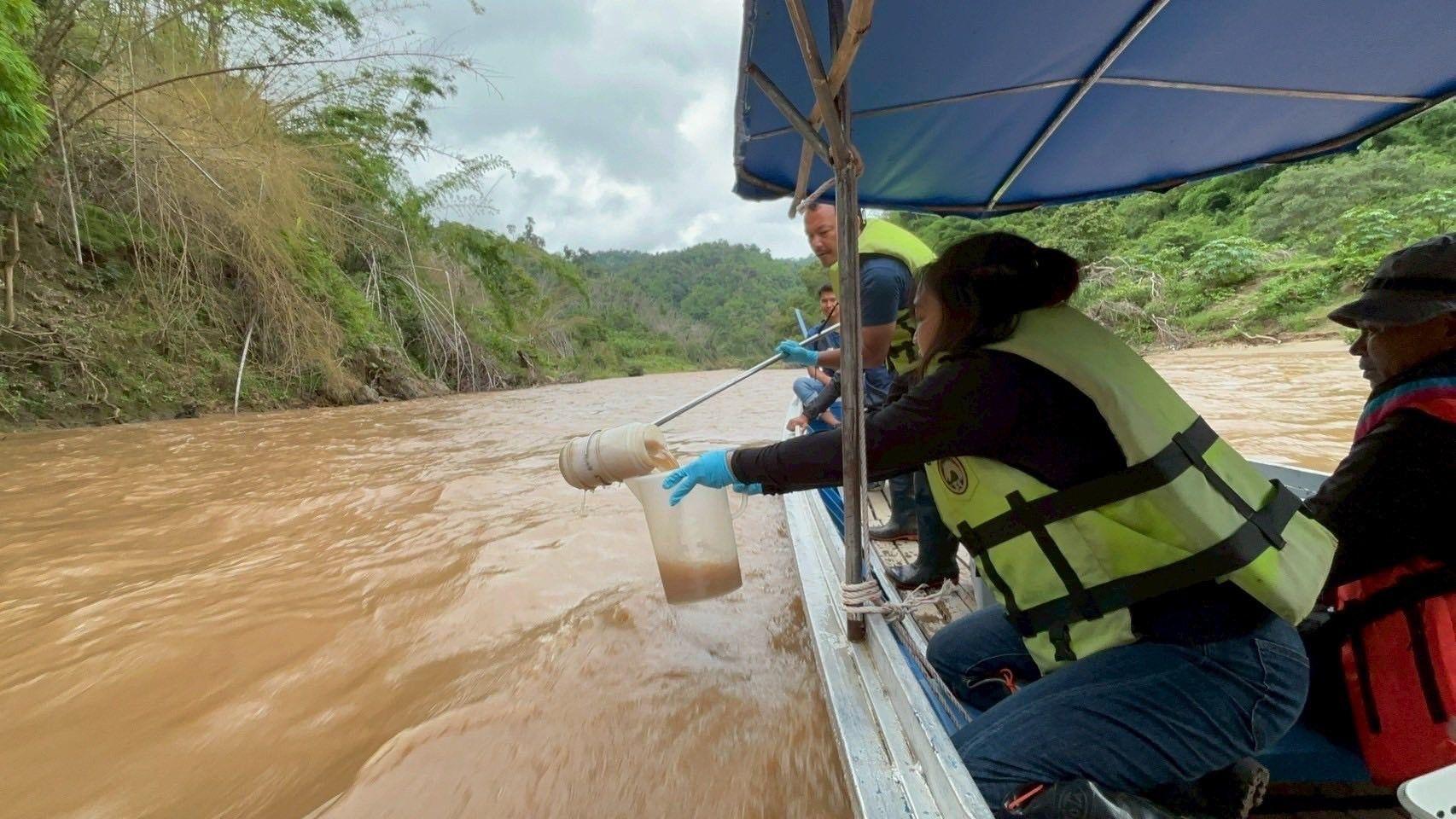
On February 22, 2024, acidic wastewater associated with the operation entered local waterways.
The pollution pathway included the Taboun and Man streams and the downstream Vaen, Xam and Nam Sam river system.
Reported contaminants included:
- Arsenic
- Lead
- Copper
- Zinc
- Iron
- Cyanide
The incident caused fish mortality, reduced the availability of irrigation water and raised concerns about livestock and human exposure.
Reports from affected communities identified 36 downstream villages. This is a considerably larger geographical impact than the immediate surroundings of the mine.
Estimating the affected area
There is no published, scientifically verified map showing the complete contamination boundary. However, the 2026 scientific study provides a map of the mine, connected rivers and 12 downstream monitoring stations.
Using the map’s scale and the distribution of the monitoring points, a reasonable estimate is approximately 80–120 kilometres of connected river corridor between the source area and the lower monitoring locations. This includes several connected streams and river reaches, rather than a single continuous stretch of one river.
Using a one-to-two-kilometre-wide riparian corridor, including both banks, produces a rough exposure envelope of:
80–240 square kilometres.
This is an estimated geographical area at risk, not a measured area of contaminated land. Pollution would be concentrated around particular reaches, sediments, irrigation intakes and village water-use areas rather than distributed uniformly across that entire envelope.
There is another important geographical distinction: the Nam Xam system flows east into Vietnam. It does not flow into the Mekong mainstream. The incident therefore raises a Laos–Vietnam transboundary pollution concern.
The wider reported mining project covers approximately 198 square kilometres, although the scientific paper identifies a much smaller 500-hectare pilot concession. The project area should not be confused with the actual disturbed or contaminated footprint.
The scientific measurements
A study published on June 3, 2026, examined water at 12 monitoring locations between February and April 2024.
The authors reported the following mean concentrations:
| Contaminant | Reported mean |
|---|---|
| Arsenic | 30.29 mg/L |
| Lead | 10.38 mg/L |
| Copper | 14.97 mg/L |
| Free cyanide | 0.51 mg/L |
| Manganese | 3.82 mg/L |
| Iron | 1.46 mg/L |
The reported arsenic and lead concentrations were thousands of times higher than the drinking-water guideline values used in the paper.
These are extraordinary results. The authors used laboratory quality-control procedures, but the study is a screening-level assessment with only 12 downstream stations. Its own limitations section notes that sediment and soil sampling was spatially limited, and contamination downstream in Vietnam was inferred rather than directly measured.
Independent repeat testing is essential before extrapolating these concentrations across the entire river system.
The suspension order and the subsequent operation
The environmental incident was followed by a Ministry of Energy and Mines suspension notice dated March 6, 2024, ordering mining to stop until water quality improved.
However, in April, affected villagers reported that mining activities continued despite the order. Reports later that year again described operations continuing while communities remained concerned about contamination and the lack of transparent cleanup information.
The distinction matters: the allegation of continued operation comes from community reporting, not a published criminal judgment against the company.
There was also a serious question about the project’s legal status.
November 2026: A further reservoir failure
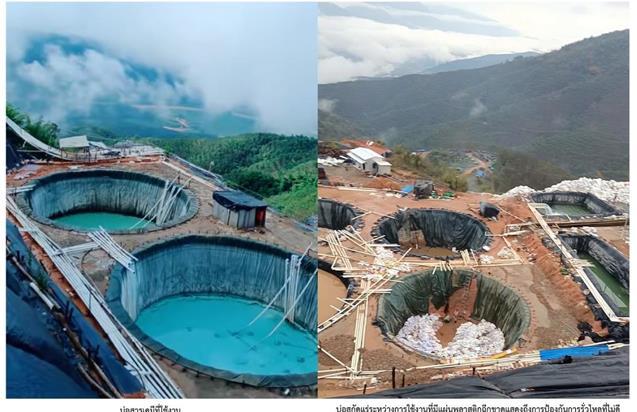
On November 1, 2026, several drainage ponds at the operation overflowed. More than 1,000 cubic metres of muddy water were reported to have entered the Nam Vaen River, which flows into the Nam Xam and then across the Vietnamese border.
Radio Free Asia reported that approximately 18 villages depend on these waterways for agriculture and other daily activities. Residents reported dead fish and livestock, although these reports had not all been independently verified.
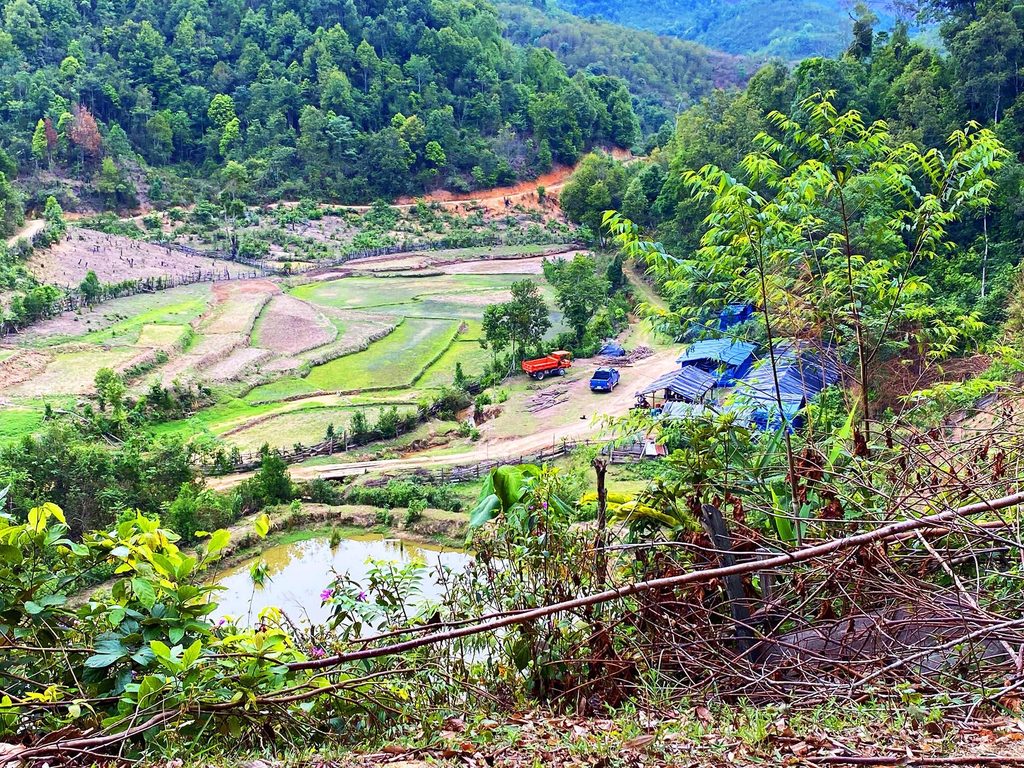
The company and local authorities said the water was safe, while villagers continued to express concerns.
There is an important distinction between the events:
- The 2024 incident involved documented reports of cyanide and dissolved heavy-metal contamination.
- The November 2026 incident involved an overflowing reservoir and muddy-water discharge. The chemical composition had not been independently established in the reporting available by November 24.
Radio Free Asia counted three spill events associated with the operation: February 2024, April 2026 and November 2026. The Lao National Assembly described November’s event as the second reservoir breach at the project.
The National Assembly intervenes
On November 13, 2026, the National Assembly Standing Committee ordered operations suspended until further notice. Its November 17 public notification outlined a much broader investigation.
The directives include:
- Review of the mining concession, reportedly expired in January 2025, and the legality of any subsequent extensions.
- Investigation of the reservoir failure.
- Scientific testing of water, soil, sediment and aquatic life.
- Identification of affected households and assessment of compensation.
- A comprehensive environmental remediation plan.
- Certified structural safety assessments and improved wastewater containment.
- Three to twelve months of environmental monitoring after remediation.
The operation cannot resume until legal and technical requirements are met and formal government approval is granted.
The concession expiry is still a matter requiring investigation; it should not yet be represented as a proven finding of illegal operation.
Laos National Assembly notification, published by KPL, November 17, 2026
Why this constitutes serious environmental delinquency
Taken together, the documented events raise questions that go far beyond an isolated industrial accident.
Mining reportedly commenced before all required environmental and technical assessments were completed. A suspension order was followed by community reports of continued operation. The company promised compensation and new containment infrastructure, but affected residents continued to question the lack of transparency. Further reservoir incidents then occurred in 2026.
There is no evidence that these releases were deliberately carried out to poison waterways. The more important issue is whether the operator and its corporate owners repeatedly failed to establish and maintain the environmental safeguards necessary for this type of chemical-intensive extraction.
That is a serious pattern of corporate environmental delinquency, regardless of whether deliberate pollution can be demonstrated.
2. A second Chinese corporate network: Chifeng Gold, Xiamen Tungsten and Myanmar
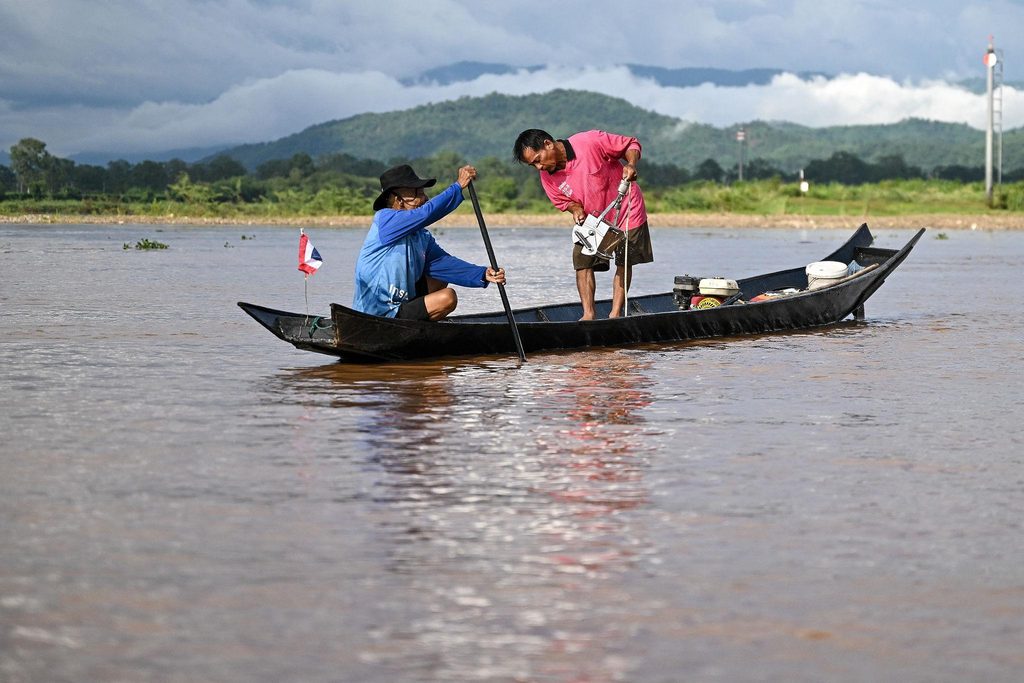
The Laos investigation also reveals another corporate network connected to rare-earth operations in the region.
This is a separate Chinese corporate structure, not a subsidiary of China Rare Earth Group.
A United Nations Special Procedures communication dated April 21, 2026, identified the following relationship:
- Xiamen Tungsten Corporation: Chinese state-backed rare-earth company.
- Chifeng Gold: major Chinese private gold producer.
- Shanghai Chijin Xiawu Metal Resources: joint venture established in September 2022 by Xiamen Tungsten and Chifeng Gold.
- China Investment Mining Company: reportedly operating rare-earth mines in Myanmar, 90% owned by Shanghai Chijin Xiawu.
The UN communication was sent to both Xiamen Tungsten and Chifeng Gold concerning alleged transboundary environmental damage associated with mining in Myanmar.
The letter explicitly stated that it did not prejudge the accuracy of the allegations. It is an official human-rights communication raising concerns and requesting accountability, not a court ruling establishing the companies’ liability.
The connection to Laos
Chifeng Gold has another significant mining operation in Laos.
It owns 90% of Lane Xang Minerals Limited Company (LXML), the operator of the Sepon gold and copper mine in Savannakhet Province. The Lao government holds the remaining 10%.
The Sepon mine has operated since 2003 and has produced more than 1.1 million tonnes of copper cathode and 1.5 million ounces of gold.
Local villagers have previously alleged increased forest clearing and river contamination following Chifeng’s acquisition of Sepon in 2018. These are community allegations rather than a quantified, independently confirmed pollution incident.
This gives Chifeng two distinct corporate connections to the wider investigation: a major operating mine in Laos and a joint venture whose subsidiary is reportedly operating rare-earth mines in Myanmar.
It does not establish that the Sepon operation and the Myanmar mines share the same environmental failures.
Sources: UN Special Procedures communication, April 21, 2026 | LXML – Company ownership and Sepon operations | Radio Free Asia – Community allegations concerning Sepon
3. Myanmar: More than 590 rare-earth mining sites
The Laos incidents are part of a much larger regional mining expansion.
A September 2026 report from the United Nations High Commissioner for Human Rights identified more than 590 rare-earth mining sites in Myanmar by May 31, 2026, compared with 215 before the 2021 military coup.
Shan State alone increased from 12 identified sites before the coup to 85 afterward.
The report described an increasingly opaque corporate environment involving foreign companies, subsidiaries, armed groups and other actors. It also documented the use of mining revenues by armed organizations controlling some of the mining areas.
Myanmar exported approximately US$620 million worth of rare-earth minerals to China in 2025. The value of trade flows had reached approximately US$1.4 billion in 2023.
The distinction between mines and corporate ownership is important: satellite imagery can identify mining sites, but it cannot establish the owner of every operation. The UN report says foreign entities are frequently involved through subsidiaries and other arrangements.
United Nations – Situation of human rights in Myanmar, September 2026
The Kok, Sai and Mekong river systems
In northern Myanmar, mining operations in Shan State have become a major concern for Thailand.
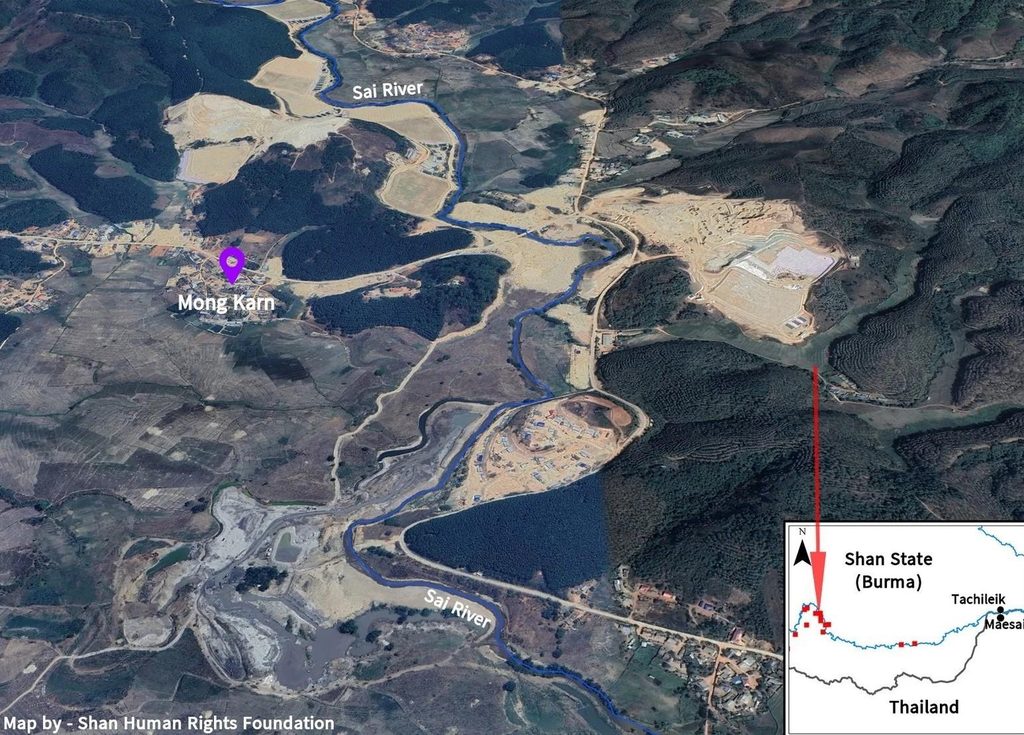
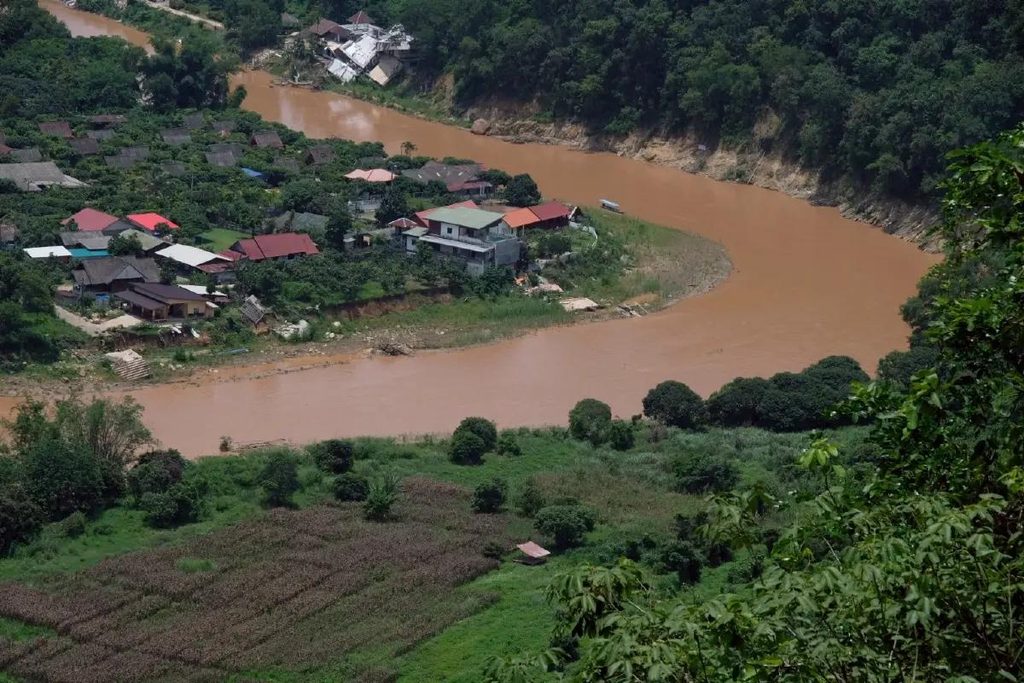
The Kok River flows from Myanmar into northern Thailand, through Chiang Mai and Chiang Rai provinces, before joining the Mekong. The Sai and Ruak rivers are also affected by upstream mining concerns.
The Stimson Center used satellite imagery to identify:
- Three active rare-earth mines upstream of the Kok River.
- At least two additional sites potentially under development.
- One active rare-earth mine in the Sai River headwaters.
- At least nine active gold mines along the Sai system, with five more in development.
The Nam Lwe River is particularly concerning. This is a 200-kilometre tributary of the Mekong, entering the mainstream approximately 150 kilometres upstream from Chiang Rai. Satellite analysis identified 31 rare-earth mines in Wa State and 26 more farther downstream in the National Democratic Alliance Army-controlled area.
The important point is that several mining operations are distributed throughout the same river basin. Contamination cannot necessarily be attributed to a single mine.
Stimson Center – Toxic Rare Earth Mining is Ruining Mekong Tributaries in the Golden Triangle
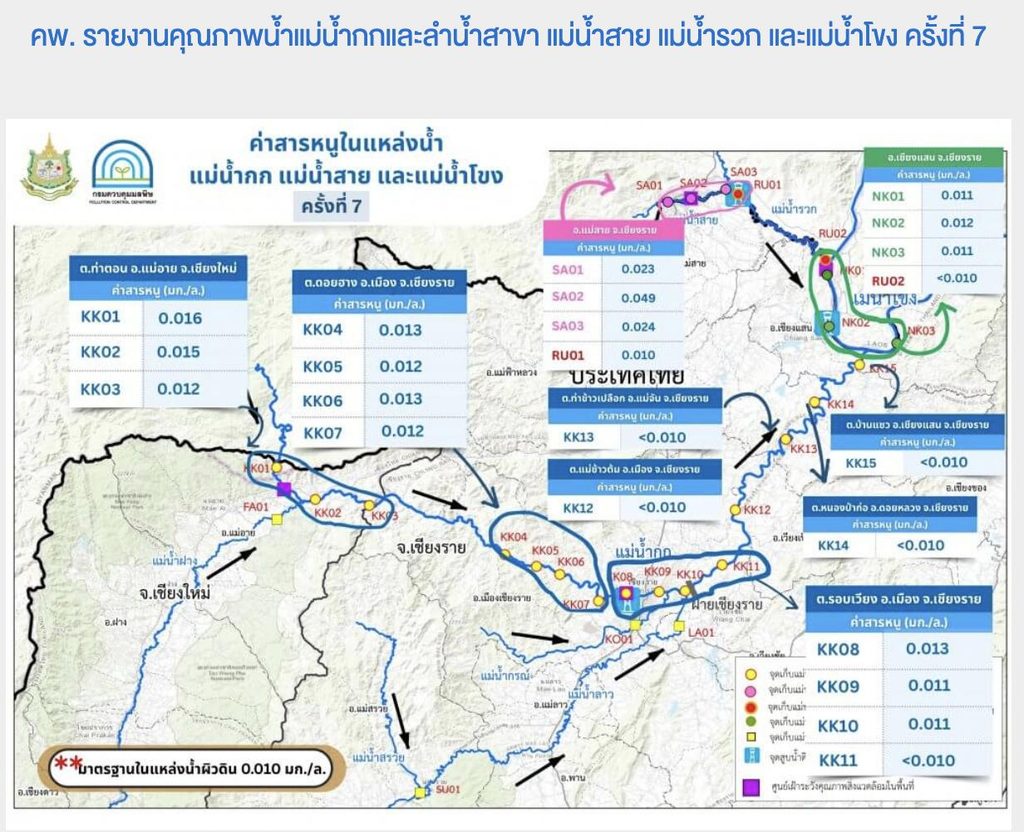
Thailand’s measured contamination
Thai authorities carried out 12 rounds of water testing and seven rounds of sediment testing between March and September 2025.
Reported contaminants included:
- Arsenic
- Lead
- Mercury
- Manganese
The UN Special Procedures communication reported that concentrations exceeded national standards and that environmental DNA testing in July 2025 identified chemical and biological markers associated with upstream mining.
The full extent of sediment contamination remained unknown, particularly because seasonal flooding can move contaminated mud and sediment further downstream.
More than one million residents in Chiang Mai and Chiang Rai were identified as potentially affected by the wider pollution crisis. This does not mean that every resident was directly exposed to contaminated water.
Thailand’s Pollution Control Department estimated annual economic losses of up to 1.3 billion baht from effects on farming, fishing and tourism.
UN communication on transboundary contamination
4. Other Chinese-linked mining pollution cases around the world
The Laos–Myanmar investigation is not an isolated example. Earlier cases provide a longer record of serious pollution incidents, including several where company responsibility was established by courts or regulators.
China, 2010: Zijin Mining and the Ting River
Company: Zijin Mining Group
Location: Fujian Province, China
Date: July 2010
One of the clearest examples of documented corporate negligence occurred at Zijin Mining’s Zijinshan copper operation.
The Chinese Supreme People’s Court described how leakage problems had existed since October 2006. In September 2009, environmental authorities had required the company to carry out a thorough repair, but the measures were inadequate.
On July 3, 2010, a damaged liner in a wastewater pond allowed approximately 9,176 cubic metres of acidic copper wastewater to escape through an unauthorized connection into the Ting River.
On July 16, a second emergency wastewater reservoir leaked another 500 cubic metres.
The water contained copper, zinc, iron, cadmium, lead and arsenic.
The consequences were substantial:
- Approximately 1,850 tonnes of farmed fish died.
- Local water supply facilities were temporarily shut down.
- The government released more than 15,000 tonnes of caged fish to prevent further losses from possible contamination.
The company was fined RMB 30 million. Several responsible managers received prison sentences of three to three and a half years.
This case is particularly relevant because the court documented that the company had known about the containment problem for years and had failed to adequately address it after regulatory intervention.
Chinese Supreme People’s Court – Zijin Mining environmental pollution case
Serbia, 2021: Another Zijin operation contaminates the Mali Pek River
Company: Zijin Copper, part of Zijin Mining
Location: Majdanpek, Serbia
Date: March 2021
A separate Zijin operation in Serbia was associated with heavy-metal pollution in the Mali Pek River.
Independent sampling commissioned by the environmental organization RERI found:
| Contaminant | Concentration relative to legal limit |
|---|---|
| Copper in sediment | 17 times |
| Arsenic in sediment | 3.5 times |
| Lead in sediment | Nearly 2 times |
| Iron in downstream water | 5 times |
| Manganese in downstream water | 2 times |
The river was classified as Class V water, unsuitable for any use under the Serbian classification system.
Following a criminal complaint, prosecutors deferred criminal prosecution against the company and its responsible person in exchange for a payment of one million Serbian dinars for humanitarian or public purposes.
This was not a criminal conviction, but it was a formal prosecutorial response to documented pollution.
The two Zijin cases are particularly interesting when viewed together: one in China involving years of unresolved containment problems, and another in Serbia involving heavy-metal contamination and a prosecution agreement.
RERI – Zijin Copper and Mali Pek River pollution
Peru, 2017: Chinalco and the Rumichaca River
Company: Minera Chinalco Perú
Location: Junín, Peru
Date: August 17, 2017
A mineral-processing slurry overflow at Chinalco’s Toromocho operation reached the Rumichaca River following a power disturbance and a partially blocked drainage structure.
Peru’s environmental regulator, OEFA, initially identified approximately 200 metres of affected river and 300 square metres of affected soil.
The subsequent regulatory process produced an important finding: Chinalco was held administratively responsible for failing to implement the necessary preventive and control measures.
The regulator’s corrective measures required sediment cleanup along a four-kilometre section of the Rumichaca River.
The four kilometres represent the required cleanup reach, not a measurement proving that the entire distance was equally contaminated.
The case also involved the handling and final disposal of hazardous waste generated by the cleanup.
OEFA – Initial environmental assessment | OEFA – Administrative ruling and corrective measures
Zambia, 2025: Sino-Metals and the Kafue River watershed
Company: Sino-Metals Leach Zambia
Parent: China Nonferrous Metal Mining Group (CNMC)
Location: Copperbelt Province
Date: February 18, 2025
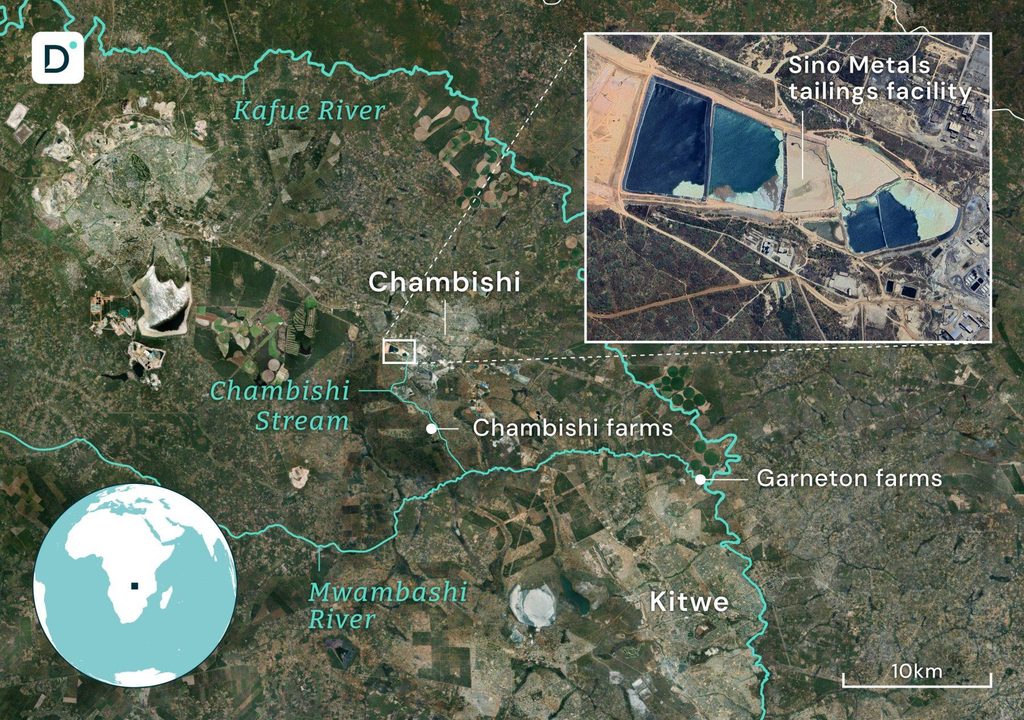
A failure at Tailings Dam No. 15 released acidic copper-processing waste into the Chambishi Stream, Mwambashi River and Kafue River system.
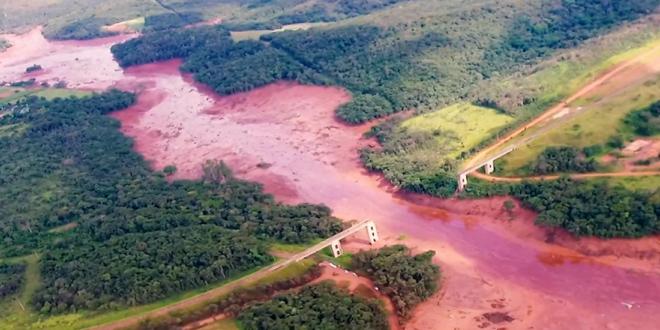
Initial reports described approximately 50,000 cubic metres of waste. The company later disputed the amount that actually escaped into the environment, and the precise discharge quantity remains contested.
Fish deaths were reported downstream, including reports of impacts approximately 100 kilometres from the original incident. Kitwe temporarily shut down its water supply.
The Zambian Environmental Management Agency later conducted a major environmental investigation:
- 512 surface-water sampling locations.
- 509 sediment samples.
- 1,188 soil samples.
- 44 shallow groundwater wells and one borehole.
- Ecological monitoring across 35 sites.
The assessment examined the watershed from Chambishi through Mwambashi and the Kafue River to Itezhi-Tezhi.
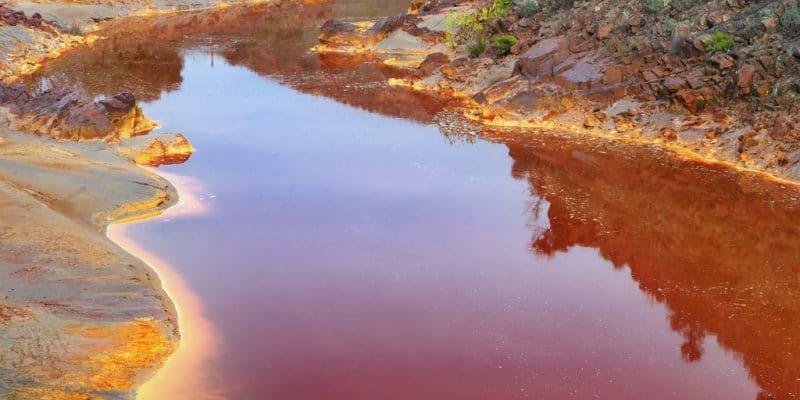
The fishery recovery estimates are particularly important. The assessment concluded that functional reproductive stability could return within three breeding seasons, assuming pollution containment and effective protection. Full recovery of fish age structure, genetic diversity and pre-incident yield potential could take up to five years.
This is a useful example of why an incident cannot be considered resolved simply because the water looks clear or the initial chemical concentrations fall.
ZEMA – Full Environmental and Social Incident Impact Assessment
Democratic Republic of Congo, 2024–2026: Copper and cobalt contamination
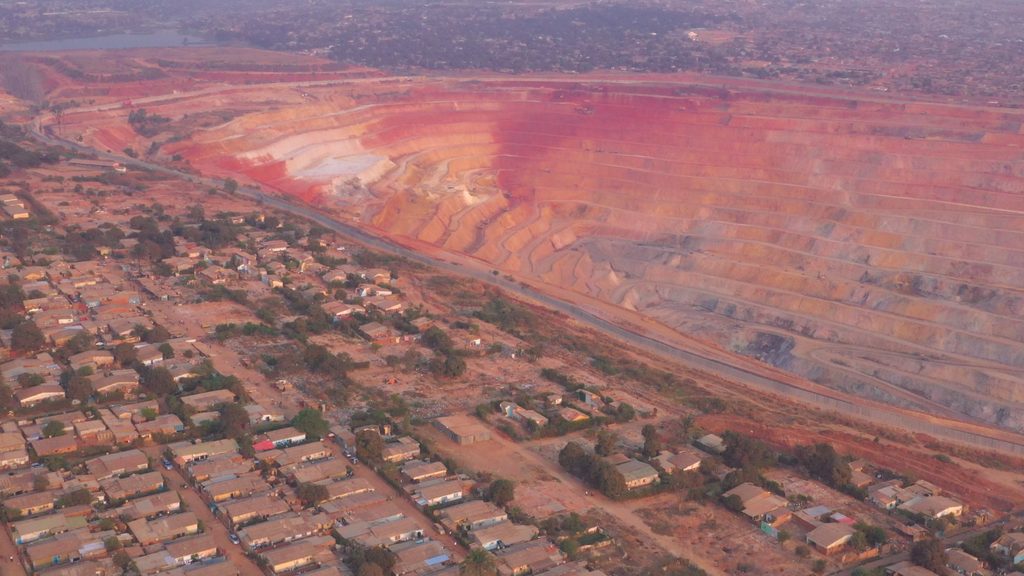
Company: Tenke Fungurume Mining, operated by CMOC Group (80%) and Gécamines (20%)
Location: Lualaba Province
Research conducted by RAID, AFREWATCH and Source International examined mining pollution in communities surrounding large copper and cobalt operations.
Four scientific studies covered eight communities in the Kolwezi and Fungurume region. They found elevated levels of copper, cobalt, manganese, arsenic, lead and uranium in water, sediment and other environmental samples.
The Kelangile River and Lake Kando recorded metal concentrations exceeding international environmental standards.
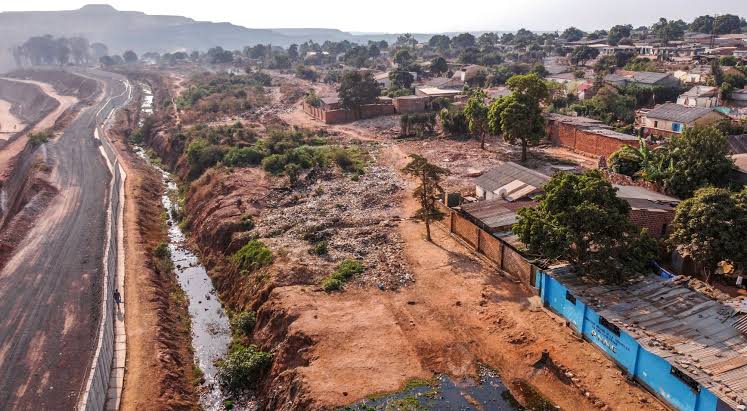
A community well approximately 200 metres from a tailings storage facility was found to be around 100 times more acidic than recommended, with manganese and aluminium concentrations reaching up to 14 times relevant health-based limits.
The studies included operations run by CMOC’s Tenke Fungurume Mining and Zijin’s COMMUS, alongside a separate Glencore operation.
These findings concern chronic pollution around several mining operations, rather than one identifiable discharge event. TFM submitted a detailed response disputing aspects of the allegations and stated that its own monitoring showed compliance with applicable standards.
Source International – Investigation of mining pollution in the DRC | Business & Human Rights Resource Centre – Company responses and findings
Indonesia, 2025: Nickel tailings reach the Bahodopi River
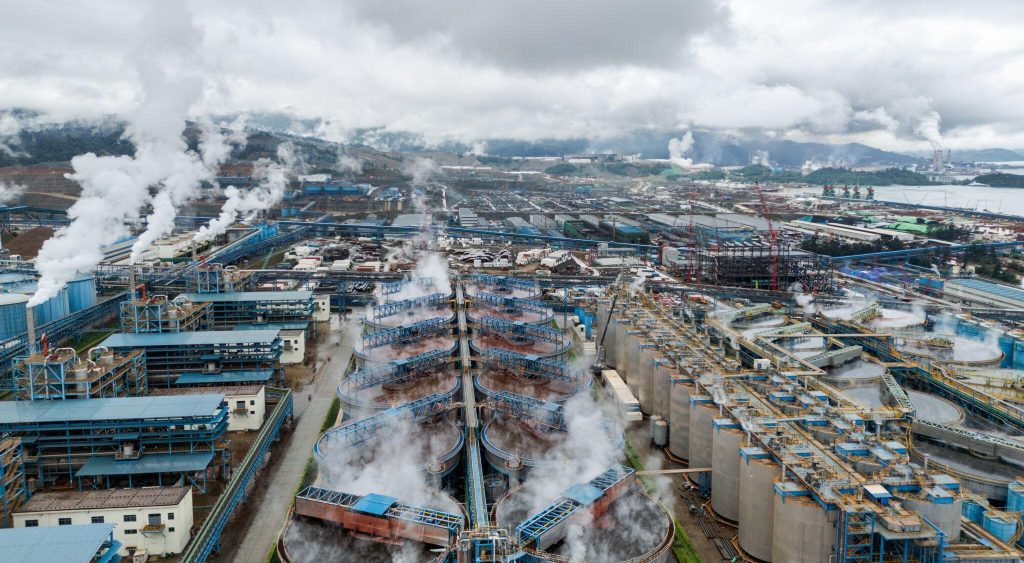
Company: PT Huayue Nickel Cobalt
Location: Morowali, Sulawesi
Date: March 16, 2025
A filtered tailings facility at the Morowali nickel-processing complex failed through liquefaction during heavy rainfall.
An Earthworks investigation reported that tailings travelled approximately two kilometres from the facility to the Bahodopi River, continuing downstream toward the coast.
The material originated from high-pressure acid leaching (HPAL) processing, which produces large quantities of acidic, metal-rich waste.
The investigation reported pollution affecting the Bahodopi River and Labota village, with 341 families and workers identified as being at risk.
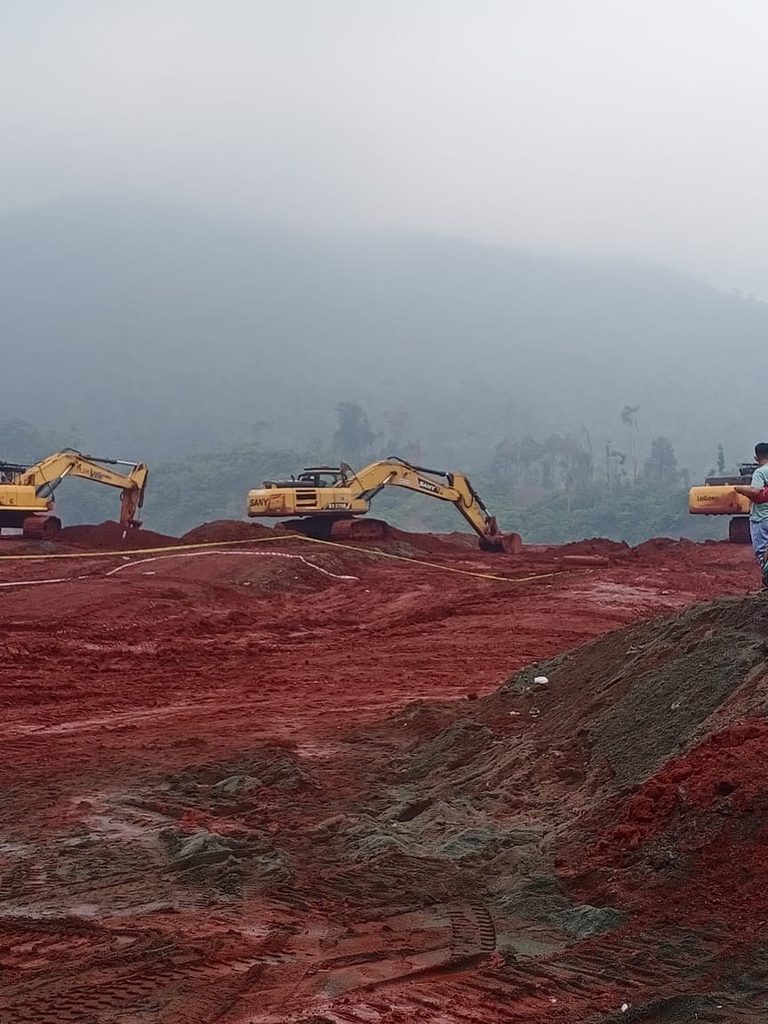
Five days later, a separate tailings facility operated by PT Qing Mei Bang experienced a landslide that killed three workers. This was a separate company and incident, although it occurred in the same industrial complex.
The available evidence does not establish a complete downstream contamination distance or long-term recovery period for the Huayue incident. The two-kilometre figure describes the reported route from the facility to the river, not the total length of the polluted waterway.
Earthworks – Filtered tailings failures in Indonesia | Business & Human Rights Resource Centre – Huayue incident
Papua New Guinea, 2019: Ramu NiCo’s toxic slurry spill
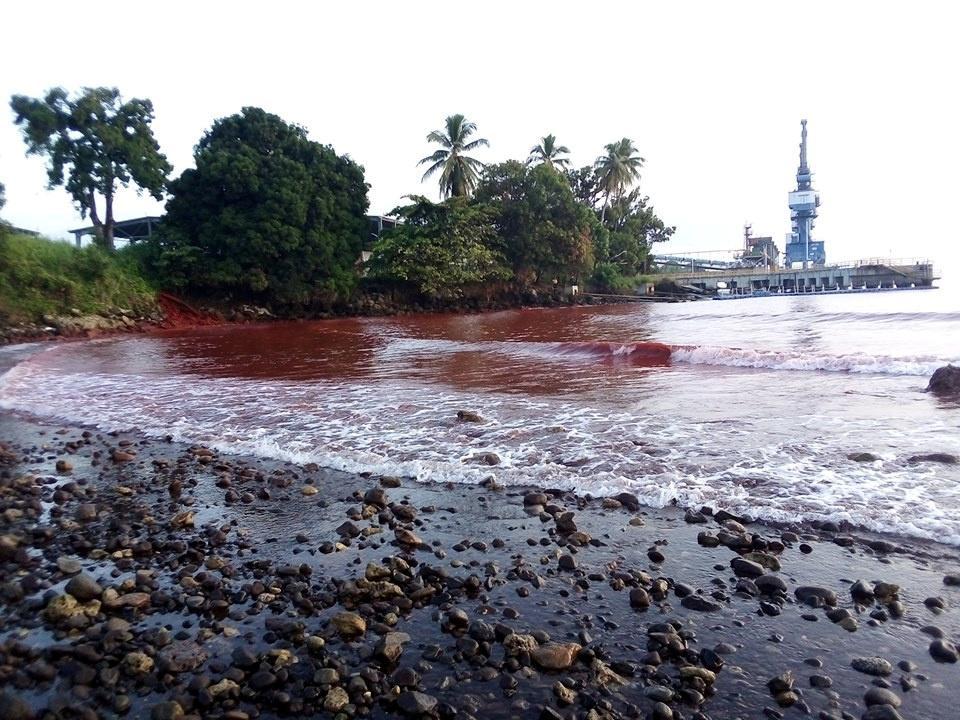
Company: Ramu NiCo Management, majority-owned by China’s Metallurgical Corporation of China (MCC)
Location: Basamuk Bay, Madang Province
Date: August 24, 2019
An electrical fault caused a pump failure at a nickel-processing plant, resulting in an overflow of approximately 200,000 litres of mineral-rich slurry.
Around 80,000 litres escaped into Basamuk Bay, turning seawater bright red and staining the shoreline.
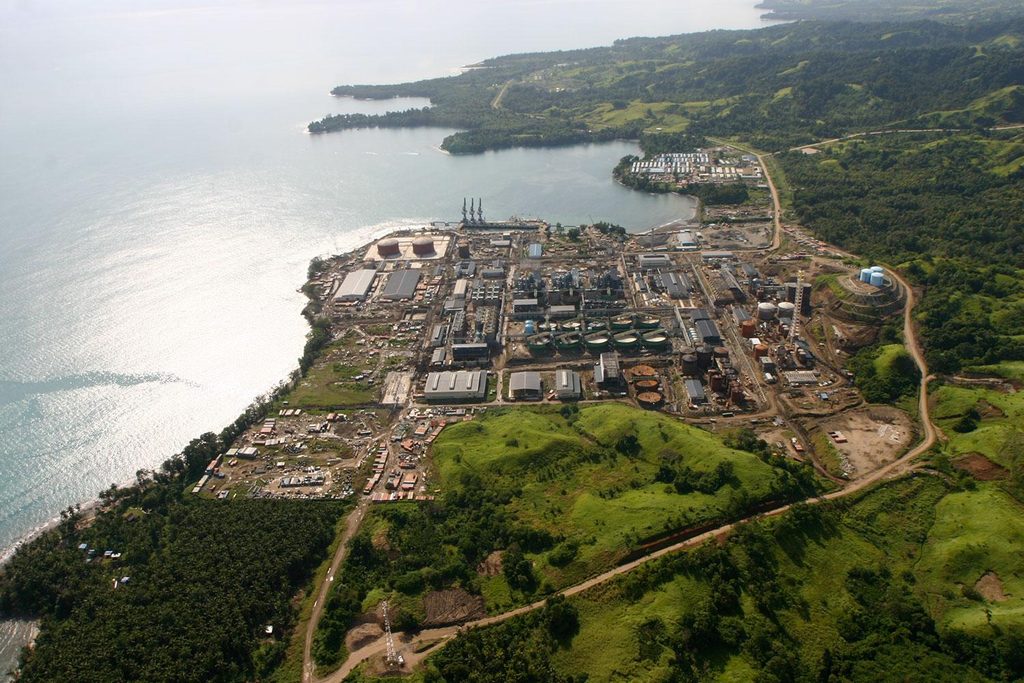
The slurry was described by mining authorities as highly acidic and rich in nickel and cobalt.
The visible discoloration disappeared within three days. However, authorities advised residents not to catch or eat fish from the bay for a further four to six weeks while possible heavy-metal contamination in the food chain was investigated.
The company disputed claims of lasting environmental damage, and government investigations produced conflicting assessments of the extent of marine contamination.
There is no reliable published measurement of the full marine area affected or the time required for complete ecological recovery.
ABC News – Chinese-owned Ramu Nickel plant spill | ABC – Subsequent government shutdown
5. How far can mining pollution realistically travel?
One of the most important questions is whether contamination remains close to the original mine or can travel far enough to affect distant communities.
The answer depends on the chemical composition, river flow, sediment characteristics, rainfall and water chemistry.
There are two major mechanisms of downstream contamination.
Dissolved contaminants: Metals dissolved in acidic water can travel downstream with the river flow. As water mixes with cleaner water, concentrations may decline. However, changes in acidity and chemical conditions can cause metals to precipitate or attach to suspended particles.
Sediment-bound contaminants: Metals attach to fine mineral particles, clay, organic matter and iron oxides. These particles can travel downstream, settle into riverbeds and floodplains, and become a long-term source of contamination.
This second mechanism is particularly important because it means pollution does not necessarily disappear when the initial water plume has passed.
A real example: Copper contamination travels 750 kilometres
A scientific study published in January 2026 examined copper and cobalt contamination in sediment along 750 kilometres of the Kafue River in Zambia.
The river has been exposed to nearly a century of copper mining.
Researchers found:
- Copper contamination traceable up to 750 kilometres downstream of the Copperbelt.
- Sediment deposits approximately 100–220 centimetres thick.
- Copper concentrations reaching 1.9% in some sediment samples.
- Average sediment accumulation rates of approximately 12–27 millimetres annually.
This is historical cumulative mining pollution, not the measured footprint of the 2025 Sino-Metals spill.
Nevertheless, it demonstrates that mining-derived metals can be transported hundreds of kilometres and deposited far from their original sources.
How long do these contaminants remain?
Metals do not biodegrade or disappear. They can change chemical form, dissolve, precipitate or become attached to sediments, but the metal itself remains in the environment.
| Contaminant | Long-term environmental behaviour |
|---|---|
| Arsenic | Can accumulate in sediment and soil; may become mobile again when chemical conditions change |
| Lead | Persistent in soil and sediment; can enter food chains through contaminated particles |
| Cadmium | Persistent and potentially mobile in acidic environments; can accumulate in crops and organisms |
| Copper | Accumulates in river sediment and can be toxic to aquatic organisms |
| Mercury | Can be transformed into methylmercury, which bioaccumulates in aquatic food chains |
| Cobalt and manganese | Can accumulate in sediment and become mobile under changing redox conditions |
| Cyanide | Free cyanide can biodegrade or volatilize; some metal-cyanide complexes can persist in soil and sediment |
| Sulfuric acid | The acidity can be neutralized, but associated metals may remain and continue to contaminate the environment |
Research on contaminated riverbank sediments has found that metals can be stored in floodplains for hundreds of years. Sediment buried far from the active channel can remain relatively stable, but material exposed to changing water levels, floods, dredging and chemical conditions can become mobile again.
A particularly important risk is the remobilization of previously deposited pollutants during seasonal floods. A river may appear to have recovered during low-water conditions, only for contaminated sediment to be washed back into the water system months or years later.
Cyanide is different from heavy metals
Cyanide deserves separate consideration. Free cyanide is generally not as environmentally persistent as arsenic, lead or copper. It can volatilize, biodegrade and undergo chemical transformation.
However, cyanide can form complexes with metals such as iron, copper and zinc. Some of these compounds are more persistent in sediments and can release cyanide under particular environmental conditions.
This means that an initial reduction in free cyanide concentration does not necessarily establish that every cyanide-related environmental risk has disappeared.
Government of Canada – Scientific assessment of cyanides and their environmental fate
6. Comparing the documented geographical and long-term impacts
The available evidence is uneven. Some incidents have detailed government investigations, while others rely on community reports or independent scientific studies.
The figures below distinguish confirmed measurements from geographic estimates and longer-term regional observations.
| Location / operation | Geographic extent | Long-term implications |
|---|---|---|
| Laos North 2, 2024 | Estimated 80–120 km connected river corridor; 80–240 km² at-risk riparian envelope | No established full recovery period; sediment and groundwater monitoring incomplete |
| Laos North 2, 2026 | 18 villages reliant on affected rivers; over 1,000 m³ muddy discharge reported | Chemical composition and recovery period unconfirmed |
| Myanmar–Thailand mining | Nam Lwe tributary 200 km long; several interconnected rivers affected | Heavy metals remain detectable in water and sediment in 2025–26 |
| Zijin, China, 2010 | Downstream Ting River contamination; complete length not established | Major fishery damage and formal criminal penalties |
| Zijin, Serbia, 2021 | Mali Pek River pollution; no verified length | Heavy metals in sediment and water above legal standards |
| Chinalco, Peru, 2017 | 200 m initially identified; 4 km sediment-cleanup requirement | Official administrative responsibility and corrective action |
| Zambia, 2025 | Chambishi–Mwambashi–Kafue system to Itezhi-Tezhi assessed | Fishery reproductive stability: 3 breeding seasons; full age structure recovery: up to 5 years |
| DRC, 2024–26 | Eight studied communities | Persistent contamination concerns in rivers, lakes, wells and sediments |
| Indonesia, 2025 | Approximately 2 km reported from tailings facility to Bahodopi River | Full downstream extent and recovery not established |
| Papua New Guinea, 2019 | Approximately 80,000 litres escaped into Basamuk Bay | Precautionary fish restrictions for 4–6 weeks; full ecological recovery unquantified |
7. The corporate accountability problem
The Laos North 2 case deserves particular attention because it combines several issues rarely documented together so clearly:
- A Chinese state-owned parent structure.
- A major chemical contamination incident in 2024.
- A government suspension order followed by reports of continued mining.
- Promises of compensation and containment improvements without sufficient public transparency.
- Further reservoir failures in 2026.
- A concession whose reported expiry date is now under formal review.
- A fresh suspension order requiring scientific investigation and remediation.
The other cases occurred in countries where corruption is high and reporting is dangerous. I suspect many cases go unnoticed and unreported. The stakes are high. We’ve only known about the Laos and Myanmar cases because Thailand observers have condemned spillover across the border. Thai relative political freedom allows denouncing of Chinese mining pollution.
Knowing China operates in every country in the world, what else is hidden under the surface? BYD even was caught using slave labor in Brazil, and Chinese gangs operate scam centers in Cambodia. There is no restraint to cutting corners to increase profits.
Chinese mining pollution is a question of whether companies can repeatedly externalize the environmental costs of extraction onto communities, waterways and neighbouring countries, while the minerals themselves enter international supply chains. It is also a point of reflection of our habits, our influence of marketing pushing us to consume newer products that perform better and seem cleaner – projecting an image of modernity and sometimes even protecting the environment, in the case of EVs. The reality is quite the opposite.
Where heavy metals become embedded in river sediments and agricultural land, the consequences can outlast the mine, its operators and the original investment by decades or even centuries.
Sources and further reading
Laos – China Rare Mineral Development Company North 2
- Radio Free Asia – Rare earth miner to compensate Lao villagers for polluting river water (May 20, 2024). Original reporting on the February 2024 discharge, cyanide and metal contamination, fish deaths and the 36 affected villages.
https://www.rfa.org/english/news/laos/rare-earth-mining-pollution-compensation-05202024144639.html - Business & Human Rights Resource Centre – Laos: Contamination fears continue after Chinese-Lao rare earth mine leak (October–November 2024). Particularly important for the corporate ownership chain, 198 km² project area, investment, reported continuation of mining and lack of response from the Chinese parent companies.
https://www.business-humanrights.org/en/latest-news/laos-contamination-fears-continue-after-chinese-lao-rare-earth-mine-leak-villagers-report-lack-of-project-information-incl-co-non-responses/ - Scientific paper – Riverine Ecosystem Contamination and Ecological Risk Assessment Following Cyanide Leakage from In Situ Rare Earth Mining in Northern Laos (2026). Twelve downstream monitoring locations and reported concentrations of arsenic, lead, copper and cyanide.
https://www.mdpi.com/2673-4834/7/3/96 - Business & Human Rights Resource Centre – Company responses and continuing environmental complaints (November 24, 2026). Updated record of the latest incident and Beijing Platinum’s lack of response.
https://www.business-humanrights.org/en/latest-news/beijing-platinum-world-technology-development-did-not-respond-to-concerns-on-ponds-breach-in-xamneua-district-in-nov-26/ - Laotian Times – Rare Earth Ponds Burst in Houaphanh (November 4, 2026). Initial reporting on the two ponds, river restrictions and the 1,000-plus cubic metres of muddy water reported by authorities.
https://laotiantimes.com/2026/11/04/rare-earth-ponds-burst-in-houaphanh-villages-halt-river-use-pending-inspections/ - Laotian Times – Heavy Rainfall Blamed for Rare Earth Reservoir Breach (November 6, 2026). Government account of the incident, the reported volume and pending laboratory testing.
https://laotiantimes.com/2026/11/06/heavy-rainfall-blamed-for-rare-earth-reservoir-breach-in-houaphanh - Radio Free Asia – Villagers in northern Laos are afraid to use river water after rare-earth pond spill (November 16, 2026). Details of the reported animal deaths, affected villages, company explanation and third reported incident.
https://kh.rfa.org/english/laos/2026/11/16/laos-water-rare-earth-contamination-china/ - Laotian Times – Houaphanh Suspends Rare Earth Mine After Two Ponds Breach (November 17, 2026). Reports the provincial suspension notice and conditions for resuming operations.
https://laotiantimes.com/2026/11/17/houaphanh-suspends-rare-earth-mine-after-two-ponds-breach/ - KPL – National Assembly Orders Suspension of Rare Earth Operations Following Dam Breach in Houaphanh (November 17, 2026). Official account of the National Assembly directives, concession review, environmental investigation, compensation and remediation requirements.
https://kpl.gov.la/asean2024/En/detail.aspx?id=111801
Myanmar, Thailand and Chinese rare-earth corporate networks
- United Nations Special Procedures – Communication AL CHN 3/2026 (April 21, 2026). Official communication identifying China Investment Mining Company and its reported ownership connection to Shanghai Chijin Xiawu, Xiamen Tungsten and Chifeng Gold. It also documents concerns about transboundary contamination in Thailand. Allegations are not treated as judicial findings.
https://spcommreports.ohchr.org/TMResultsBase/DownLoadPublicCommunicationFile?gId=30830 - United Nations High Commissioner for Human Rights – Situation of human rights in Myanmar, A/HRC/63/21 (September 2026). Documents the increase from 215 to more than 590 rare-earth mining sites and reports US$620 million in Myanmar rare-earth exports to China in 2025.
https://bangkok.ohchr.org/sites/default/files/documents/2026-08/a_hrc_63_21-hc-report-myanmar-final.pdf - Stimson Center – Toxic Rare Earth Mining is Ruining Mekong Tributaries in the Golden Triangle (September 22, 2025). Satellite mapping of mining operations, including 31 rare-earth mines in Wa State and 26 in NDAA territory, as well as mines affecting the Kok, Sai and Mekong tributaries.
https://www.stimson.org/2025/toxic-rare-earth-mining-is-ruining-mekong-tributaries-in-the-golden-triangle/ - Mekong River Commission – MRC Addresses Kok River Water Quality Concerns (July 3, 2025). Independent regional testing found arsenic above the standard at four of five sampling locations in the relevant Mekong monitoring area.
https://www.mrcmekong.org/media-releases/pr_07042025 - Mekong River Commission – MRC Steps Up Regional Action as Monitoring Highlights Localised Arsenic Concerns (October 20, 2025). Further monitoring of arsenic contamination around the Kok and Mekong confluences.
https://www.mrcmekong.org/media-releases/mrc-updates-on-response-to-arsenic-contamination-in-the-mekong-river/2025/ - Mekong River Commission – MRC Steps Up Regional Action as Monitoring Highlights Localised Arsenic Concerns (April 2026). Updates on water and sediment contamination in the Kok, Sai, Ruak and Mekong rivers.
https://kpl.gov.la/detail.aspx?id=99972 - Thailand Pollution Control Department – Monitoring dataset, March 2025–August 2026. Station-level measurements of arsenic, lead, manganese and turbidity in northern Thailand.
https://doi.org/10.5281/zenodo.23330747 - Scientific Reports – Evaluation of heavy metal contamination and carcinogenic risks in the tropical catchment: evidence from the Kok River Basin, Thailand (2026). Further scientific research on water quality, sediment contamination and potential exposure risks.
https://www.nature.com/articles/s41598-026-79040-w
Other Chinese mining incidents
- Supreme People’s Court of China – Zijin Mining environmental pollution case (June 18, 2013). Official court account of the Ting River disaster, 9,176 m³ of leaked acidic wastewater, a second 500 m³ leak, fish mortality and criminal penalties against the company and responsible managers.
https://www.court.gov.cn/zixun/xiangqing/7843.html - RERI – Zijin Copper and Mali Pek River pollution (May 17, 2022). Serbian environmental organization’s account of the 2021 incident and the prosecutorial settlement requiring a payment of one million dinars.
https://reri.org.rs/en/based-on-the-criminal-complaint-submitted-by-reri-zijin-copper-and-the-director-of-the-company-were-fined-one-million-dinars-for-the-pollution-of-the-river-mali-pek/ - OEFA – Mineral spill into the Rumichaca River, Peru (August 21, 2017). Official environmental regulator’s initial measurements: approximately 200 metres of river and 300 m² of soil.
https://www.gob.pe/institucion/oefa/noticias/20404-oefa-supervisa-derrame-de-mineral-al-rio-rumichaca-en-junin - OEFA – Administrative decision concerning Minera Chinalco (October 2020). Regulatory findings concerning mineral pulp that escaped the Toromocho plant’s containment structures and reached the Rumichaca River.
https://cdn.www.gob.pe/uploads/document/file/1482919/Res%20209-2020-OEFA-TFA-SE.pdf.pdf - Source International, RAID and AFREWATCH – Investigating Mining Pollution in the Democratic Republic of Congo (June 2026). Four independent scientific studies covering air, water and sediment contamination around major copper and cobalt mining operations, including CMOC and Zijin operations. Includes the companies’ responses.
https://source-international.org/featured-investigating-mining-pollution-in-the-democratic-republic-of-congo - Earthworks – Multiple Dams Fail at Indonesian Nickel-Mining Facilities (March 28, 2025). Reporting on the PT Huayue Nickel Cobalt tailings incident and the separate PT Qing Mei Bang facility collapse.
https://earthworks.org/blog/multiple-dams-fail-at-indonesian-nickel-mining-facilities/ - Earthworks – Filtered Tailings in Indonesia: The Catastrophic Failure of a Disruptive Technology (2026). Technical investigation, satellite imagery and mapped tailings pathways toward the Bahodopi River.
https://earthworks.org/wp-content/uploads/2026/03/filtered_tailings_in_indonesia.pdf - ABC News – Chinese-owned Ramu Nickel plant spills 200,000 litres of toxic slurry into the sea (August 30, 2019). Original reporting on the Basamuk Bay incident, company response and reported pump failure.
https://www.abc.net.au/news/2019-08-30/chinese-owned-mine-in-png-spills-200000-litres-of-toxic-slurry/11464108 - ABC News – Chinese-owned nickel plant in PNG shut down after toxic slurry spill (October 25, 2019). Follow-up covering the 80,000 litres that escaped into the bay and regulatory findings concerning containment, operator competency and equipment maintenance.
https://www.abc.net.au/news/2019-10-25/chinese-owned-nickel-plant-in-png-shut-down-after-toxic-spill/11636086
Laos sulfuric acid tanker incident
- Radio Free Asia – Flipped truck spills sulfuric acid into Lao tributary of Mekong River (April 5, 2024). Identifies the destination as Kuang Jian Sin Sengsavang Rare Earth Development Company and documents community reports of fish deaths and water restrictions.
https://www.rfa.org/english/news/laos/spill-04052024133642.html - Mekong River Commission – Effective Response to Chemical Spill in Luang Prabang Mitigates Environmental Impact (April 8, 2024). Official sampling and response assessment. Reports that containment prevented the spill from affecting Nam Khan and Mekong River water quality.
https://www.mrcmekong.org/media-releases/effective-response-to-chemical-spill-in-luang-prabang-mitigates-environmental-impact/2024/
Scientific references: Downstream transport and persistence
- Journal of Geochemical Exploration – Trends of Cu and Co Contaminated Sediment Dispersal Along the Kafue River (January 2026). Research documenting copper transport in sediment over more than 750 kilometres. This concerns historical cumulative mining pollution, not the measured reach of the 2025 Sino-Metals spill.
https://www.sciencedirect.com/science/article/abs/pii/S0375674225002328 - Minerals – Environmental Risk of Metal Mining Contaminated River Bank Sediment at Redox-Transitional Zones (2014). Scientific review explaining how metals can be transported hundreds of kilometres, stored in floodplain sediments for centuries and subsequently remobilized by floods, changes in water chemistry and human activity.
https://www.mdpi.com/2075-163X/4/1/52 - Environment and Climate Change Canada – Screening Assessment: Cyanides (February 2023). Government scientific assessment distinguishing free cyanide, which can degrade or transform in water, from persistent cyanide complexes such as ferrocyanides in soils and sediments.
https://www.canada.ca/en/environment-climate-change/services/evaluating-existing-substances/final-screening-assessment-cyanides.html - Zambia Environmental Management Agency – Environmental and Social Incident Impact Assessment, Sino-Metals Leach Zambia (December 18, 2025; published 2026). Primary government investigation with 512 surface-water sampling points, 509 sediment samples, 1,188 soil samples, mapped contamination, ecological assessments and fishery recovery projections.
https://www.zema.org.zm/wp-content/uploads/2026/01/ESIIA-Report-for-the-Tailings-Dam-failure-at-Sino-Metals_Rev-2_05.01.26.pdf