


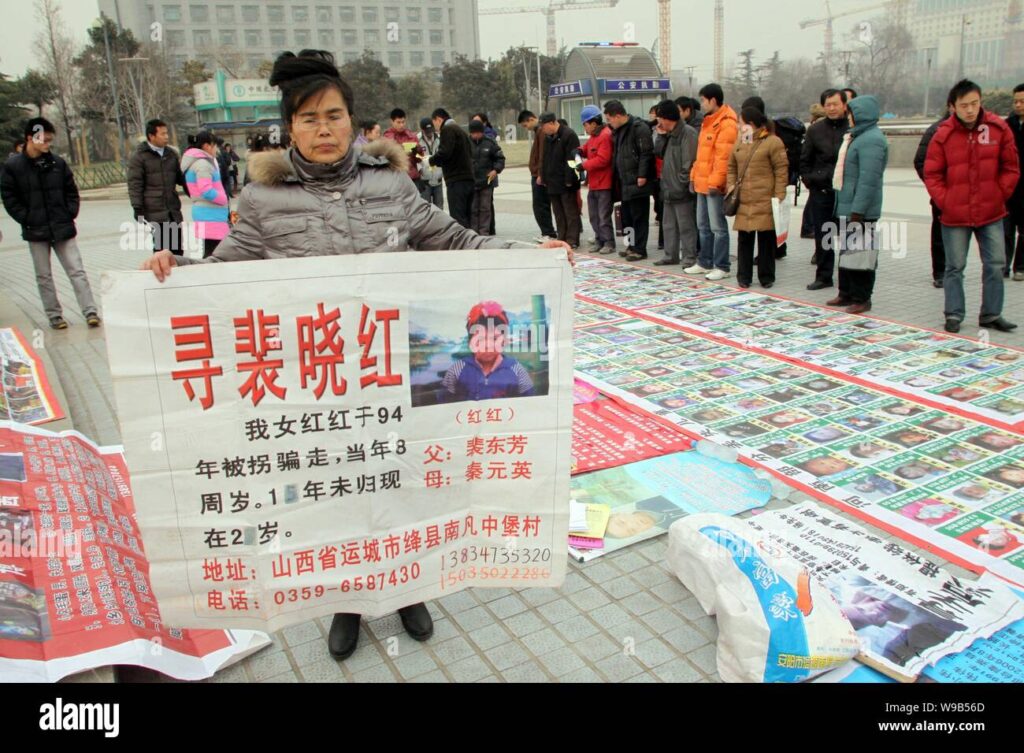
Every year, hundreds of thousands of children disappear in China—a staggering figure that remains largely overlooked by international media. These disappearances encompass abductions, trafficking, forced adoption, and even state-led brinksmanship. Yet the issue is underreported and overshadowed by China’s economic narrative and highly controlled information environment.
Alarmingly High Numbers — And A Disturbing Blind Spot
Official figures underreport the reality. According to U.S. State Department estimates and independent researchers, between 70,000–200,000 children go missing in China annually—far above the government’s claim of under 10,000.
https://en.wikipedia.org/wiki/Kidnapping_in_China
SerpentZA Speaks Out
South African vlogger “SerpentZA” (Winston Sterzel), who lived in China for 14 years, created a revealing video about the trafficking and disappearance of Chinese children—an episode rarely covered in mainstream Western outlets.
https://youtu.be/Ad6HalIEQl4
(Watch his segment beginning around 0:00 for raw eyewitness accounts and data.)
Behind the Disappearances
Four major factors fuel this crisis:
- Child abduction for trafficking or ransom — A multimillion-dollar illegal industry tied to rural poverty and human smuggling.
https://en.wikipedia.org/wiki/Kidnapping_in_China - Forced adoption or separation under the one-child policy — Families were compelled to relinquish daughters; sometimes, twins were torn apart. A 2025 news story recounts twins separated during infancy under state coercion—one raised in China, the other adopted in the U.S.
https://www.the-sun.com/news/14378803/ - Government-enforced disappearances — Not just criminal cases. Dissidents, publishers, and vulnerable children have been seized by state security forces with little or no oversight.
https://en.wikipedia.org/wiki/Causeway_Bay_Books_disappearances - Weak surveillance and migrant vulnerability — Rural migrant families often lack urban hukou, denying them access to welfare and police protection—children of these families are at higher risk.
In-Depth Reading
Books:
- The Lost Daughters of China by Karin Evans – Focuses on abandoned girls during the one-child policy era, exploring forced surrenders and identity struggles.
https://www.amazon.com/Lost-Daughters-China-Abandoned-Searchfor/dp/1585420263 - Message from an Unknown Chinese Mother by Xinran – Eyewitness accounts of mothers separated from their children or forced to give them up due to policy.
https://en.wikipedia.org/wiki/Xinran
Why is This a Media Blind Spot?
- State media control and censorship: Sensitive stories seldom surface in mainland outlets.
- International reticence: Foreign news organizations often self-censor to maintain access.
- Policy-driven narratives: The government emphasizes social harmony and GDP growth over human rights visibility.
- Whatabouism: Often west-centric when discussing issues – but the USA also has a X problem
Call to Awareness
- Share the SerpentZA video and these statistics to raise public awareness.
https://youtu.be/Ad6HalIEQl4 - Promote investigative journalism and nonprofit reports to pressure for transparency.
- Support grassroots advocacy by NGOs such as “Missing in China” and aid groups working on child protection and public policy.
Final Word
The scale of child disappearances in China—ranging from trafficking and forced abandonment to enforced state abductions—represents a deeply troubling humanitarian issue. It’s not just a matter of missing statistics; it’s lives torn apart in silence.
Bringing this issue into public discourse—and challenging media taboos—can drive meaningful attention to one of the world’s most under-acknowledged crises.


 FR
FR  EN
EN