

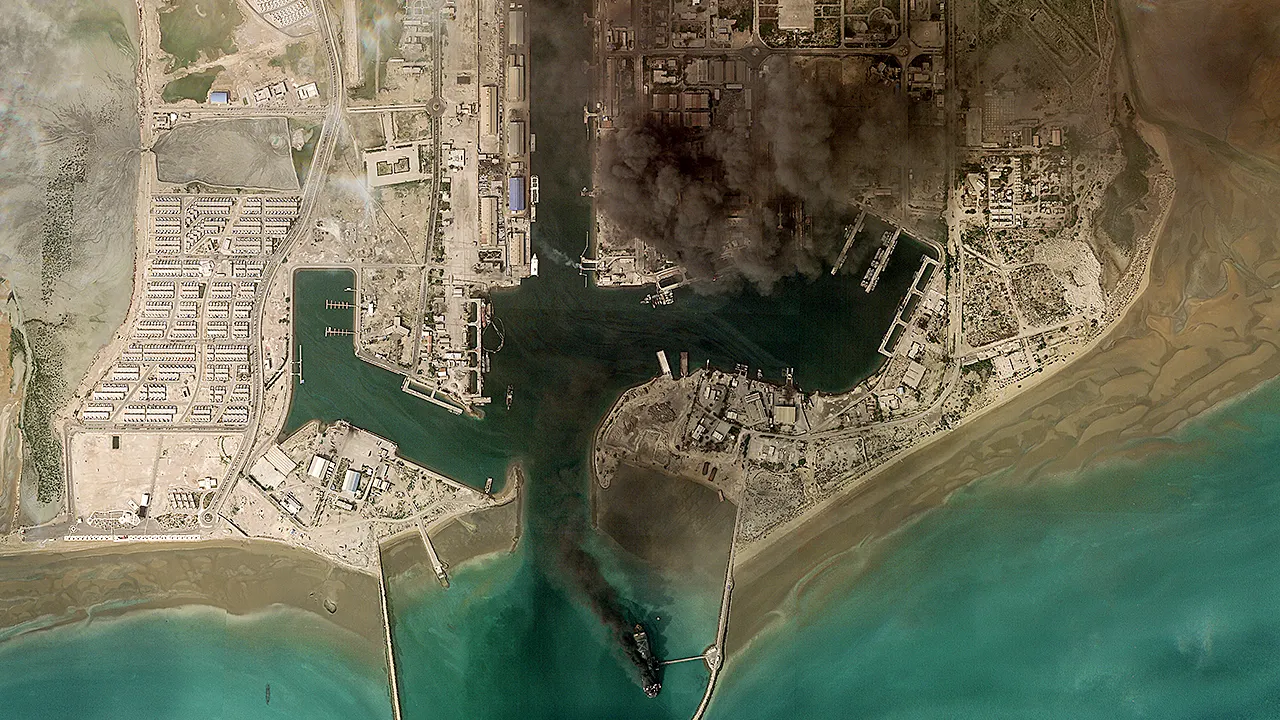
In the opening days of Operation Epic Fury — the U.S.-Israeli campaign that kicked off on February 28, 2026 — something eerily reminiscent of December 7, 1941, played out in the Persian Gulf and Gulf of Oman. But this time the roles were reversed. Instead of American battleships getting caught flat-footed at Pearl Harbor, it was Iran’s surface fleet that was largely nailed while tied up at the docks.
Satellite imagery and CENTCOM releases show burning hulls and sunken wrecks at Bandar Abbas (Iran’s main naval HQ), Konarak, and Chabahar. Frigates, corvettes, the drone “carrier” Shahid Bagheri, forward-basing ship Makran, and dozens of smaller vessels were hit at their piers or anchored just offshore. U.S. officials, including Adm. Brad Cooper, have confirmed over 30 Iranian ships destroyed or disabled in the first week-plus, with many of the biggest ones never even getting underway. As Cooper put it: “Not a single Iranian ship was underway” in the Persian Gulf, Strait of Hormuz, or Gulf of Oman by early March.
The question everyone is asking: Why? It was obvious for weeks that the U.S. and Israel were preparing major strikes after Iran’s refusal to abandon its nuclear program. U.S. carrier strike groups were already in theater. Yet most of the regular Iranian Navy (NEDAJA) and even many IRGCN assets stayed put. Were they fooled by diplomacy? Were the ships simply not seaworthy? Or was it something else?
1. The U.S. Navy Literally Pushed Them Back Into Port
This isn’t speculation — it’s straight from the U.S. commander on scene. Adm. Brad Cooper explained that American carrier strike groups (including the Abraham Lincoln and others) were “squeezing Iran from the sea and have them backed into their own ports.”
In other words, the moment tensions spiked, any Iranian warships that had been out on patrol or exercises (there had been a big joint drill with China and Russia just days earlier — Marine Security Belt 2026) were ordered home or felt it was safer to hug the coast. Dispersing a fleet sounds smart on paper, but when the other side has two carrier air wings, Aegis destroyers, submarines, and total air superiority, “going to sea” can feel like sailing into a kill zone. So they huddled in the familiar (and supposedly defended) waters of their home bases.
Result? Perfect targets for precision strikes from the air and sea. Several vessels, including a Jamaran-class corvette and the Shahid Soleimani-class catamaran Haj Qasem, were hit while literally anchored or moored.
2. They Didn’t Disperse — Even Though They Had Time
Open-source analysts and pre-strike satellite photos showed Iranian ships clustered in predictable spots. Many had returned to home ports in the days leading up to the strikes rather than scattering or heading into deeper waters. One analysis noted the regular navy “appears not to have adjusted its deployments and has not conducted a wholesale dispersal to sea from its home ports until hours before the attack.”
Why the hesitation? Possibly command-and-control issues once the first strikes landed (U.S./Israeli hits on Iranian leadership and comms nodes came fast). Or maybe a doctrinal blind spot: Iran’s big ships have always been more prestige platforms and floating missile batteries than a true blue-water fleet meant to slug it out in the open ocean. The real “navy” for choking the Strait has long been the IRGC’s swarm boats, shore-launched missiles, and mines — assets that don’t need to leave port to be dangerous.
3. Chronic Maintenance, Sanctions, and “Not Operationally Ready” Problems
Let’s be blunt: Iran’s navy has been rotting under sanctions for decades. Spare parts are scarce, training is limited, and hulls spend more time pier-side than at sea. The three Russian Kilo-class submarines? At least two were reportedly in extended repairs or limited readiness. One was reportedly struck right at its pier in Bandar Abbas.
Even the newer domestically built ships (Moudge/Jamaran-class frigates, Soleimani catamarans) suffer from reliability issues. Crews get limited underway time. When a full-scale war looks imminent, you can’t magically make a fleet that averages maybe 20-30 days at sea per year suddenly surge to combat readiness. Many of those “warships” at Bandar Abbas were probably in various states of upkeep, refit, or low-fuel status — sitting ducks.
4. The Bluff / Diplomacy Trap — Did They Think It Was All Talk?
This is the speculative but very plausible piece. For months there had been back-channel talks, threats, counter-threats, and diplomatic maneuvering. Iran had watched previous rounds of escalation (2024-2025 exchanges) fizzle into sanctions and limited strikes. The regime may have calculated — or convinced itself — that Trump was bluffing or that last-minute negotiations would kick the can down the road again.
Recent high-profile naval exercises with Russia and China may have added to the false sense of security: “The world is with us; they won’t dare a full war.” When the first missiles started flying on Feb. 28, it was too late to get the fleet to sea in any coordinated way.
Classic Pearl Harbor parallel, ironically: intelligence warnings ignored, over-reliance on “they won’t really attack the homeland bases,” and a doctrine that assumed the fight would be asymmetric and on Iran’s terms.
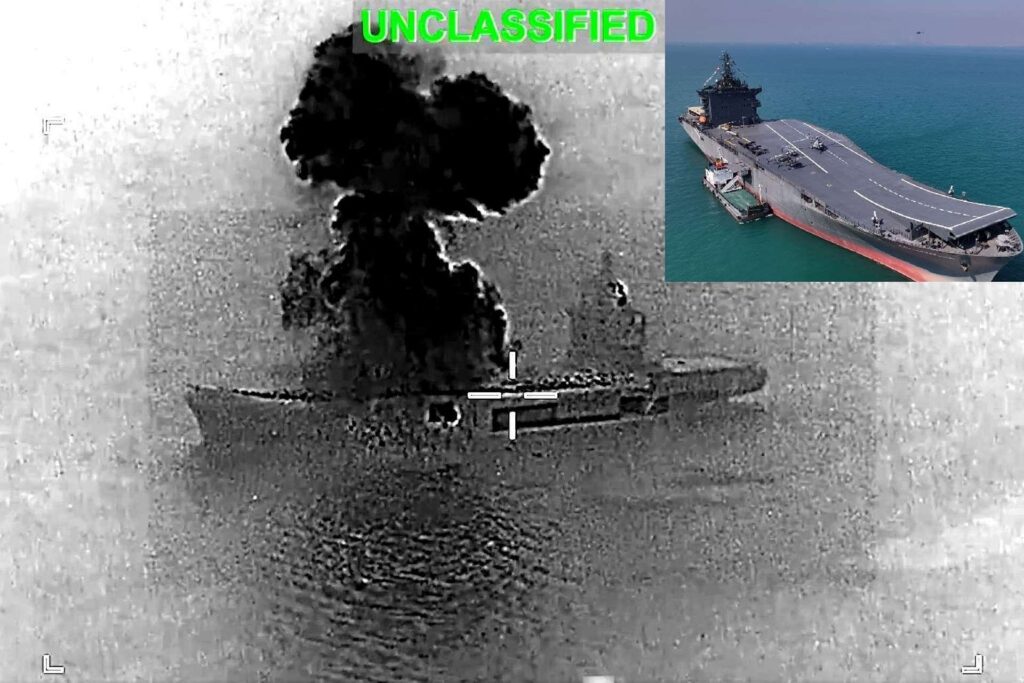
Strike on Iran’s Shahid Bagheri Drone Carrier
Bottom Line: A Perfect Storm of Overconfidence, Poor Readiness, and U.S. Dominance
Iran’s navy didn’t get Pearl Harbored because of one single failure. It was a toxic mix:
- U.S. naval power physically herding them into port,
- chronic material and training weakness that made “sortie now” unrealistic for many hulls,
- a doctrine that never planned for the big ships to survive a peer-level fight anyway,
- and almost certainly a strategic miscalculation that the Americans and Israelis were still bluffing right up until the bombs fell.
The IRGC’s small-boat and missile forces have proven harder to eradicate completely (they’re still harassing shipping in the Strait), but the “real” navy — the frigates, corvettes, and drone carriers the regime loved to parade on TV — has been largely wiped out while tied to the pier.
History will debate the wisdom of the broader campaign, but the naval chapter is already written: when you leave your fleet at home against the world’s strongest navy, you don’t get a sea fight. You get a parking-lot massacre.
The Iranian surface fleet didn’t lose at sea. It never even made it out of the harbor.
Sources / Links
Satellite Imagery & Visual Evidence of Port Damage
- Reuters gallery of satellite images showing strikes on Bandar Abbas harbor, including vessels hit at piers and smoke plumes (March 3, 2026): https://www.reuters.com/pictures/satellite-images-show-scope-iran-strikes-2026-03-02 (Direct before/after views of burning ships and facilities.)
- New York Times analysis with Planet Labs imagery of multiple ships burning at Bandar Abbas for over 24 hours (March 2, 2026): https://www.nytimes.com/2026/03/02/world/middleeast/satellite-images-iran-navy.html (Emphasizes no salvaging visible, ships nailed at docks.)
- Naval News / TWZ reporting with satellite confirmation of Makran and other assets struck while moored at Bandar Abbas (March 2, 2026): https://www.navalnews.com/naval-news/2026/03/us-strikes-destroy-irans-main-naval-assets (Details on forward-basing ship and drone carrier hits at port.)
Adm. Brad Cooper Statements & Naval Losses
- Fox News briefing where Cooper confirms over 30 ships destroyed, notes the fleet “squeezed… backed into their own ports,” and mentions the drone carrier on fire (March 2026): https://www.foxnews.com/politics/operation-epic-fury-destroys-irans-navy-cuts-missile-attacks-90-ongoing-campaign (Direct quote on no ships underway in key waters.)
- CBS News on Cooper’s update: U.S. seeking to dismantle missile production; 30+ vessels gone, including drone carrier ablaze (March 5, 2026): https://www.cbsnews.com/news/pete-hegseth-brad-cooper-iran-news-conference-03-05-2026 (Ties into the “not a single Iranian ship underway” line.)
- USNI News (U.S. Naval Institute) on Iranian naval forces as major targets, with strikes on warships/submarines at bases (March 2, 2026): https://news.usni.org/2026/03/02/iranian-naval-forces-are-major-target-in-operation-epic-fury-strikes (Confirms Shahid Bagheri and Makran hit at berthing in Bandar Abbas.)
Specific Asset Strikes (e.g., Shahid Bagheri, Maintenance/Readiness Issues)
- Naval News on CENTCOM footage and confirmation of strikes setting Shahid Bagheri ablaze (March 2026): https://www.navalnews.com/naval-news/2026/03/centcom-releases-footage-showing-strike-on-irans-drone-carrier (Visual proof of the prestige platform nailed early, likely at/near port.)
- The War Zone (TWZ) on Bandar Abbas ablaze, including Makran on fire at the pier (March 2, 2026): https://www.twz.com/news-features/irans-key-naval-base-on-strait-of-hormuz-set-ablaze-from-strikes (Discusses lack of dispersal and port clustering.)
 EN
EN  FR
FR