

The AI crash is beginning to look very different from the investment opportunity investors were promised. China has already experienced a spectacular collapse in its AI-linked stocks, wiping out hundreds of billions of dollars. Now, the same doubts are spreading through the American technology market.
The interesting part is that the damage is not distributed equally. Some companies are losing billions in market value despite having profitable businesses. Others are discovering that their entire business model depends on borrowing enormous amounts of money to build infrastructure that may take years to generate a return.
And a few companies could find themselves on the wrong side of the biggest technology investment cycle in decades.
China provides the first major warning. The American sell-off is beginning to reveal who might be next.
China: The first major AI crash
By October 2026, China’s STAR 50 index, which tracks major technology and semiconductor companies, had fallen approximately 40% in less than four months. Around $480 billion in market value had disappeared.
The broader CSI 300 index had also entered bear-market territory, falling roughly 20% from its June high.
This was particularly damaging because Beijing had actively encouraged the investment boom. Facing American restrictions on advanced semiconductors, Xi Jinping made domestic technological independence a national priority.
The STAR Market, created in 2019, was designed to help technology companies raise capital. Listing requirements were relaxed to allow companies with strong growth potential to go public without first demonstrating profitability.
The strategy attracted enormous amounts of investment. Unfortunately, enthusiasm eventually became disconnected from financial reality.
At the peak, the STAR 50 traded at approximately 250 times annual earnings. Even after the correction, it remained around 100 times earnings, compared with approximately 30 times for the Nasdaq 100.
AI-related shares had grown to represent 42% of China’s stock market value and 57% of trading activity, according to Goldman Sachs figures reported by Reuters.
When such a large portion of the market depends on one investment theme, a reversal becomes difficult to contain.
The casualties are already impressive:
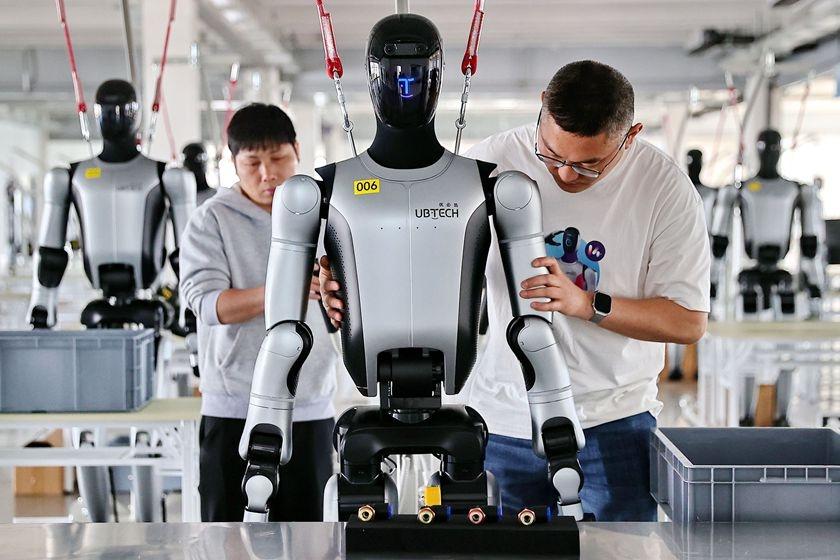
- Unitree: The humanoid robot manufacturer attracted orders for 8,000 times the number of shares available in its August IPO. Its stock initially jumped 460% before losing approximately half its value.
- CXMT: China’s major memory manufacturer has lost more than a quarter of its market value over the recent period.
- MetaX and Moore Threads: These chipmakers initially surged approximately 700% and 400% on their respective debuts, only to lose around half their value from subsequent highs.
- Zhongji Innolight and Eoptolink: Optical-component manufacturers have fallen approximately 60% from their June and July peaks, with potential American restrictions on supplying US data centers adding pressure.
These are not obscure speculative companies. They are precisely the kinds of businesses Beijing wants to develop into national technology champions.
Yet investors are discovering that a strategically important company is not automatically a good investment.
The underlying problem: AI is easier to distribute than to monetize
China’s AI industry has another problem that extends beyond stock-market speculation: generating revenue.
According to Epoch AI’s October 2026 analysis, the six largest Chinese AI companies collectively generate approximately 10% of the AI-related revenue earned by OpenAI and Anthropic.
Chinese models have become increasingly competitive. Many are released with open weights, allowing developers and businesses to download, modify and operate them independently.
This creates enormous distribution opportunities, but it also makes charging for the models more difficult.
Consider Z.ai’s GLM model. After its release, 12 other companies were already offering the same model within a single day. Within 20 days, Z.ai’s share of usage for its own model on OpenRouter had fallen from 90% to just 20%.
The company created the technology, attracted the initial attention and then watched other businesses capture much of the activity.
This illustrates a fundamental problem with the economics of open AI models. The company developing the technology may not be the company making the money from running it.
Some businesses are consequently specializing in operating data centers and providing access to models developed by others. They can capture revenue from infrastructure and computing even when the original model is freely available.
This raises an uncomfortable question: how many companies can actually make a sustainable return from developing increasingly powerful models when competitors can distribute comparable technology at little or no cost?
The technology can be impressive while the business economics remain disappointing.
The American AI crash: The same questions, different circumstances
The American market is now facing a similar reassessment, although its problems are somewhat different.
On October 30, 2026, Wall Street experienced a particularly severe technology sell-off. The Nasdaq dropped 2.86%, Intel plunged 28.6% in one session, AMD fell 10.9%, and Nvidia declined 4.2%.
The semiconductor index lost 7.2%.
Investors were increasingly concerned about the enormous cost of building AI infrastructure and whether the companies financing it could generate sufficient returns.
The monthly performance from September 30 to October 30 tells an even more interesting story.
| Company | October share-price change |
|---|---|
| Intel | -45.3% |
| CoreWeave | -37.0% |
| Nebius | -34.7% |
| Sandisk | -33.9% |
| ARM | -28.9% |
| Alphabet (Google) | -18.7% |
| AMD | -17.5% |
| Micron | -16.9% |
| Meta | -15.2% |
| Nvidia | -10.4% |
| Oracle | -4.8% |
| Amazon | -3.5% |
| Microsoft | +1.8% |
| Apple | +3.5% |
These figures compare closing prices at the end of September and October, based on historical market prices.
The pattern is revealing. The companies most directly exposed to the financing and construction of AI infrastructure suffered particularly heavy losses.
Let’s look at the biggest casualties.
The super-losers: Who are in the most trouble?
1. CoreWeave: Building an enormous business on borrowed money
CoreWeave is arguably one of the clearest examples of the financial risks behind the AI infrastructure boom.
Its business revolves around providing computing infrastructure to companies that need enormous quantities of GPUs. It must acquire expensive hardware, secure facilities, arrange electricity and finance increasingly large data-center projects.
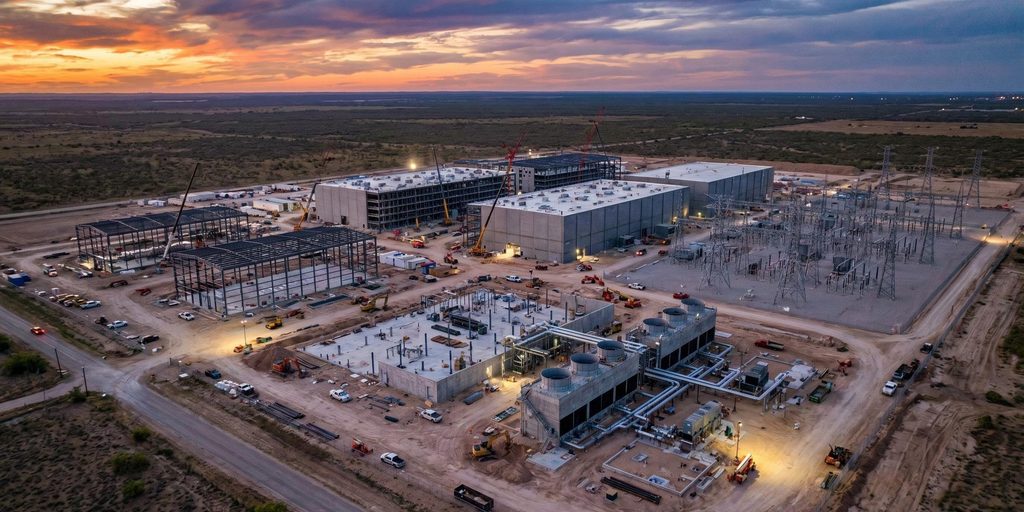
The business requires enormous amounts of capital before the infrastructure can generate revenue.
The problem is the cost of financing. CoreWeave has accumulated substantial debt, and creditors are increasingly concerned about whether the company can generate enough cash to service it.
Its margins are extremely thin, while the interest expense associated with borrowing makes expansion increasingly expensive.
Its shares fell approximately 37% in October alone.
CoreWeave is exposed to several risks simultaneously: expensive hardware, enormous construction commitments, dependence on continued AI demand and the possibility that financing becomes prohibitively expensive.
A slowdown in data-center demand could leave the company with expensive infrastructure and debt obligations that are difficult to service.
CoreWeave is one of the strongest candidates for the title of super-loser in an AI investment correction.
2. Intel: A giant caught on the wrong side of the cycle
Intel suffered the biggest monthly decline among the major companies in this comparison, losing approximately 45% in October.
Its October 30 collapse followed disappointing earnings and a weak revenue forecast. The company also indicated that it did not expect positive cash flow for the year.
Intel’s difficulties extend beyond the AI investment cycle. Its established PC processor business is facing pressure from weaker demand and expensive memory components.
The irony is that the AI boom has helped create enormous demand for computing hardware while simultaneously increasing costs for the traditional computer industry.
Intel is particularly exposed because it must compete in several markets while managing its own expensive manufacturing and technology challenges.
Its collapse is a warning that being associated with semiconductors does not guarantee participation in the AI boom’s profits.
3. Chinese AI and robotics investors
China has perhaps the most obvious group of immediate casualties: individual investors who bought into the AI and robotics frenzy at extraordinary valuations.
Unitree is the perfect example. An IPO oversubscribed 8,000 times created enormous expectations, but investors who entered near the initial excitement have experienced a painful reversal.
The same applies to investors in MetaX and Moore Threads.
Margin borrowing makes the situation worse. When investors purchase shares with borrowed money, falling prices can trigger additional collateral demands or forced sales.
Those forced sales push prices lower and can trigger further liquidations.
This is how a correction becomes a vicious circle, particularly in a market dominated by retail investors.
The Chinese AI correction could also make future technology IPOs considerably harder. Companies that expected to raise money by attaching themselves to the AI investment theme now face investors demanding actual profitability.
4. Nebius and the other infrastructure builders
Nebius, another company exposed to the AI data-center expansion, lost approximately 35% in October.
Its situation highlights a wider vulnerability among companies renting computing capacity and building specialized AI infrastructure.
The economics depend on keeping expensive GPUs busy enough to recover their purchase and financing costs.
A data center that has not secured sufficient customers can become an enormous financial liability.
The industry has been behaving as though demand will continue growing indefinitely. Investors are beginning to ask what happens if the infrastructure arrives faster than paying customers.
The chipmakers: Winners of the boom, potential losers of the correction
There is another interesting contradiction in the AI economy.
The companies supplying GPUs, memory and other components initially benefited enormously from the infrastructure rush. Nvidia, Micron and Samsung have been among the obvious beneficiaries of increased demand and higher hardware prices.
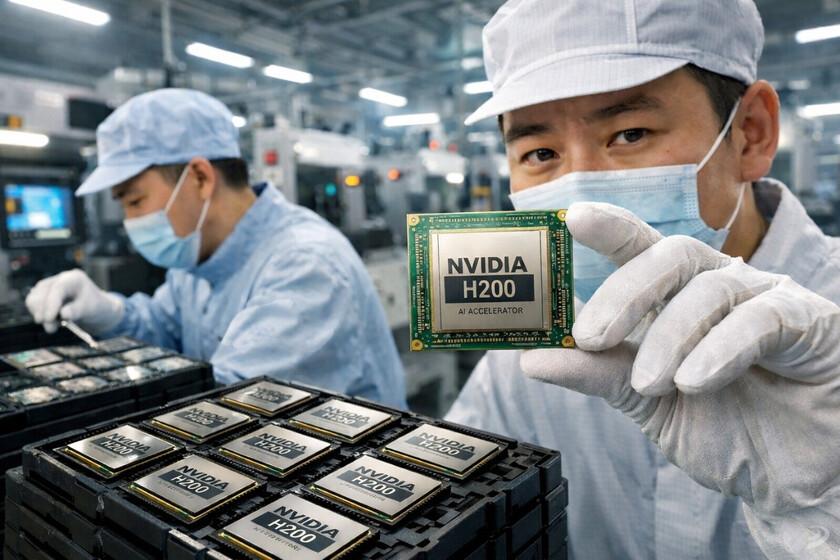
However, their customers are the companies paying those inflated prices.
Data-center developers and AI operators do not particularly appreciate paying enormous premiums for memory and computing capacity. Their profitability depends on eventually generating more revenue than their infrastructure costs.
This is now becoming a problem.
AMD lost approximately 17.5% in October, ARM fell nearly 29%, and Micron dropped approximately 17%.
Nvidia also declined approximately 10%, despite remaining one of the industry’s most profitable businesses.
The distinction is important. Nvidia is not in the same financial position as CoreWeave. Nvidia sells expensive hardware into the market and generates substantial profits and cash flow. CoreWeave must finance the infrastructure required to operate that hardware.
A slowdown could hurt both, but the financial exposure is very different.
Memory manufacturers face their own risk. A period of extraordinary prices and strong demand can eventually encourage investment in additional capacity. Once supply catches up or customers reduce orders, pricing power can reverse quickly.
The businesses benefiting most from the shortage could become victims of the next phase of the cycle.
Google and Meta: The cost of the infrastructure race
The biggest technology platforms are also feeling the pressure.
Google and Meta have committed enormous amounts of money to AI infrastructure, including data centers, GPUs and other computing resources.
These investments are intended to strengthen their existing businesses and create new revenue streams. The difficulty is that the spending happens immediately, while the financial returns may take considerably longer.
Google’s free cash flow deteriorated significantly during the periods examined in the financial comparison, with infrastructure commitments adding further pressure.
Meta also reported negative free cash flow of approximately $2.12 billion in its third-quarter 2026 results, despite generating $32.79 billion in operating cash flow.
That is a substantial difference between the cash a company generates from operations and what remains after capital investment.
Meta’s stock lost approximately 15% during October, while Alphabet fell nearly 19%.
Neither company is about to disappear. Both have established businesses that generate substantial revenue. However, shareholders are increasingly questioning whether the additional AI expenditure will produce returns proportional to its cost.
There is also a competitive problem for Google: AI could change the economics of its existing search business. It must finance the new technology while protecting the business that made it so profitable.
Who is actually winning?
The most interesting contrast is Apple.
Apple has not committed itself to the same extraordinary infrastructure spending race as the companies building massive AI data centers. Its established products continue to generate enormous sales, and its business does not depend on monetizing huge quantities of AI computing capacity.
Its shares gained approximately 3.5% in October, making it one of the strongest performers among the major technology companies.
Microsoft also held up comparatively well, gaining approximately 1.8%.
Microsoft has invested heavily in AI, but it also has substantial existing cloud revenue, enterprise customers and financial resources to support its investments.
Nvidia deserves a separate mention. Its shares declined, but the company remains one of the strongest financial beneficiaries of the AI boom. Selling the equipment required by almost everyone else gives it a different risk profile from the companies borrowing money to purchase that equipment.
The market is beginning to reward companies with visible revenue, cash generation and established customers over those whose valuations depend primarily on future expectations.
The real danger: What happens when the data centers are finished?
The AI industry has spent extraordinary amounts of money purchasing hardware and arranging the construction of new data centers.
But purchasing GPUs is only the beginning.
Those GPUs must be installed, powered, maintained and used. The data centers must attract customers willing to pay enough to recover the enormous investment.
The entire financial structure depends on continued demand.
Consider what happens if AI revenue grows more slowly than expected, or if increasingly capable models become cheaper to operate.
Infrastructure companies could find themselves with expensive equipment, enormous financing commitments and insufficient utilization.
Chipmakers could lose some of their pricing power. Memory manufacturers could face weaker demand. Technology companies could be forced to reconsider projects and postpone further investment.
Even consumers have already experienced part of the cost through expensive memory and graphics hardware, as AI infrastructure absorbs a growing share of available computing components.
There is a chain reaction here, and it extends well beyond the companies developing AI models.
Will it keep crashing?
I called the current crash last month in my post: AI extinction pitch: Using fear for hype and New MIT study: AI Scaling Has a Limit. Perhaps Silicon Valley Already Knows It. as well as warning about Chinese AI in general with Chinese AI: The Communist Party Behind the Machine and a $480 Billion Reality Check.
I am not sure if it’s done crashing – since a lot of the economy does not really need to make sense in this era. AI definitely is a long-term trend, although it’s far from being financially viable.
Bottom line: the LLM’s limitations and inability to have discovered the secret to an actual AI is bound to bite tech companies in the near future – since they can’t deliver the miracle promised.
Further reading / video: