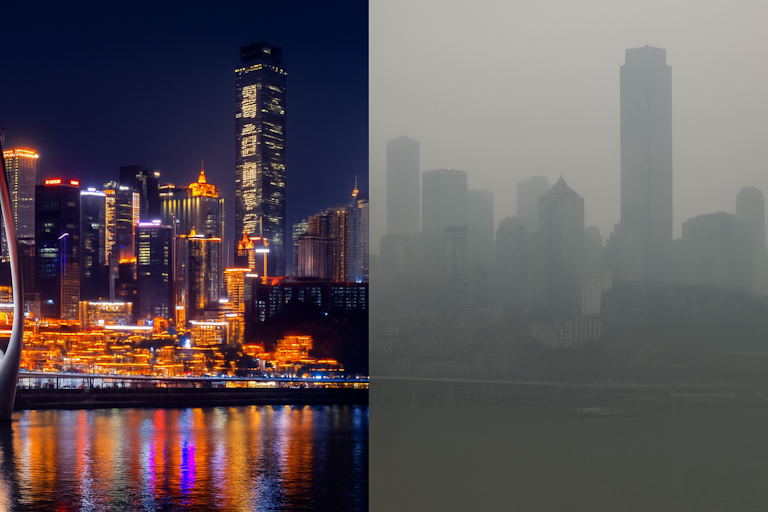

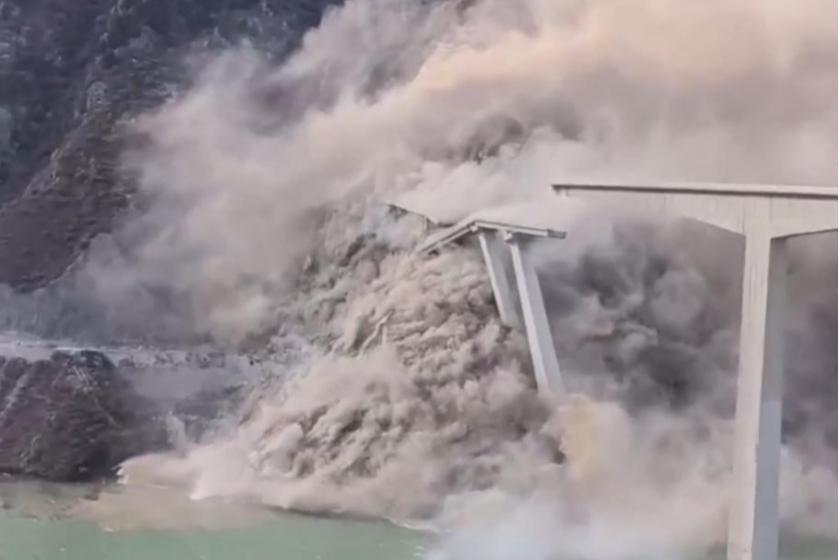
China has invested enormous sums in selling the world an image of engineering superiority: record-breaking bridges, bullet trains, massive dams and futuristic cities. The carefully marketed spectacle works. Yet China’s infrastructure failures tell another story, with a growing record of bridge collapses, defective construction, falsified inspections, cost overruns and unfinished projects. Here are examples from 2023–2026, and they are only a small selection.
China’s infrastructure failures inside China
- 2023 – G109 expressway tunnel, Beijing: A tunnel construction collapse killed two workers. Investigators attributed it to extremely fractured geology and freeze-thaw conditions.
- May 2024 – Meizhou–Dabu Expressway, Guangdong: An embankment collapsed after prolonged heavy rainfall, sending 23 vehicles down a slope. Fifty-two people died and 30 were injured. Investigators found weaknesses in surveying, design, construction, supervision and maintenance.
- July 2024 – Zhashui Bridge, Shaanxi: Flash floods and debris overwhelmed the bridge, sending 25 vehicles into the river. Sixty-two people were killed or went missing. The official investigation also identified shortcomings in bridge design, construction management and supervision.
- August 2024 – Ma’erkang, Sichuan: A temporary steel trestle on the Shuangjiangkou hydropower reservoir road project collapsed during construction, killing four workers. The investigation found an incomplete structure, an excavator operating beyond its load capacity and serious safety-management failures.
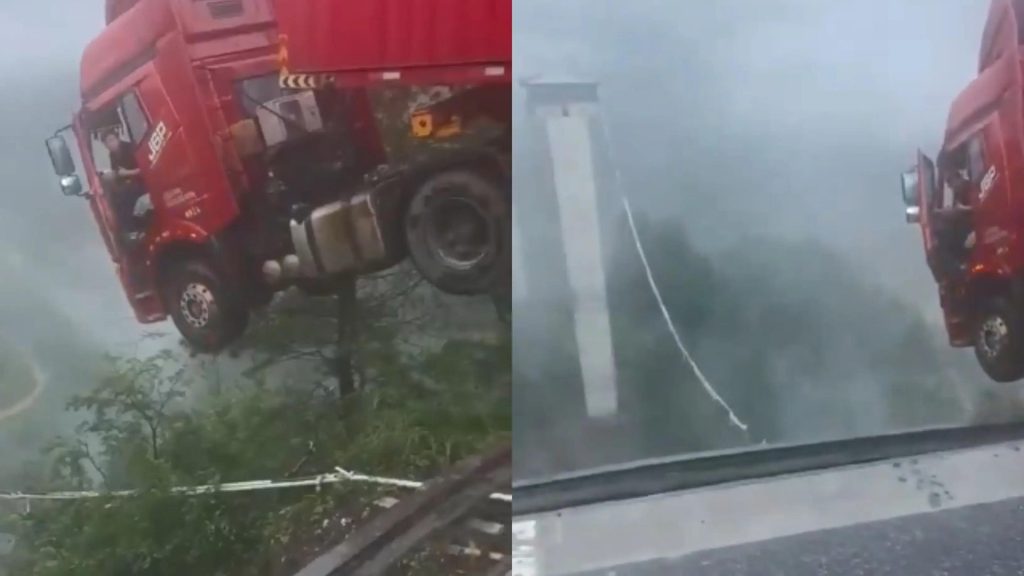
- June 2025 – Houzihe Grand Bridge, Guizhou: A section of the bridge approach collapsed following a rain-triggered landslide. A truck was rescued and no lives were lost, thanks to traffic restrictions imposed after deformation was detected.
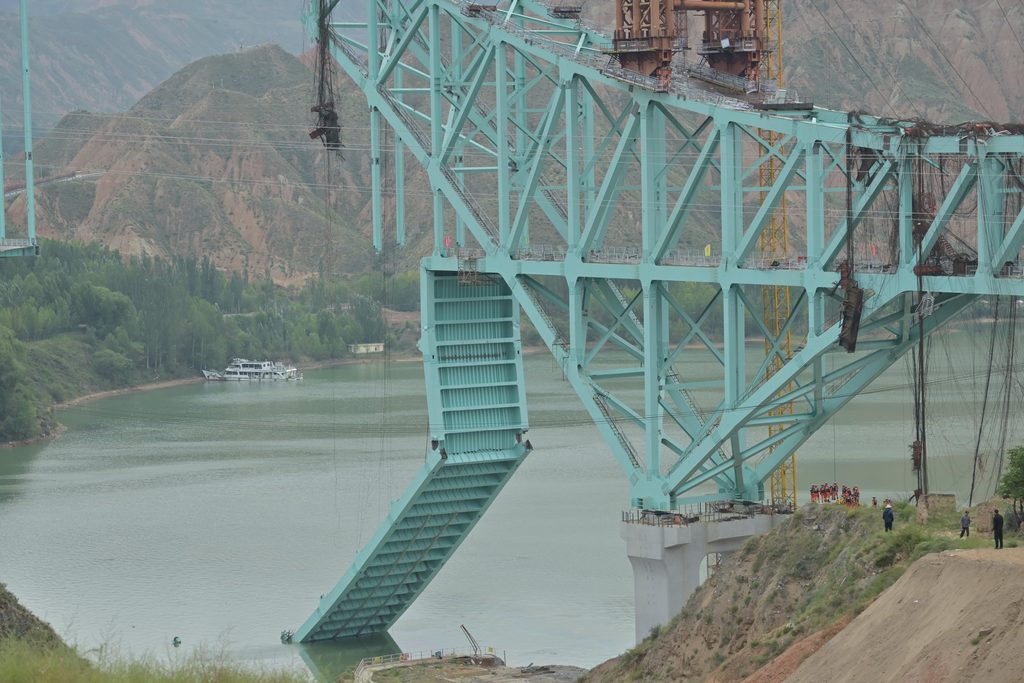
- August 2025 – Jianzha Yellow River railway bridge, Qinghai: An unfinished bridge collapsed, leaving 13 dead and three missing. Investigators found substandard bolts with approximately 41% less load-bearing capacity than required, illegal subcontracting and fabricated compliance documentation.
- August 2025 – Jiangjun Bridge, Xinjiang: Five people died and 24 were injured when a suspension bridge deck tilted after its cable failed. Investigators discovered that pulleys had replaced proper cable saddles and subsequent repairs ignored basic construction procedures.
- November 2025 – Hongqi Bridge, Barkam (Ma’erkang), Ngawa Tibetan and Qiang Autonomous Prefecture, Sichuan: A landslide destroyed the right-bank approach and part of the roadbed. Nobody died because the road had been closed. A 2026 investigation uncovered seriously inadequate geological surveys and falsified survey data: only two boreholes were drilled where at least 22 were required.
- December 2025 – Sanmenxia railway underpass, Henan: A construction-site slope collapsed, killing five workers. Investigators found falsified soil-testing results that had compromised the geological survey.
- February 2026 – Yuegang Bridge, Jiangsu: A 95-metre section of an unfinished bridge collapsed, killing five construction workers.
- November 2025 – Kunming railway, Yunnan: A railway inspection train struck maintenance workers, killing 11 and injuring two. The investigation found unauthorised access to the tracks, inadequate protection and serious management failures.
The recurring themes in China’s infrastructure failures are remarkably consistent: inadequate surveys, substandard materials, falsified paperwork, illegal subcontracting and inspections that exist more on paper than on the construction site.
China’s infrastructure failures overseas
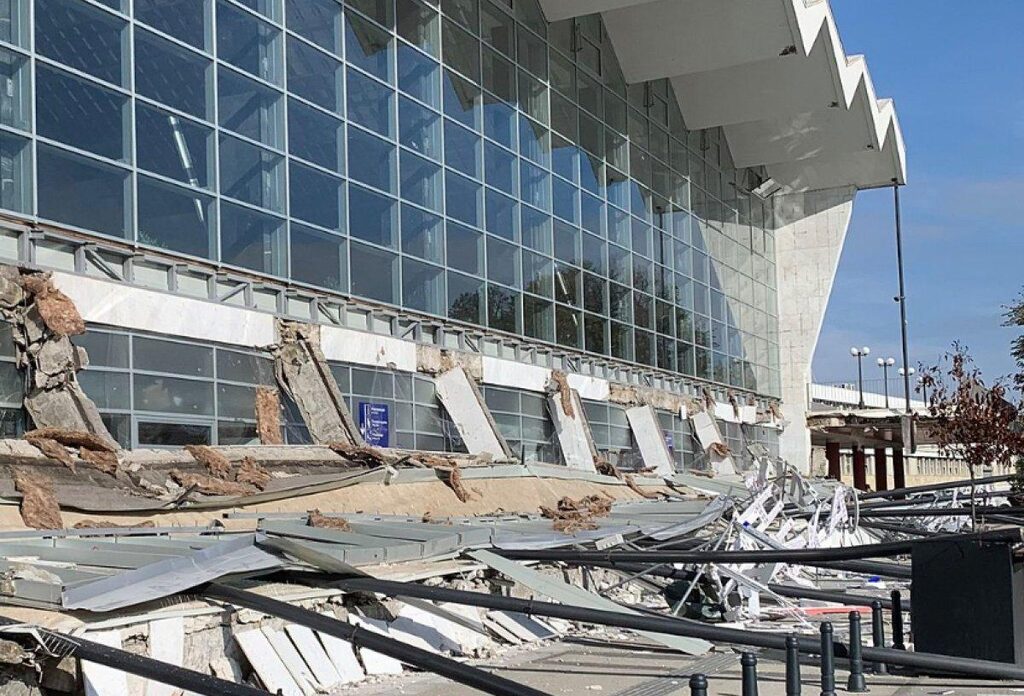
- November 2024 – Novi Sad railway station, Serbia: Its canopy collapsed just four months after the station reopened following reconstruction by the Chinese CRIC–CCCC consortium. Sixteen people died. Project documentation raised questions about canopy works and safety assurances. Thirteen people have been indicted, although the trial and allocation of responsibility remain ongoing.
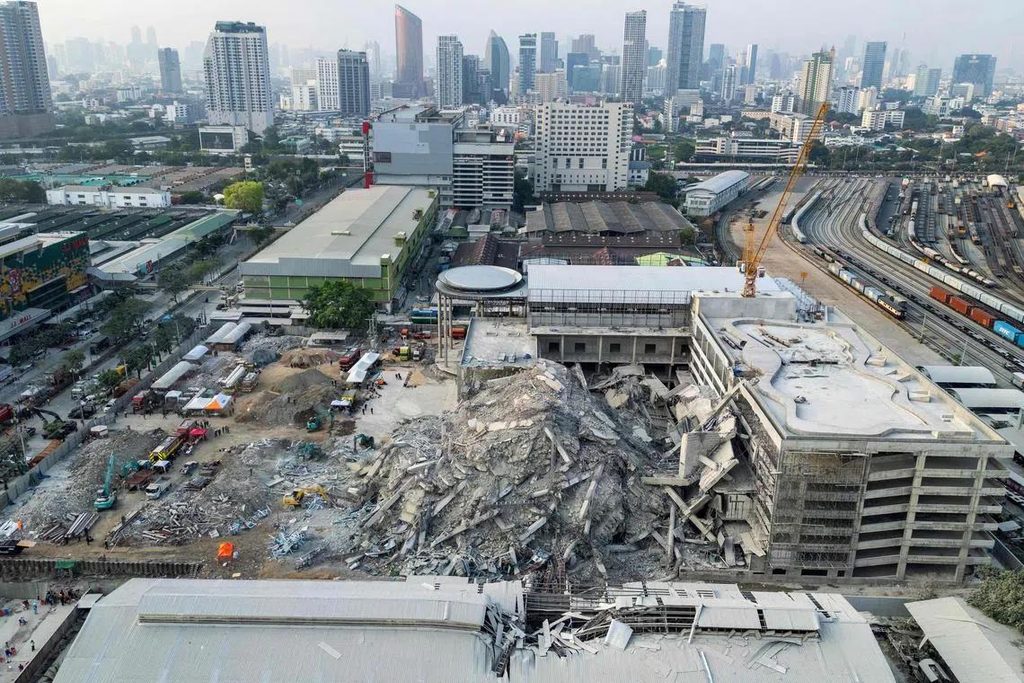
- March 2025 – Bangkok State Audit Office, Thailand: The 30-storey building collapsed during an earthquake, killing more than 90 people. Its construction joint venture included China’s Railway No. 10 and Thai contractor Italian-Thai Development. Investigators found substandard concrete, inadequate reinforcement anchorage and non-compliant structural design. Twenty-three individuals and companies were indicted.
- January 2026 – Thai–Chinese high-speed railway, Thailand: A massive launching gantry collapsed onto a passenger train, killing 32 people and injuring dozens. Thailand’s subsequent investigation found systemic safety failures, including a skipped mandatory crane procedure that concentrated more than 700 tonnes of weight on one support.
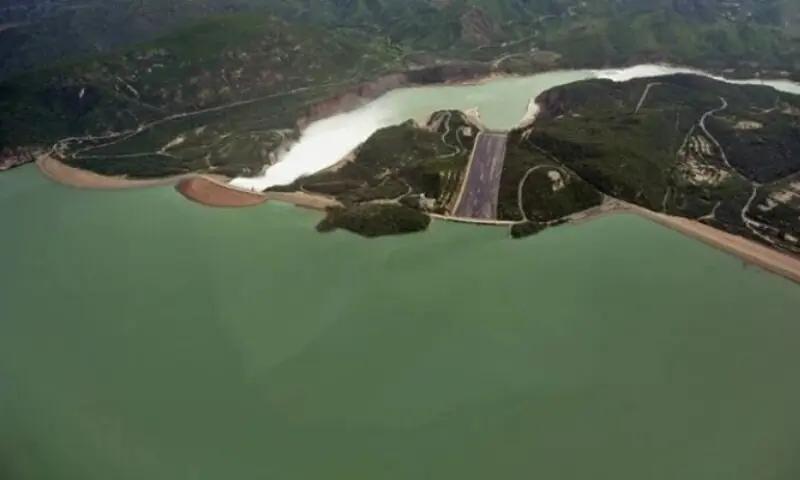
- Tarbela-V hydropower extension, Pakistan: PowerChina held the US$354.6 million civil-works contract. Its temporary cofferdam breached in August 2025 below its stated design discharge capacity. A government inquiry blamed the contractor, consultant and WAPDA, identifying unauthorised design changes. The project’s estimated cost subsequently ballooned from 82 billion to 317 billion rupees, with completion delayed until 2028. In November 2026, another rock collapse caused water to enter the construction tunnels and powerhouse area, although workers were safely evacuated and the main dam remained undamaged.
- Coca Codo Sinclair hydropower plant, Ecuador: Sinohydro built this 1,500 MW flagship project, but more than 17,000 cracks have been reported in its eight steel pressure distributors. After years of disputes and international arbitration, Ecuador formally accepted the plant in April 2026 while retaining guarantees relating to the defective equipment.
The image versus the reality
China’s infrastructure failures challenge the carefully cultivated image of an engineering superpower. The world’s largest bridge or most impressive railway station is meaningless if its components are defective, its inspections fabricated or its construction unsafe.
These examples span three years, several continents and billions in infrastructure spending. They are not an exhaustive list. The real question is how many more projects will have to fail before the world stops confusing impressive renderings and ribbon-cutting ceremonies with engineering excellence.