

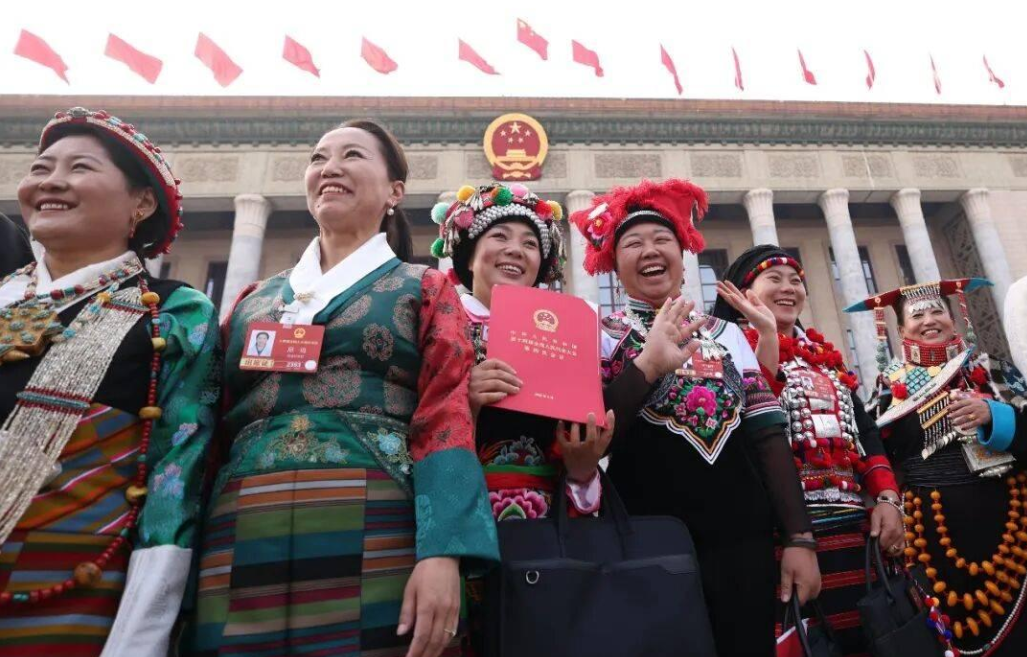
On July 1, 2026, China’s Law on Promoting Ethnic Unity and Progress officially came into force. Its title suggests a law designed to foster harmony between China’s many ethnic groups. However, a closer reading—and the broader context of Chinese government policy—indicates that the law is less about protecting diversity than about strengthening political and cultural conformity under the authority of the Chinese Communist Party.
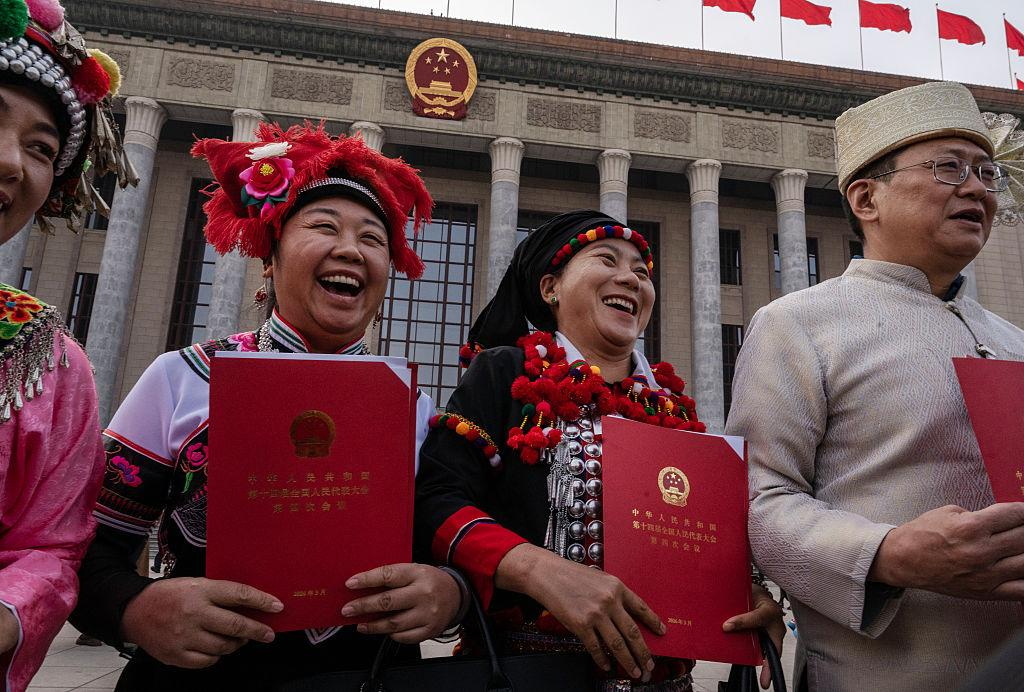
The official news showcased a bunch of hired actors holding the red legal booklet in ethnic costumes. Although the law is the exact opposite. That is the most dystopian imagery I’ve seen in my life.
Throughout the legislation, “ethnic unity” is presented as a national objective. In practice, critics argue that this concept increasingly means encouraging all ethnic groups to adopt a common national identity, prioritize Mandarin Chinese, embrace state-approved historical narratives, and align with the Party’s political and ideological goals. Rather than celebrating cultural pluralism, the law reinforces an expectation that diversity should exist only within boundaries defined by the state.
Perhaps the most significant development for international travelers is Article 63, which states that individuals and organizations outside mainland China who engage in activities that allegedly undermine the law may be held legally responsible according to Chinese law. While the extent to which this provision can be enforced abroad is limited by international jurisdiction, it signals China’s continued willingness to claim legal authority over conduct occurring outside its borders when that conduct is later connected to Chinese jurisdiction.
This is not merely theoretical. China has, in recent years, adopted several laws with broad extraterritorial provisions, particularly in the areas of national security and counter-espionage. The new Ethnic Unity Law continues that pattern by creating another legal framework through which speech, advocacy, research, or activism conducted overseas could become relevant if an individual later enters China.
The law also relies on broad and flexible language. Terms such as “undermining ethnic unity” are not narrowly defined, giving authorities substantial discretion in determining what behavior crosses the line. That uncertainty can have a chilling effect, as individuals cannot easily predict what public statements, academic work, social media activity, or organizational affiliations may be viewed as problematic.
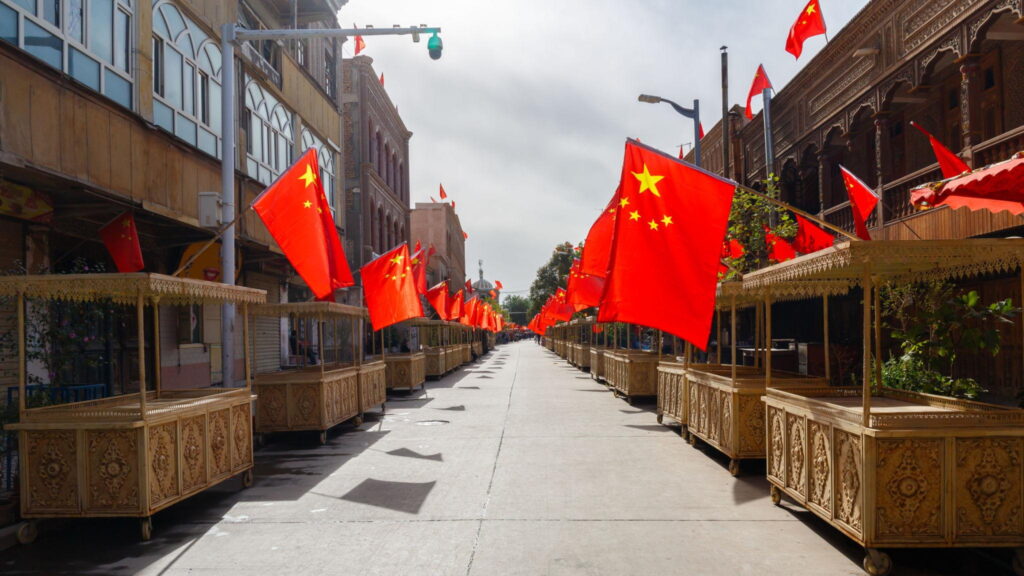
For ordinary tourists with no public involvement in politically sensitive issues, the practical risk is likely to remain low. The situation is different for journalists, academics, researchers, NGO workers, human rights advocates, and members of diaspora communities who have publicly discussed issues relating to Tibet, Xinjiang, Inner Mongolia, or other subjects the Chinese government considers politically sensitive. These individuals should recognize that online content published years earlier may receive scrutiny when entering Chinese jurisdiction.
Supporters of the law argue that it strengthens national cohesion and combats separatism. Critics counter that it effectively codifies an assimilationist approach, where preserving ethnic identity is acceptable only so long as it remains subordinate to state-defined political unity. In that sense, the law is arguably less about fostering genuine multiculturalism than about ensuring that cultural, religious, and ethnic expression conforms to a single official vision of Chinese national identity.
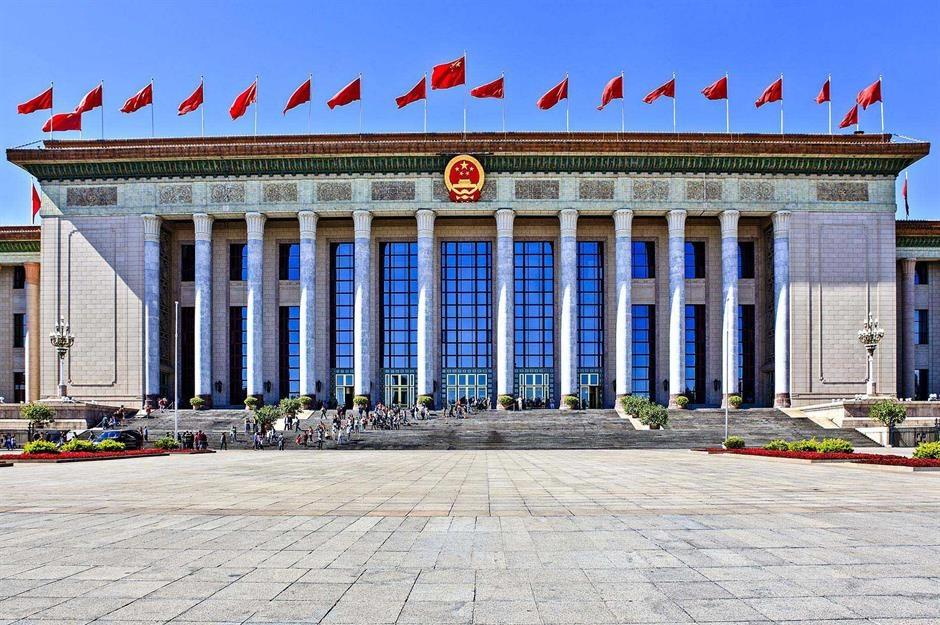
For anyone planning to travel to China, the takeaway is straightforward: understand that Chinese law increasingly reaches beyond its borders, that politically sensitive expression may carry consequences inside China even if it occurred elsewhere, and that the language of “unity” should be read alongside the broad legal powers the state has granted itself to define—and enforce—what that unity means.


 EN
EN  FR
FR