

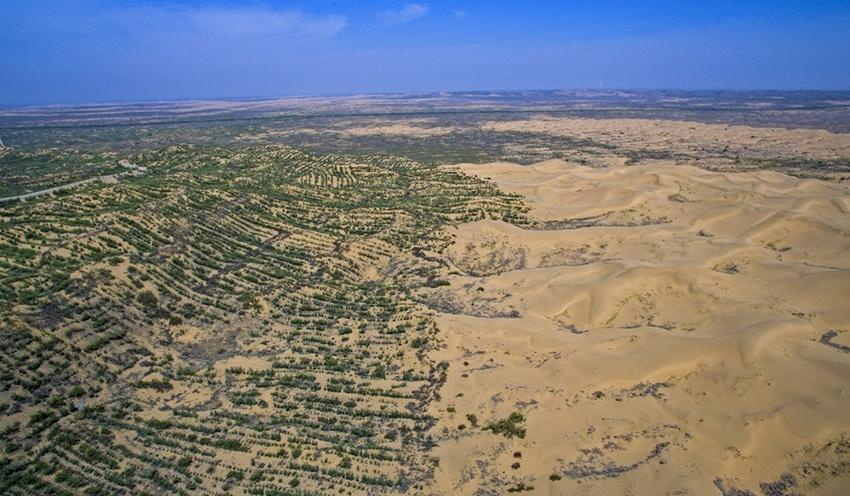
If you’ve spent any time on Facebook, Instagram, X, or YouTube recently, you’ve probably seen viral posts praising China for planting 60 to 80 billion trees. They often describe the project as proof that China is “saving the planet” while Western countries supposedly do nothing.
There’s one irony these posts rarely mention: the very social media platforms amplifying this narrative are blocked inside mainland China. The campaign’s biggest audience isn’t the Chinese public—it’s the rest of the world.
That doesn’t mean China’s massive reforestation effort is fake. It isn’t. The country has carried out one of the largest tree-planting campaigns in human history. The question is whether more trees automatically mean a healthier environment. The science says the answer is far more complicated.
Trees Are Not Always the Right Solution
Much of northern China is naturally dry grassland, shrubland, or semi-arid steppe—not dense forest. Planting millions of trees in places where forests would not naturally exist can create new ecological problems instead of solving old ones. Ecologists have warned for years that afforestation in drylands must be approached carefully because trees consume enormous quantities of water.
Trees continuously draw moisture from the soil and release it into the atmosphere through evapotranspiration. At the scale of tens of billions of trees, that process becomes large enough to alter regional water cycles.
Recent research found that China’s reforestation projects redistributed water across the country, leaving some already dry regions with less available freshwater, even while rainfall increased elsewhere.
This doesn’t mean trees are “bad.” It means planting the wrong trees in the wrong place can produce unintended consequences.
A Forest Isn’t Always a Forest
Another misconception is that all forests are equal.
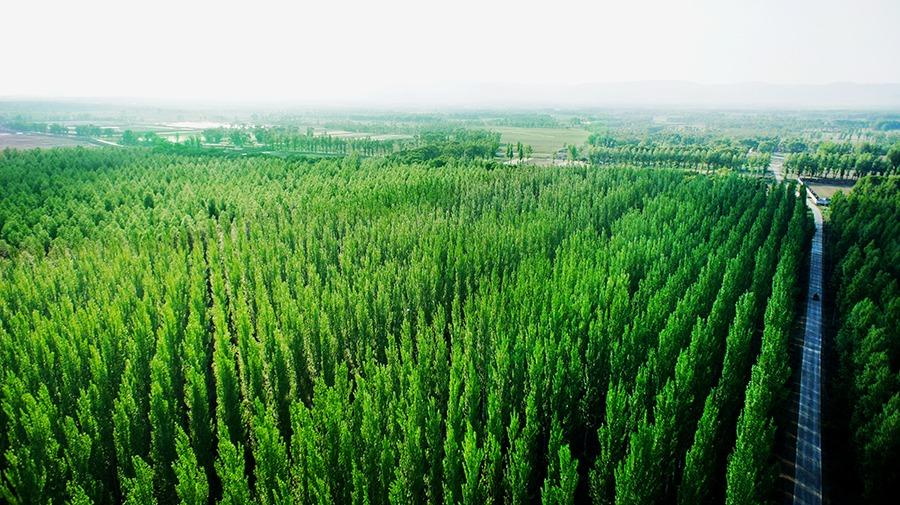
Large portions of China’s planting campaign rely on monoculture plantations—vast areas dominated by one or two fast-growing tree species. These plantations are easier to manage and produce impressive satellite imagery, but they often provide much less biodiversity than natural forests.
Scientists have repeatedly warned that monocultures are more vulnerable to pests and disease, support fewer animal species, and can be ecologically fragile. In some cases, entire plantations have been devastated by a single disease because every tree belonged to the same species.
A plantation of identical trees may increase “forest cover” on paper, but that does not necessarily recreate a functioning natural ecosystem.

The Human Cost Is Rarely Discussed
Large environmental projects also have social consequences.
China’s anti-desertification programs have included grazing restrictions and land-use changes that affected pastoral communities in several northern regions. While authorities describe these policies as ecological restoration, critics argue that some herding communities were relocated or lost access to traditional grazing land as conservation zones expanded.
Those stories rarely appear in viral social media posts celebrating record-breaking tree numbers.

Why the Story Went Viral
The number itself—60 billion trees—is easy to understand. It’s visually impressive and fits perfectly into short videos and inspirational posts.
What gets lost is nuance.
China has unquestionably slowed desertification in some areas, reduced dust storms, and increased national forest cover. Those are genuine achievements documented by researchers. At the same time, scientists continue to debate the long-term sustainability of planting large monoculture forests in water-scarce regions, pointing to groundwater depletion, biodiversity loss, and unintended changes to regional hydrology.
The reality is neither “China saved the planet” nor “every tree was a mistake.”
Looking Beyond the Headlines
Environmental policy should be judged by ecological outcomes—not by headline numbers or viral graphics.
Planting billions of trees makes for excellent public relations. Restoring healthy ecosystems is far more difficult.
When social media celebrates a single statistic while ignoring biodiversity, water availability, native ecosystems, and the people living on the land, it isn’t telling the whole story. Good environmental policy is about planting the right species, in the right places, for the right reasons—not simply planting the largest possible number of trees.


 EN
EN  FR
FR