

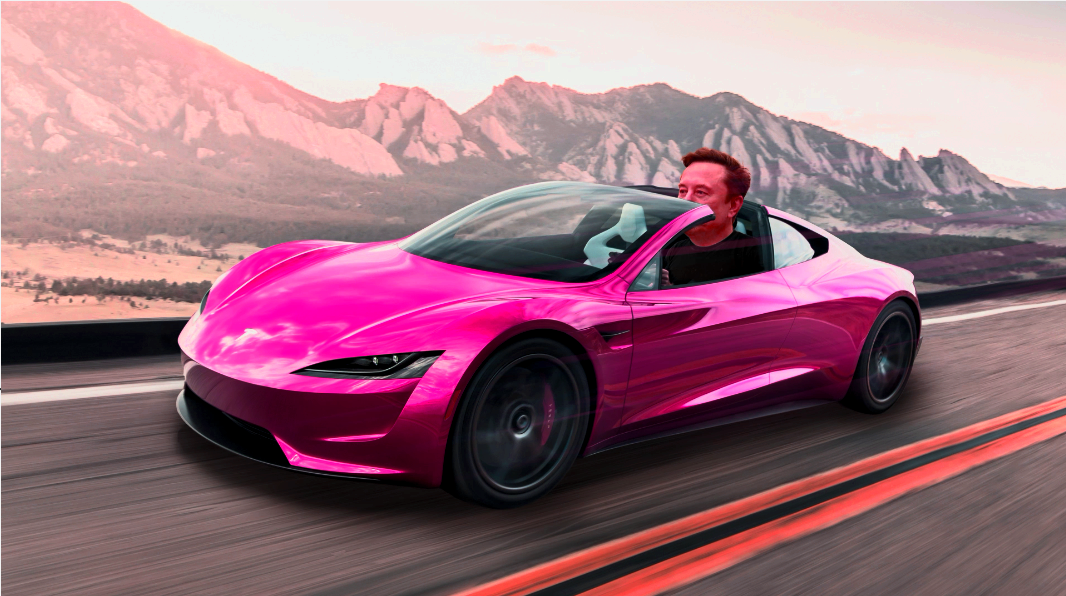
Tesla’s October 15 Roadster reveal was real. But does the device shown have anything to do with a practical production car?
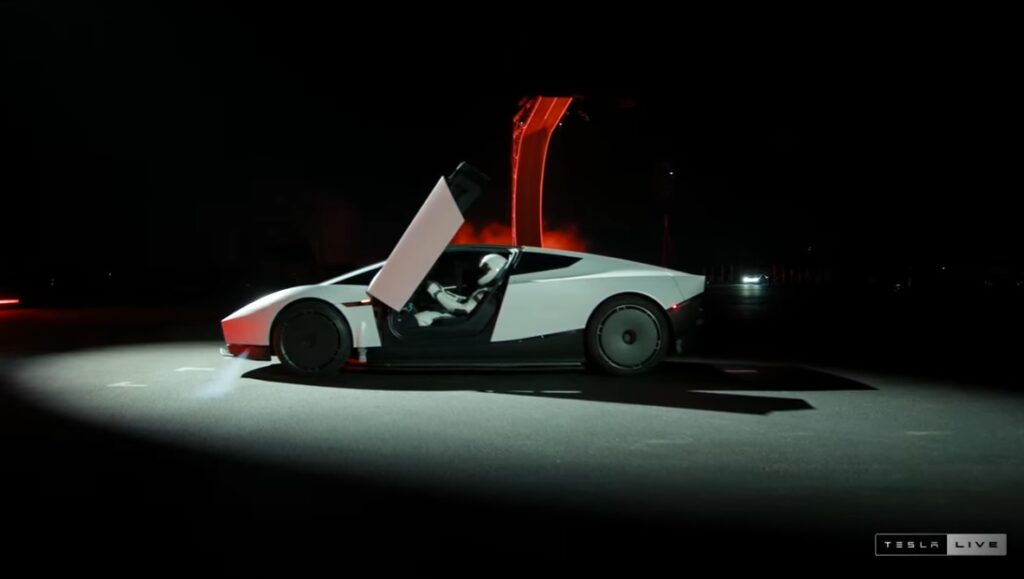
The most revealing evidence comes from Edmunds’ journalist Chris Rosales, who attended the event and examined the vehicles. He identified three different Roadsters: a production-intent prototype with a functioning interior, a separate vehicle fitted with a skirt to seal the suction system against the ramp, and a stunt car that looked like a skeleton fitted with thrusters. The stunt car also appeared to have fixed suspension, judging by its landing.
The production-intent prototype drove around the event. That answers one question: a functioning car existed. The flying demonstration, however, used different hardware. We have no independent inspection establishing that the stunt car carried the complete battery, drivetrain, suspension and safety equipment of the production-intent vehicle. Its exposed underside looks unusual, but the available evidence does not prove that the battery was missing.
Five seconds of thrust, hours to refill
The follow-up Top Gear interview exposed the practical limitations that the launch presentation glossed over.
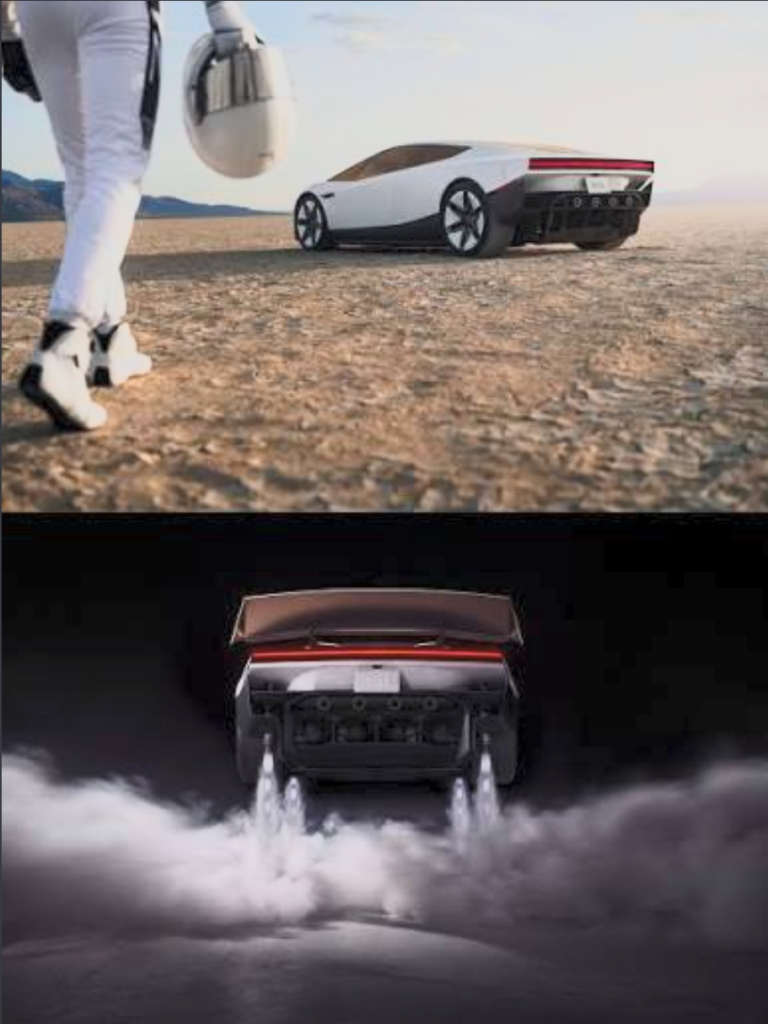
The Thrust version uses a 200-litre pressure vessel and four rear nozzles. Tesla vehicle-engineering chief Lars Moravy told Top Gear that one charge supplies roughly five to six seconds of thrust, with the tank then needing refilling at a station. He described current filling times of two to six hours, with “hope to get it down to 30 minutes”. But that would be physically impossible. It’s slow because transfers heats up highly pressurized containers. Very careful “hope” wording.
That is a substantial amount of equipment for brief bursts of thrust. At the public reveal, Elon Musk said the car could replenish its own air supply. In the technical interview, the explanation involved a high-pressure nitrogen filling system. A working onboard compressor would consume battery power, generate heat and require suitable cooling and pressure-control equipment. The event demonstrated no self-replenishment cycle, measured energy use or repeated jumps with documented refill times.
The Rocket version also raises an obvious safety question: a human occupant would sit beside a very high-pressure vessel. Tesla has shown no independently verified crash, pressure-vessel failure or occupant-protection results for this configuration.
Did anyone actually fly in it?
No human was aboard during the aerial stunts. Musk explained that the demonstration was operated autonomously to avoid killing anyone, and the apparent occupant discussed onstage was a dummy. CNN independently reported that the car had no actual driver during the demonstration.
Photographs of someone sitting inside a stationary Roadster are a different matter. Edmunds confirmed that one prototype had a full interior and functioning electronics, and the published cockpit photographs are not automatically fake. I found no credible evidence of a person riding through the jumps.
The distinction matters because a vehicle that can land on its wheels without a passenger has demonstrated something very different from a machine that can repeatedly transport a person safely through the air.
The fake videos are now part of the story
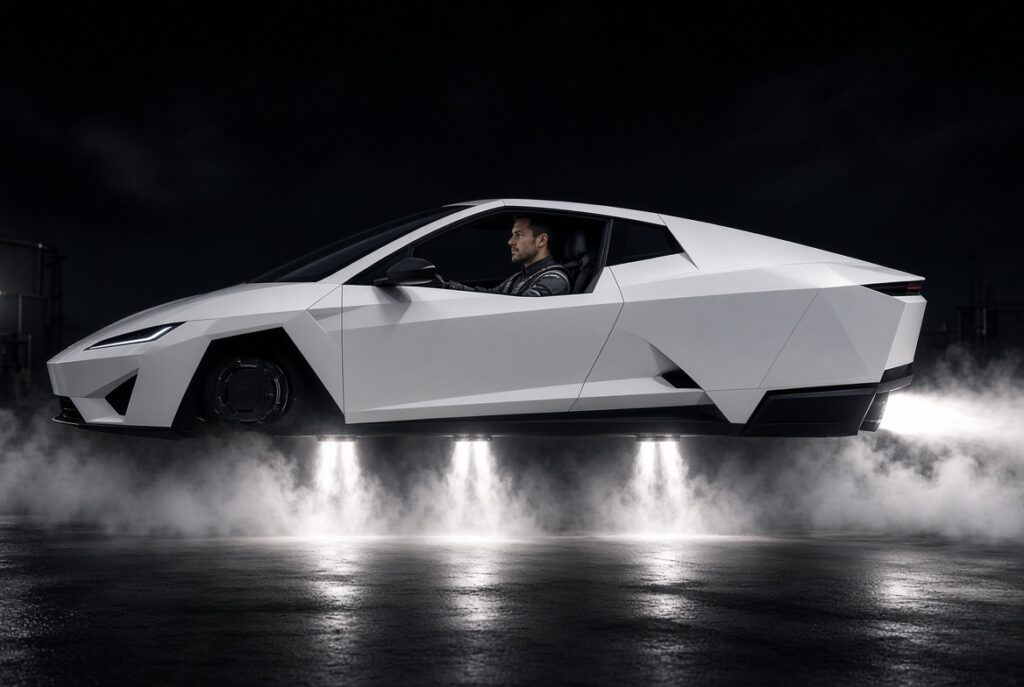
The real event has been accompanied by fabricated footage. Lead Stories examined an AI-generated clip purporting to show the Roadster flying from a city rooftop. Another fact-check identified a fabricated Golden Gate Bridge stunt in which the car supposedly dropped toward the water and flew back up, with a driver stepping out afterward.
Both were circulated on social media after the genuine unveiling. The bridge video was assessed as highly likely to be AI-generated, and neither clip matched the real event footage. There is no evidence that Tesla produced or coordinated these fakes. Their effect is nevertheless predictable: fabricated stunts get mixed with real footage, making an already extraordinary demonstration harder to evaluate.
The genuine event needs no invented flying sequences. It already gives us plenty to question.
The technology is interesting. The application is another matter.
The suction principle itself was demonstrated publicly in April 2025, when McMurtry’s Spéirling drove a short distance upside down using fan-generated downforce. Tesla has adapted the idea to a different vehicle and demonstration. The compressed-gas thrusters add another layer of engineering, allowing brief hops and rotation.
Roger Connor, curator of vertical flight at the Smithsonian’s National Air and Space Museum, offered a useful assessment to CNN before the reveal: “We’re not talking about sustained flight. We are literally talking about hopping.” He also noted the basic weight compromise between aircraft and road vehicles: crash structures and other automotive requirements make a car a poor starting point for an aircraft.
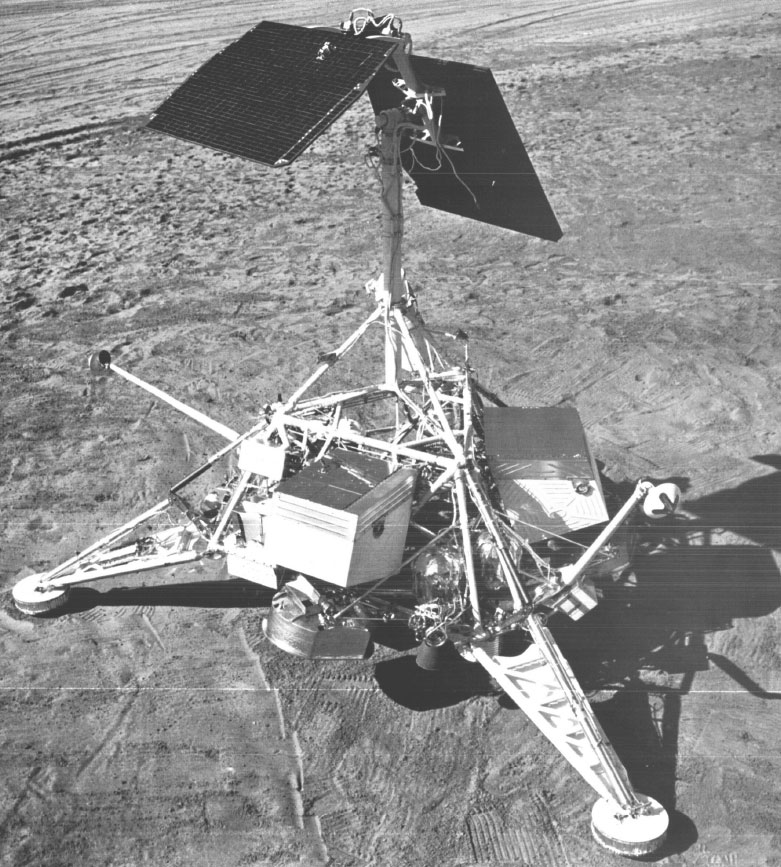
NASA’s Surveyor 1 had already completed a controlled robotic soft landing on the Moon in June 1966, using rocket braking, velocity sensing and onboard control. That was a lunar lander, not a reusable car, but rocket-assisted descent and automated landing are hardly new. The Roadster’s unusual achievement is fitting short-duration thrust maneuvers into an automobile-shaped platform.
The practical questions remain unanswered. We have no demonstration of sustained flight, meaningful horizontal travel through the air, a human-piloted jump, or routine operation outside a controlled test site. The event also showed no ordinary road or track evaluation sufficient to establish the flying configuration’s safety, durability or utility. The Rocket version is explicitly described as off-road only.
Nine years later, the delivery date is still a promise
Tesla announced the second-generation Roadster in 2017 and initially promised deliveries in 2020. That deadline passed, followed by further revisions. Nearly nine years later, the current production target is 2028, with no delivered second-generation Roadsters from the original programme.
The reservation terms deserve particular attention. Tesla’s current Roadster Reservation Agreement states that the vehicle remains under development and that the company “cannot guarantee when your vehicle will actually be delivered or if it will be delivered.” The reservation provides approximate priority rather than a confirmed vehicle order; the final purchase price is undetermined, and the reservation payment is not held in escrow.
Those are the company’s own contractual terms, not an interpretation by critics. Customers are being asked to put substantial sums toward a vehicle whose final configuration, price and delivery remain uncertain.
The verdict is straightforward: Tesla demonstrated genuine aerial stunts using specialised hardware, alongside a separate production-intent prototype. It has not demonstrated a practical flying passenger car. The most useful evidence so far comes from what independent observers saw at the event and what Tesla’s engineering representatives conceded in a recorded interview—not from the performance figures or futuristic imagery used to sell the idea.
Until a production-ready vehicle passes independent testing, Tesla’s Flying Roadster will not supersede actual common sense and the laws of thermodynamics that set a hard limit.
Thunderf00t’s cool funny review of this absurdity https://www.youtube.com/watch?v=YdZ9MxtPBRY