

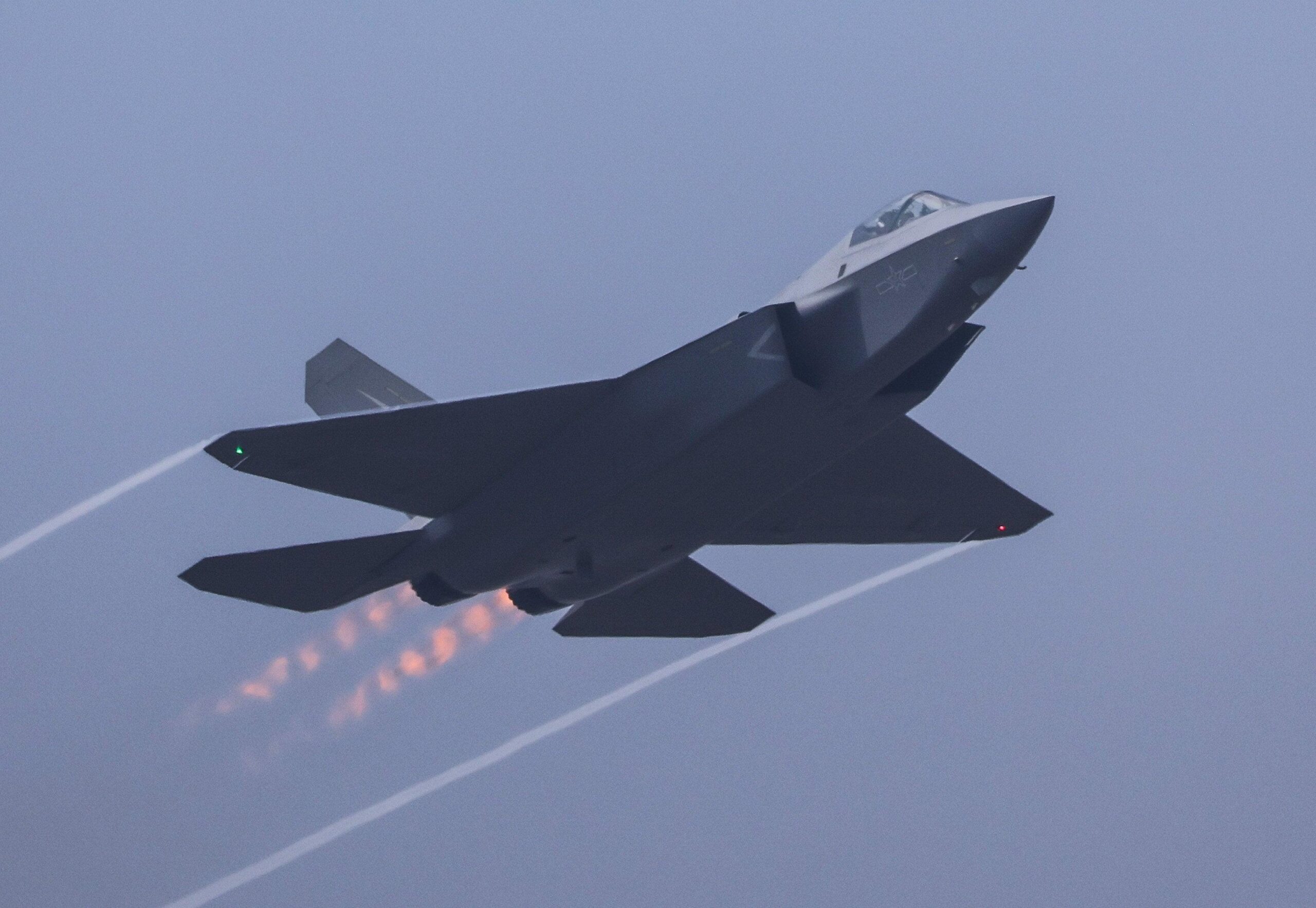
China military power is growing rapidly, and the People’s Liberation Army (PLA) has become a serious military force. But there is a considerable gap between the capabilities Beijing advertises, the systems it can manufacture, and what its forces have actually demonstrated under combat conditions. Washington has its own version of the problem: American defence advocates routinely portray China as an unstoppable military threat, using worst-case scenarios to justify enormous spending without always acknowledging how poorly some American programmes perform.
Both narratives deserve scrutiny. China’s propaganda machine presents prototypes and carefully staged exercises as evidence of technological dominance. American military advocacy often turns China’s expanding arsenal into an imminent threat while overlooking procurement failures, maintenance problems and the limitations of American power projection.
The May 2025 India–Pakistan conflict offers one of the most useful real-world tests of Chinese military equipment. It produced an important early success for Pakistan’s Chinese-equipped air force, followed by a much less impressive performance from Pakistan’s ground-based air defences as Indian missiles and drones reached military installations deep inside the country.
The J-35A fighter, China’s aircraft-carrier programme, its robot-dog demonstrations and its recent military leadership purges reveal further gaps between ambition and proven performance.
The objective is to examine China military power using the same standard applied to the United States: what works, what has been demonstrated, what remains uncertain, and which claims deserve considerably more scepticism.
The technological reality check: China’s prototypes versus engineering mastery
There is a recurring problem with how Chinese technological achievements are presented internationally. A prototype is treated as a finished product, a demonstration becomes proof of autonomy, domestic assembly is described as technological independence, and enormous production targets are presented as evidence of capabilities that have not yet been demonstrated. This is particularly relevant when evaluating the PLA. China’s commercial aerospace, robotics and artificial intelligence industries provide an opportunity to examine the country’s actual engineering capabilities outside the secrecy and political messaging of the military establishment.
These industries receive extraordinary government support, are promoted as national technological achievements and frequently feature in carefully staged demonstrations. They also expose weaknesses that are much harder to conceal: dependence on foreign components, unresolved engineering problems, poor reliability, human-operated demonstrations and a gap between advertised capabilities and practical performance.
The C919: a supposedly home-grown aircraft dependent on foreign technology
China’s COMAC C919 is a particularly revealing example. It was developed as a domestically designed competitor to the Airbus A320 and Boeing 737, and Beijing has presented it as a major achievement in the country’s commercial aerospace industry.
The aircraft is real, it is flying passengers, and its airframe represents a substantial Chinese engineering effort. However, describing it as an independently developed aircraft gives a misleading impression of the technological independence behind it.
The C919 relies on an extensive network of foreign suppliers for critical systems. Its LEAP-1C engines are manufactured by CFM International, the joint venture between American GE Aerospace and France’s Safran. Important avionics, flight-control equipment, power systems, braking components and other aircraft systems have also come from Western suppliers.
A 2025 Rhodium Group study examining China’s Made in China 2025 industrial programme found that approximately 90% of the identified C919 component suppliers in its dataset were foreign in 2024. Its power-system supplier figures were 83% foreign, 13% Chinese and 4% joint ventures. These are supplier-count estimates, not percentages of the aircraft’s total value, but they illustrate just how extensive the dependence remains.
The US-China Economic and Security Review Commission had previously reported that American and European suppliers accounted for more than 75% of the C919’s key components, including engines and systems ranging from communications and flight controls to aircraft tyres.
China has been developing its own CJ-1000A commercial engine through the Aero Engine Corporation of China. But developing a prototype is only the beginning. It must pass certification, demonstrate reliability over thousands of operating hours, achieve economical fuel consumption and be manufactured consistently in sufficient quantities.
The dependence is not simply theoretical. Previous export restrictions affected Chinese aircraft production and highlighted how vulnerable the programme could be to foreign suppliers. When export licences for Pratt & Whitney components were denied in 2021, China’s MA700 turboprop programme was effectively cancelled.
The C919 is an important industrial achievement, but it is not proof that China has mastered every technology required to build a modern commercial airliner independently.
That distinction matters when Beijing promotes its military aerospace industry. Producing a convincing fighter-aircraft shape is one challenge. Developing a reliable high-performance engine, manufacturing precision turbine components, achieving long service lives and maintaining consistent production quality are entirely different challenges.
If China still has major dependencies in its commercial aerospace propulsion industry after decades of investment, claims about the maturity of its latest military engines deserve particularly careful examination. The WS-19, WS-15 and other domestically developed military engines may make genuine progress, but their publicly advertised performance should not be accepted without independent evidence.
The humanoid robot spectacle: remote-controlled demonstrations are not autonomy
China’s humanoid robotics industry offers another revealing example. Unitree has become internationally famous for its dancing, martial-arts demonstrations and increasingly elaborate humanoid robots. The machines are impressive pieces of hardware, but many viral demonstrations tell us remarkably little about their independent intelligence.
Unitree itself publishes an official open-source project called XR Teleoperate. It allows a human operator wearing virtual-reality equipment and motion-tracking devices to control a humanoid robot’s movements remotely. The human performs an action, and the robot reproduces it through its control system.
This is a legitimate robotics technology, particularly for collecting training data and teaching robots how to manipulate objects. But it is not autonomous decision-making.
The distinction is important because many promotional videos show robots performing movements that appear remarkably intelligent without explaining how much human intervention, pre-programming or choreography is involved. A robot reproducing a human-controlled routine is not demonstrating that it can independently perceive its surroundings, plan an action, recover from unexpected problems and complete the same task in an unfamiliar environment.
Even more revealing is what happens when the robots have to perform outside their carefully prepared demonstrations.
Reuters conducted a substantial investigation into China’s humanoid robotics industry in August 2026. Its reporters visited factories, robot-training facilities and showrooms, examined corporate and procurement records, and interviewed approximately 40 people in the industry.
At one government-funded training centre, human operators wearing headsets and controllers repeatedly demonstrated simple movements for robots. A novice operator might need 300 attempts to obtain one usable movement. Even an experienced trainer might need 50.
The investigation found that the robots struggled with basic dexterity, reliability and adapting to unfamiliar situations. One staff member told Reuters that certain simple factory tasks were being completed at approximately 20% of human speed.
The much-publicised collaboration between UBTech and Geely’s Zeekr factory is another good example. Humanoid robots were tested sorting materials, moving boxes and handling components. Yet Geely told Reuters that conventional robotic arms and automated vehicles continued to handle all the key tasks on the active assembly line.
In other words, the publicity surrounding robots entering a car factory was considerably more impressive than their actual contribution to production.
Boston Dynamics was doing this five years earlier, with a rather different approach
It is worth remembering what Boston Dynamics was demonstrating in 2020 and 2021. Its Atlas humanoid performed parkour routines involving vaults, jumps, flips and complex coordinated movements.
These demonstrations were also choreographed and based on pre-designed movement libraries. Boston Dynamics was perfectly transparent about this. The company explained that Atlas used live perception to identify obstacles, combined with model-predictive control to adapt its movements to differences in the environment.
This was not unrestricted artificial intelligence or a robot independently inventing its own gymnastics routine. It was nevertheless a substantial engineering achievement.
The distinction is that Atlas could identify and navigate obstacles using environmental perception, select appropriate behaviours from its movement library and adjust its movements in response to real-world conditions.
The important question about Unitree’s demonstrations is therefore not whether the robots can dance or execute a complicated sequence. It is whether they can independently interpret an unfamiliar environment, manipulate objects reliably, recover from unexpected situations and complete useful work without a human effectively operating them.
The comparisons are revealing. Five years after Boston Dynamics demonstrated advanced dynamic locomotion and perception-based movement planning, China’s humanoid industry is still struggling to turn impressive promotional performances into dependable general-purpose industrial work.
There is genuine progress in Chinese robotics, and Unitree has made impressive advances in hardware and manufacturing. But the recurring presentation of remotely operated, carefully rehearsed performances as evidence of autonomous intelligence is deeply misleading.
A robotics industry built on government money and promotional demand
The scale of government involvement makes this gap particularly relevant.
Reuters found that China’s national, provincial and local governments spent at least $230 million purchasing humanoid robots and related equipment during the first half of 2026. This represented a dramatic increase from $62 million in the first half of 2025 and $6 million in the corresponding period of 2024.
The investigation identified more than 150 humanoid robot companies in China. Government departments were simultaneously acting as major financiers, customers and promoters of the technology.
This is a familiar industrial-policy model. Governments subsidise strategic industries, create artificial demand, fund training facilities and encourage manufacturers to expand production before the technology has matured into an economically competitive product.
There can be a legitimate long-term strategy behind this. Subsidies can help companies accumulate production experience, reduce component costs and collect training data. China’s manufacturing ecosystem could eventually become a major advantage in robotics.
But the number of robots manufactured is not the same as the number of robots capable of performing valuable autonomous work. Nor does the existence of a government-funded training centre mean that its technology is ready for widespread deployment.
The distinction matters especially when military propaganda shows robot dogs operating in coordinated formations. If humanoids still require human operators to complete relatively simple industrial tasks, the public should demand considerably more evidence before accepting claims about autonomous robotic assault teams operating under enemy fire.
Nvidia smuggling: the uncomfortable importance of foreign technology
China’s dependence on advanced foreign technology becomes even more interesting when examining the efforts to circumvent American export controls.
In December 2025, the US Department of Justice announced Operation Gatekeeper, an investigation into a major network involved in the unlawful export of restricted Nvidia artificial-intelligence processors.
According to the DOJ, Houston businessman Alan Hao Hsu and his company pleaded guilty in October 2025 to smuggling and unlawful export activities involving at least $160 million in Nvidia H100 and H200 processors between October 2024 and May 2025.
The investigation also involved other individuals and companies accused of using intermediaries, false shipping documents and shell-company arrangements to disguise the destinations of restricted processors. Authorities seized more than $50 million in Nvidia technology and cash.
The H100 and H200 processors are important because they are designed for demanding artificial-intelligence workloads and high-performance computing. They are valuable for training and operating large AI models, including systems that could have military applications.
This episode should not be misrepresented as proof that China cannot manufacture computer processors. China has its own semiconductor industry, and companies such as Huawei have developed domestic AI accelerators.
But there is a significant difference between manufacturing domestic processors and having access to the most advanced computing hardware at sufficient scale and performance.
The attempts to obtain restricted Nvidia processors demonstrate that Chinese-linked buyers still had a strong incentive to acquire technology they could not simply replace with domestic alternatives at equivalent performance and availability.
This is important for military AI. Advanced autonomy, battlefield recognition, simulation, sensor fusion and complex decision-support systems all require substantial computing resources. The ability to manufacture hardware domestically does not necessarily mean that it can match the performance, efficiency, software ecosystem or manufacturing scale of the best available foreign technology.
The smuggling case is not proof that the PLA secretly relies on Nvidia hardware for its military robots. It is evidence that access to the most advanced foreign computing technology remains strategically valuable and that export restrictions expose real vulnerabilities.
What these examples tell us about China’s military claims
These commercial examples do not prove that China’s military is incapable of developing sophisticated weapons. Civilian and military programmes have different priorities, budgets, requirements and levels of secrecy. The military can also obtain technologies and allocate resources that commercial manufacturers cannot.
But they provide a valuable reality check.
China’s aerospace industry still depends on foreign suppliers for important commercial aircraft systems. Its humanoid robotics industry produces impressive demonstrations but struggles with autonomy, reliability and useful industrial productivity. Its AI industry has pursued restricted foreign processors through sophisticated smuggling networks because domestic alternatives have not fully eliminated the demand for advanced foreign technology.
These are not isolated curiosities. They expose recurring gaps between industrial ambition, technical demonstrations and mature engineering capability.
The same questions should be asked of Chinese military programmes. Can the engines deliver their advertised performance over thousands of hours? Can the aircraft sustain their claimed range and payload? Are the stealth characteristics independently demonstrated? Can military robots actually operate autonomously, or are human operators controlling the systems? Can advanced computing equipment be produced at scale, and are the supporting electronics, sensors and software sufficiently reliable?
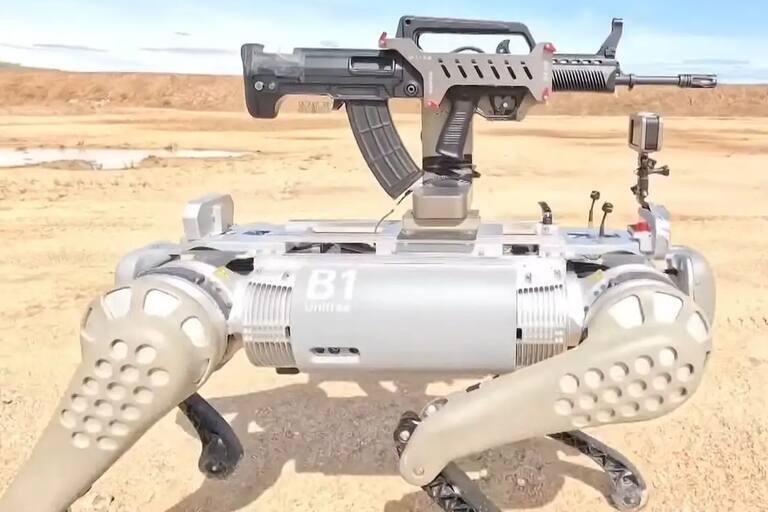
A robot dog carrying a rifle is not proof of autonomous warfare. A fighter with stealth-shaped surfaces is not proof of a mature fifth-generation aircraft. A commissioned carrier is not proof of a fully operational carrier strike group.
China has demonstrated substantial manufacturing ability and genuine technological progress. But its government-backed commercial industries repeatedly show how far the country still has to travel in some of the most demanding engineering disciplines.
The burden of proof should therefore remain on the people making the military claims. A promotional video, a government announcement or a prototype unveiling should not be treated as evidence of combat capability.
Pakistan’s 2025 war: Chinese fighters scored a success, Chinese air defences did not protect Pakistan
The May 7–10, 2025 conflict between India and Pakistan is an unusually valuable case study because it involved Chinese-origin aircraft and missiles against a major regional air force equipped with a mixture of Western and Russian systems.
Pakistan deployed Chinese J-10CE fighters and PL-15E beyond-visual-range air-to-air missiles. During the opening air engagements on May 7, Pakistan inflicted serious losses on the Indian Air Force. Independent analysis by Justin Bronk at the Royal United Services Institute (RUSI) concluded that India likely lost several aircraft, including at least one Rafale, one MiG-29 and probably a Su-30MKI.
This was a genuine operational success. It demonstrated that Chinese export fighters and missiles, integrated with Pakistan’s airborne surveillance, communications and command systems, could threaten modern Western and Russian aircraft. RUSI also assessed that Chinese assistance, including technical equipment and intelligence and command-and-control support, helped Pakistan perform considerably better than India had anticipated.
But the opening engagement was only one part of the conflict. It should not be confused with the overall performance of Pakistan’s air-defence network.
After the initial encounter, India repeatedly demonstrated that it could deliver precision standoff attacks against military targets across Pakistan. Its aircraft did not have to penetrate Pakistani airspace to launch these attacks. Indian missiles reached airbases, radar installations, command-related infrastructure and other military targets, despite Pakistan’s ground-based air-defence systems.
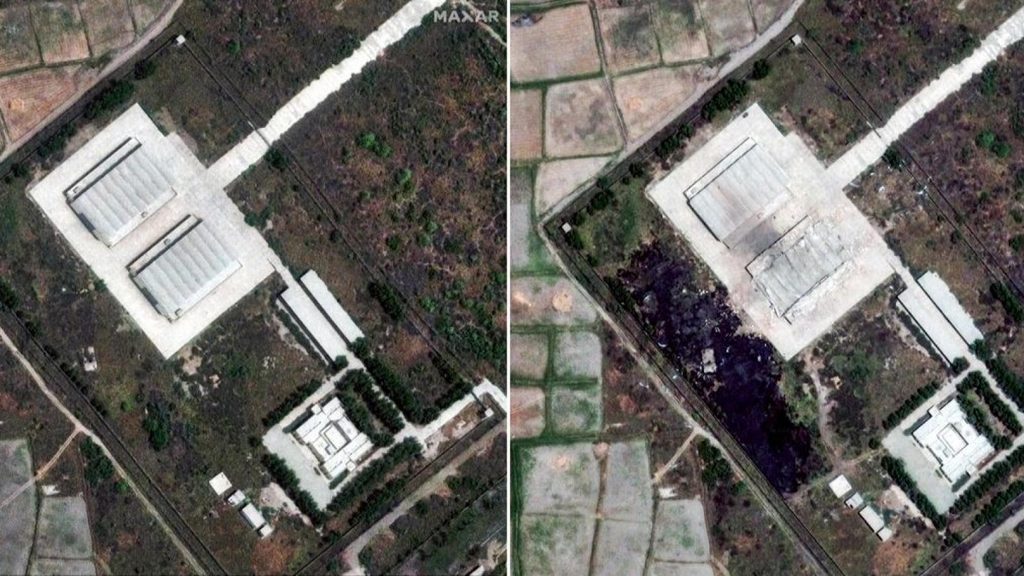
Christopher Clary’s detailed Stimson Center assessment, Four Days in May, found that India demonstrated an ability to conduct precision standoff attacks across large parts of Pakistan on every day of the conflict, particularly May 7 and May 10. It also concluded that Pakistan had a meaningful vulnerability to Indian air attack.
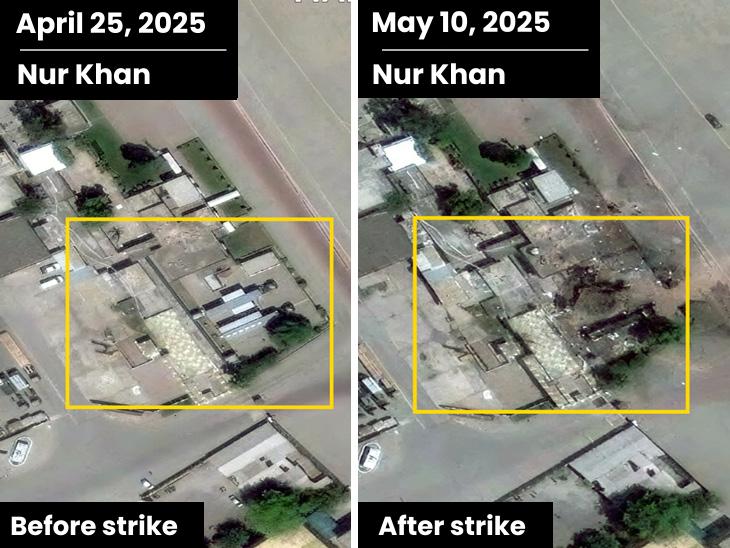
Commercial satellite imagery provided independent evidence of the damage.
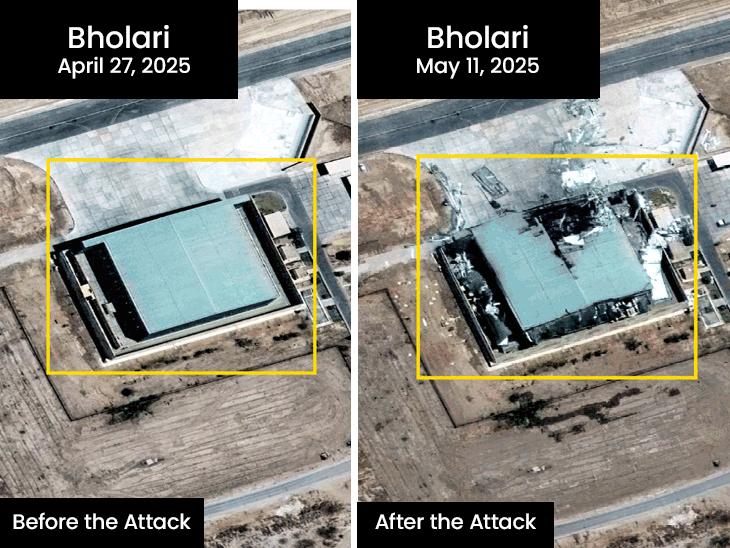
The Washington Post examined satellite images and identified damage at six Pakistani airfields. These included hangars, runway sections and mobile control buildings. At Bholari, satellite imagery showed a substantial hole in a hangar roof. Other damage was observed at Nur Khan, Shahbaz, Sukkur, Mushaf and additional facilities.
This does not mean that every facility was destroyed or that Pakistan lost its ability to operate aircraft. Some runway damage was repaired quickly, and there was no conclusive evidence that aircraft themselves had been destroyed at the damaged hangars. The important point is that Indian weapons reached multiple military installations well inside Pakistan, despite its substantial air-defence inventory.
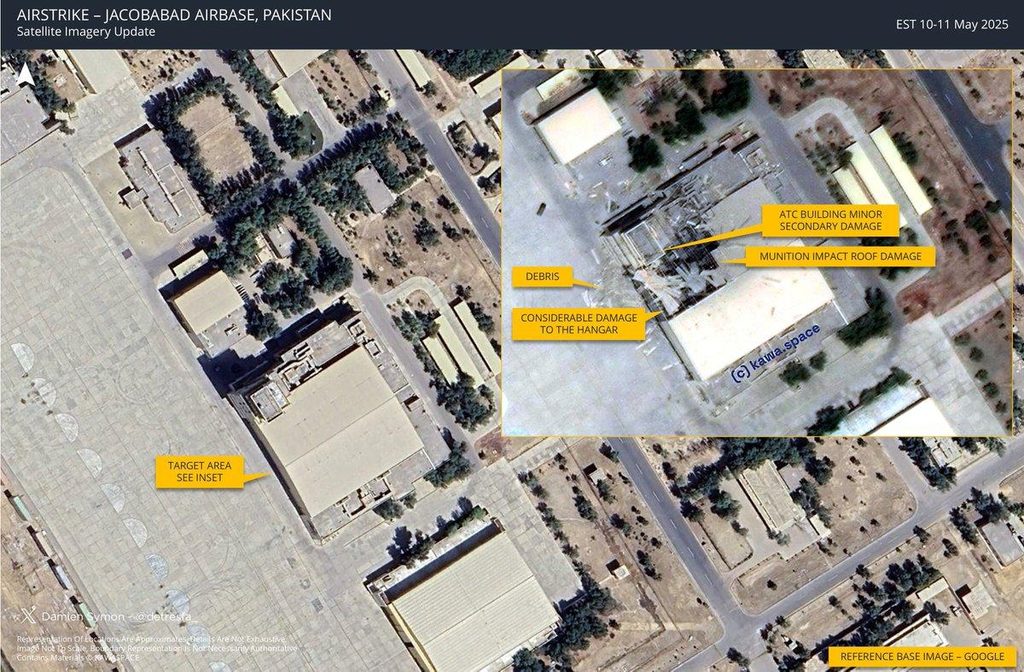
Pakistan claimed that it intercepted most incoming missiles. That may well be true. An air-defence system can intercept many incoming weapons and still fail to protect important infrastructure. The question is how many got through, what they destroyed, and whether the system could prevent the attacks from continuing.
India also appears to have performed better in defending against Pakistan’s subsequent drone and limited ballistic-missile attacks. The Stimson analysis found that India’s integrated air and missile defense system largely defeated several waves of Pakistani drone attacks and probably limited the damage from Pakistani short-range ballistic missiles. Following its opening success against Indian fighters, Pakistan inflicted virtually no observable damage on Indian military facilities, although India acknowledged limited damage at four installations.
The broader operational picture therefore looks quite different from the triumphant Pakistani and Chinese advertising narrative. Pakistan’s fighters achieved a significant opening success, but India maintained its ability to strike targets and damage military infrastructure. The balance of observable effects shifted in India’s favour over the four days.
There is one important distinction: neither country demonstrated unrestricted air superiority. There is no evidence that manned aircraft crossed into the other’s airspace during the conflict. This was a combination of air-to-air engagements, drones, missile attacks and standoff strikes, with both countries showing respect for the opposing air-defence threat.
The most revealing lesson is that owning sophisticated radar and missile systems does not create an impermeable shield. Detection, targeting, engagement capacity, electronic warfare, decoys, missile inventories, command decisions and the ability to defend numerous installations simultaneously all matter.
Chinese equipment should not be dismissed. The J-10CE and PL-15E demonstrated that they could produce a serious tactical result. However, Pakistan’s subsequent difficulties defending its infrastructure demonstrate that a country can possess impressive individual weapons and still have major weaknesses in the overall system.
Sources: RUSI – Key Questions about the India-Pakistan Aerial Clashes, Stimson Center – Four Days in May and The Washington Post – Indian strikes damaged six Pakistani airfields.
The J-35A: a stealth fighter with more marketing than publicly demonstrated performance
China’s J-35A was one of the most heavily advertised aircraft at the 2024 Zhuhai airshow. Its design is clearly intended to challenge the American F-35, and Beijing presented it as another major achievement in its development of fifth-generation combat aviation.
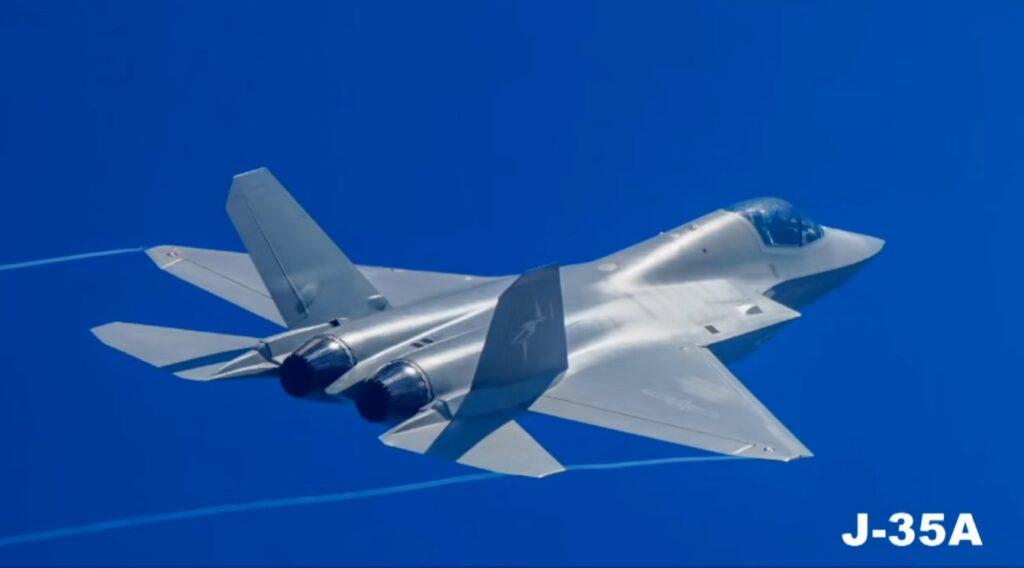
The public flight demonstration was far less convincing than the marketing.
The J-35A performed a brief five-minute display featuring steep climbs and dives. It looked relatively conservative compared with the Russian Su-57, which performed an extended aerobatic routine featuring spectacular high-angle-of-attack manoeuvres, including Pugachev’s Cobra and the falling-leaf manoeuvre.
The visual difference was striking. The Russian aircraft demonstrated an impressive level of post-stall manoeuvrability, while China’s newest fighter gave the audience a much more limited demonstration.
However, there is an important technical distinction. The J-35A did perform turns, climbs and dives. Its airshow appearance does not establish that it is incapable of supersonic flight. Nor does the absence of a supersonic demonstration establish that the aircraft cannot reach those speeds. Airshows are not controlled performance trials, and supersonic flight is generally unsuitable for demonstrations over populated areas.
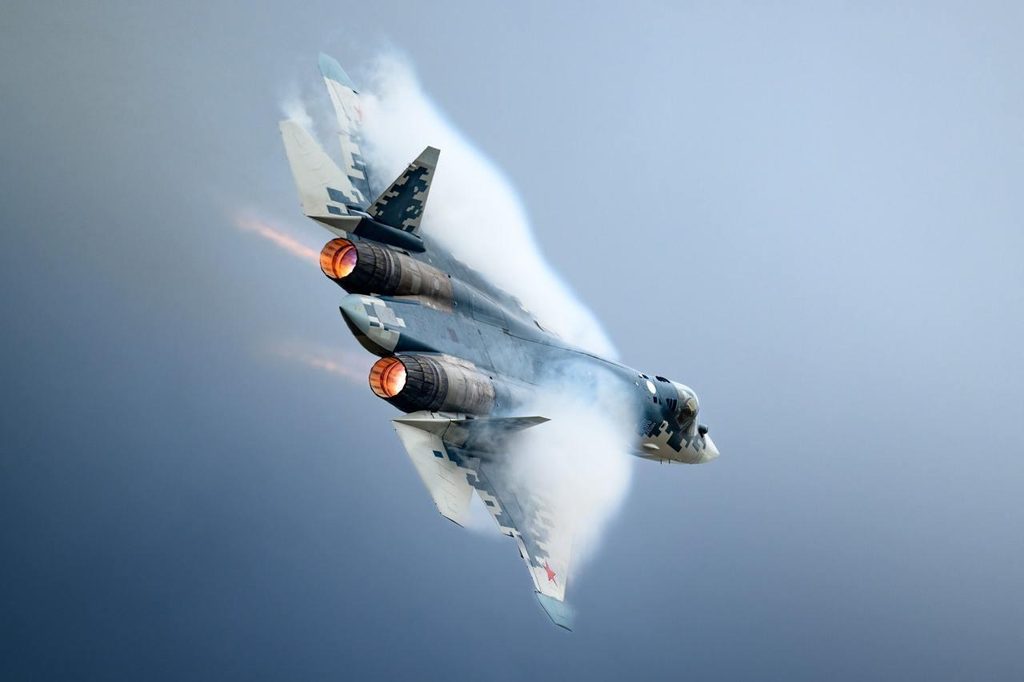
The actual problem is how little information China has released about the aircraft’s performance.
The aircraft’s radar signature, stealth coatings, sensor fusion, radar, electronic warfare systems, communications, engine performance, combat radius and sustained supersonic capabilities remain largely unverified by independent sources.
The engine is particularly important.
Early FC-31 and J-35 development involved Chinese WS-13-family engines, with different prototype aircraft potentially using improved WS-21 variants. The WS-19 was identified as the intended more powerful engine for the production J-35 family, but independent analysts could not establish whether it had flown in the aircraft displayed at Zhuhai.
Engine performance affects nearly every important aspect of fighter capability. It determines acceleration, climb performance, range, payload flexibility and the ability to sustain high speeds without afterburners. An aircraft designed around a future engine is not necessarily delivering the advertised performance with its current production powerplant.
This is where Chinese aerospace publicity becomes problematic. The aircraft’s shape is visible, and its existence is real. Its most important combat performance characteristics remain difficult to verify.
The J-35A should therefore be regarded as a developing fighter whose full capabilities are still uncertain, rather than an established F-35 equivalent.
The Su-57 comparison also needs context. The Russian demonstration was unquestionably more spectacular, but manoeuvrability at an airshow is only one aspect of fighter performance. The Su-57’s production scale, stealth characteristics, manufacturing quality and operational availability have all faced scrutiny. Its extraordinary aerobatic performance does not automatically make it a superior combat aircraft.
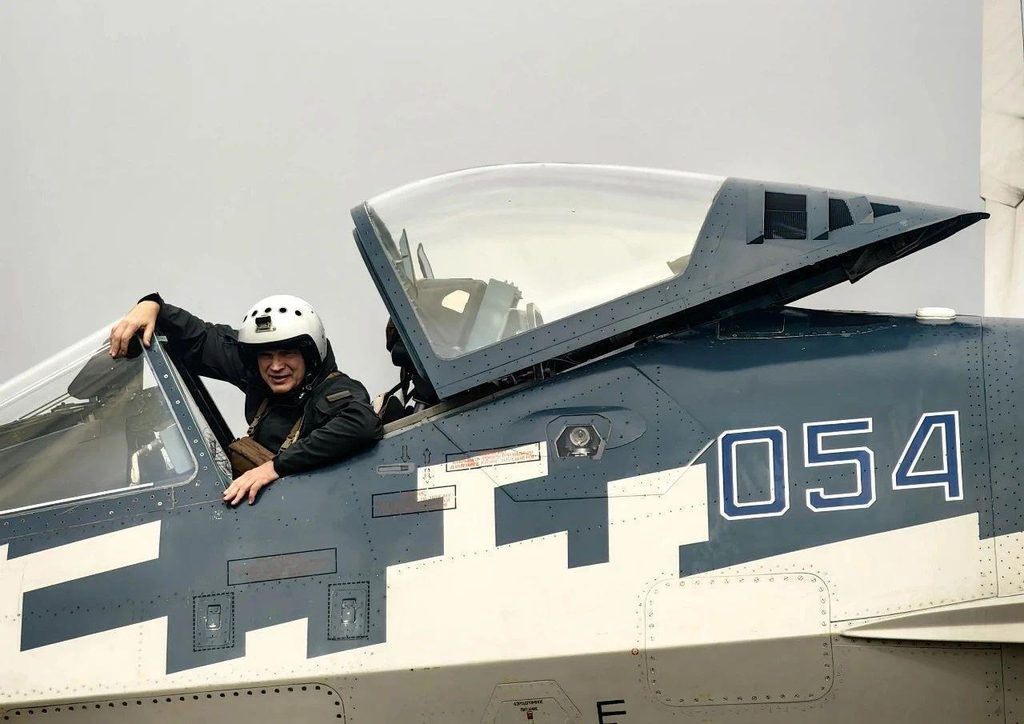
The airshow demonstrated something quite specific: Russia was willing and able to showcase impressive post-stall manoeuvring, while China chose to present a much more limited flight demonstration of its newest fighter. Neither display provides a complete combat-performance comparison.
The J-35A’s continuing engine and production questions deserve more scrutiny than its appearance.
Sources: Reuters – China’s J-35A is a black box despite its splashy debut, The Diplomat – Assessing the J-35A and The Aviationist – Highlights of the 2024 China Airshow.
China’s J-20 is a much more serious achievement
It would be a mistake to dismiss every Chinese combat aircraft because the J-35A’s public debut was underwhelming.
The J-20 is a much more established programme and represents a substantial development in China’s air force. RUSI estimates that around 300 J-20 fighters had entered service by mid-2025, distributed across at least 13 air force regiments. Its researchers also estimate that China has been producing modern J-20 variants at a considerably higher rate than the early development programme.
The J-16 is another important aircraft. It combines a heavy airframe with modern radar, advanced electronic systems and long-range weapons. China has also developed dedicated electronic-warfare aircraft derived from the J-16 and naval J-15 families.
This matters because modern air combat depends on supporting aircraft and networks as much as on the fighter itself. Airborne early-warning systems, electronic warfare, communications, radar coverage and long-range missiles can substantially influence an engagement.
The PL-15 and PL-17 are particularly important. RUSI assesses that these weapons give China a substantial range advantage over many Western and Russian air-to-air missile equivalents. The May 2025 Pakistan engagement provided an early indication of the danger posed by the export PL-15E.
The export model should not automatically be equated with the versions available to the Chinese military. Export controls and configuration differences matter. Nevertheless, even the export variant proved capable of threatening advanced aircraft in combat.
This is why China military power deserves a technically serious assessment. The country’s modern fighter fleet, missile production and supporting sensor systems represent real strategic capabilities. Dismissing them as cheap copies is just as misleading as believing every Chinese performance claim.
Source: RUSI – The Evolution of Russian and Chinese Air Power Threats.
China’s aircraft carriers: commissioning a ship is not mastering carrier warfare
Aircraft carriers provide another example of the difference between possessing impressive hardware and operating an effective military system.
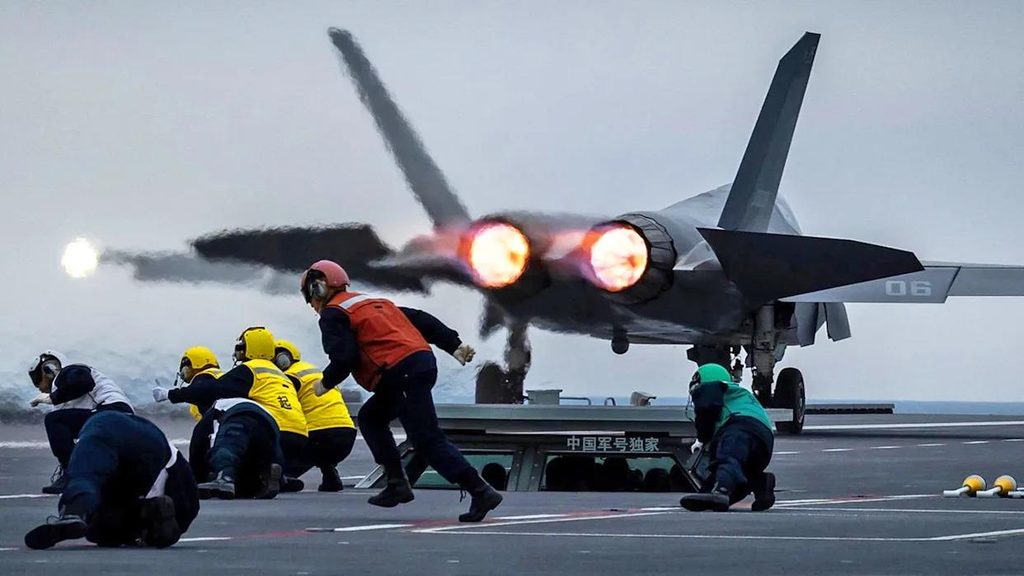
China has three carriers: Liaoning, Shandong and Fujian. The first two use ski-jump take-off arrangements, while Fujian introduces electromagnetic aircraft launch systems.
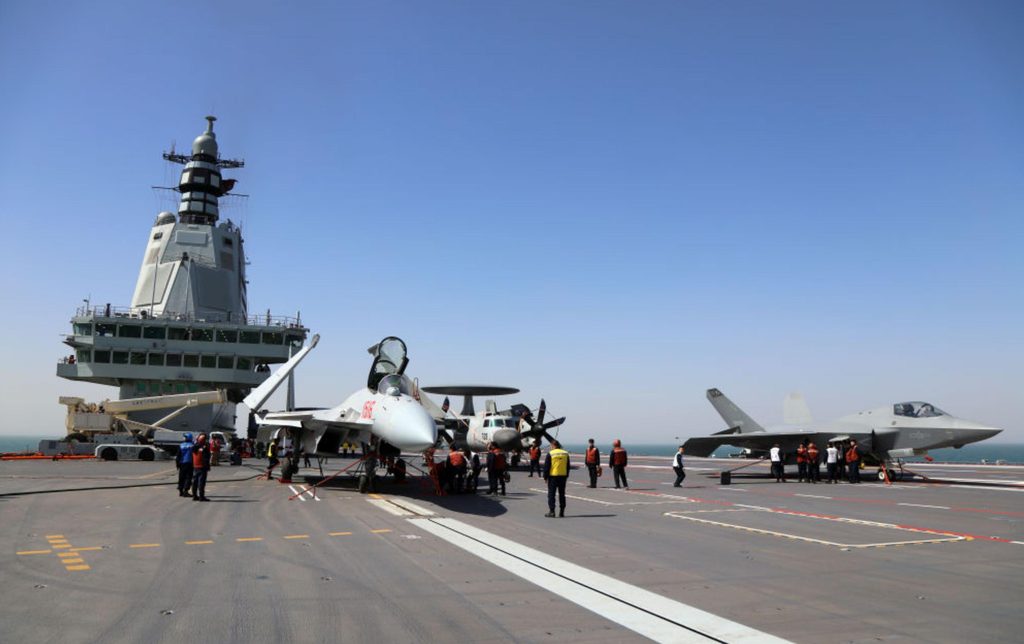
Fujian is a major technological step. It was commissioned in November 2025 after extensive sea trials. It has conducted launches and arrested landings involving the J-35 naval fighter, the J-15T and the KJ-600 airborne early-warning aircraft.
These are meaningful achievements. China is developing the equipment needed for a more capable carrier air wing.
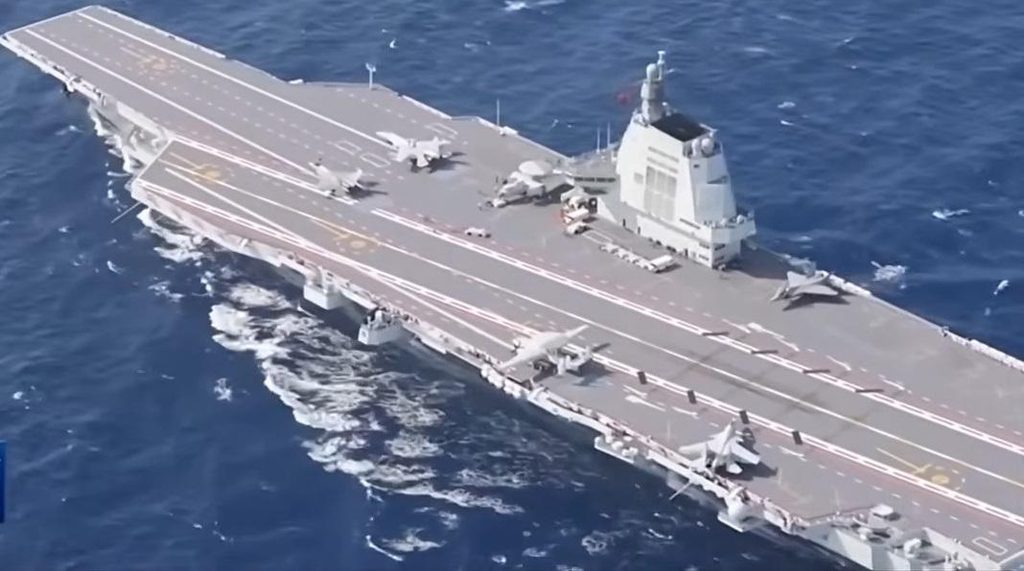
However, a carrier is not simply a ship with aircraft parked on its deck. The actual combat capability depends on the ability to coordinate launches and recoveries, refuel aircraft, load weapons, perform maintenance, manage deck space and sustain repeated sorties. It also depends on having pilots, technicians, aircraft, spare parts and escort vessels operating as an integrated force.
This is where the United States retains a substantial advantage.
The US Navy has decades of experience operating large carriers and their air wings. Chinese carriers have been learning these operations through trials, exercises and increasingly distant deployments, but their collective experience remains much more limited.
The November 2026 CSIS assessment of Chinese military activity found that Fujian was operating at sea with dozens of aircraft onboard, but had not yet reached full operational capacity. Chinese reporting also indicated that Fujian had not conducted dual-carrier operations with Liaoning or Shandong during the period examined.
China has made progress in deploying carriers beyond its immediate coastal waters. The Liaoning and Shandong participated in a significant dual-carrier deployment in 2025, and the Liaoning has conducted extended operations in the Western Pacific. These are important developments, but they do not establish the same operational maturity as the American carrier force.
The suspicious leaked carrier report
The supplied carrier transcript makes an important point about sortie generation: the ability to launch and recover aircraft repeatedly matters far more than the number of aircraft that can be parked aboard a ship.
Unfortunately, it presents a supposedly leaked Chinese academic report without providing its original document, authors, institution, publication date or identifiable source.
The transcript then gives highly precise figures for American carrier sortie generation, including hundreds of sorties within 18 hours. These figures should not be repeated as established operational performance when their source and assumptions cannot be checked.
It also interprets the appearance of the Fujian’s jet-blast deflectors as evidence that only one electromagnetic catapult was functioning. This is an inference based on visual footage, not a technical inspection or a verified report of catapult failures.
Claims about the future Type 004 carrier are even more speculative. Figures of 120,000 tonnes, 96 aircraft, a thorium molten-salt reactor, four electromagnetic catapults, railguns and powerful laser weapons have circulated through Chinese military enthusiast channels and CGI presentations. They should not be treated as confirmed ship specifications.
The United States has its own carrier problems.
The Gerald R. Ford class is supposed to represent the next generation of American carrier operations, but its electromagnetic launch and advanced arresting systems have encountered serious reliability and maintenance challenges. The US Director of Operational Test and Evaluation reported in its FY2025 assessment that unplanned maintenance prevented scheduled live missile-fire tests aboard the Ford, while the sustained sortie-generation demonstration remained delayed.
The Navy’s sortie-generation model also continued to require verification. The same report noted that insufficient data were available to establish the class’s full operational suitability.
This is a useful reminder that America also has a habit of advertising future capabilities before proving them in operational testing.
The Ford remains part of a much more experienced carrier force, but its promised performance should not be confused with demonstrated performance.
Sources: CSIS – What China’s Recent Military Surge Was and Wasn’t, Jane’s – China commissions Fujian aircraft carrier and US Director, Operational Test and Evaluation – FY2025 Annual Report.
The robot-dog revolution: putting a rifle on four legs does not create an autonomous army
China’s robot-dog demonstrations are among the most visually memorable parts of its military publicity.
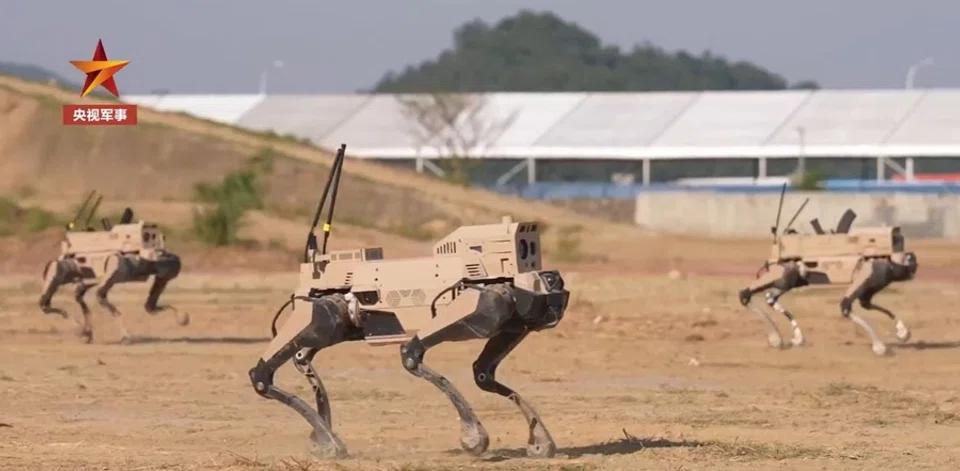
The PLA has displayed quadruped robots carrying rifles, transporting supplies and operating in groups. Some demonstrations show different robot variants supposedly performing reconnaissance, combat and support tasks. The more ambitious presentations describe networked robot packs that share battlefield imagery and communicate with command stations.
The technology is interesting. The marketing frequently gets ahead of the practical value.
Consider the basic rifle-armed robot dog. Attaching an assault rifle to a quadruped robot does not turn it into an effective infantry support weapon. A standard rifle magazine contains only 30 rounds, making sustained suppressive fire difficult. The machine must also carry its weapon, ammunition, batteries, communications equipment and sensors while remaining mobile enough to navigate difficult terrain.
The result is a complicated platform with substantial logistical requirements and limited firepower.
The video transcript raises other problems. Some of the heavier robots reportedly weigh around 50 kilograms, and the commentator questions their endurance, which he estimates at roughly four hours for some models. These specifications should be treated as reported figures rather than independently verified combat performance. Even so, the central questions are valid: how are the machines transported, maintained and recharged? What happens when communications are jammed? How do they operate when damaged, and how much human supervision do they require?
The footage itself shows soldiers controlling the robots through handheld devices, gloves and other interfaces. That is a very different proposition from autonomous machines operating independently on a battlefield.
The idea of a coordinated robotic pack is particularly speculative. Showing several robots sharing video feeds does not prove that they can autonomously recognise threats, make tactical decisions, coordinate manoeuvres and operate reliably without continuous human intervention.
There are more practical applications. A robot could carry ammunition, transport medical supplies, investigate hazardous areas, inspect suspected mines or provide reconnaissance around buildings and trenches. These roles may save human lives, especially where the machine can be remotely operated from a safer position.
Even here, the economics matter. A cheap aerial drone, a wheeled unmanned vehicle or a conventional remotely operated platform may perform the same task more cheaply and with fewer logistical headaches.
The rifle-on-a-robot-dog demonstration is almost comical when presented as proof of a revolutionary autonomous combat force. It adds a weapon to a machine without demonstrating that the combination is tactically useful, reliable or affordable.
The same standard should apply to American demonstrations. A US robot dog carrying a gun is no more proof of a combat revolution than its Chinese counterpart.
The future of military robotics is likely to depend on affordable, expendable systems that perform useful tasks reliably. The spectacle of a robotic wolf pack is secondary to whether these machines can actually survive, communicate, move supplies and contribute to combat under realistic conditions.
Ukraine’s lessons: China deserves credit for taking the war seriously
The robot-dog demonstrations are easy to ridicule, but China’s wider adaptation to the Ukraine war deserves recognition.
Ukraine has become a real-world laboratory for modern warfare. It has demonstrated how cheap FPV drones can destroy expensive equipment, how constant surveillance changes infantry movement, and how electronic warfare can disrupt communications and navigation. Trench concealment, thermal signatures, camouflage, dispersal and rapid battlefield repairs have become central to survival.
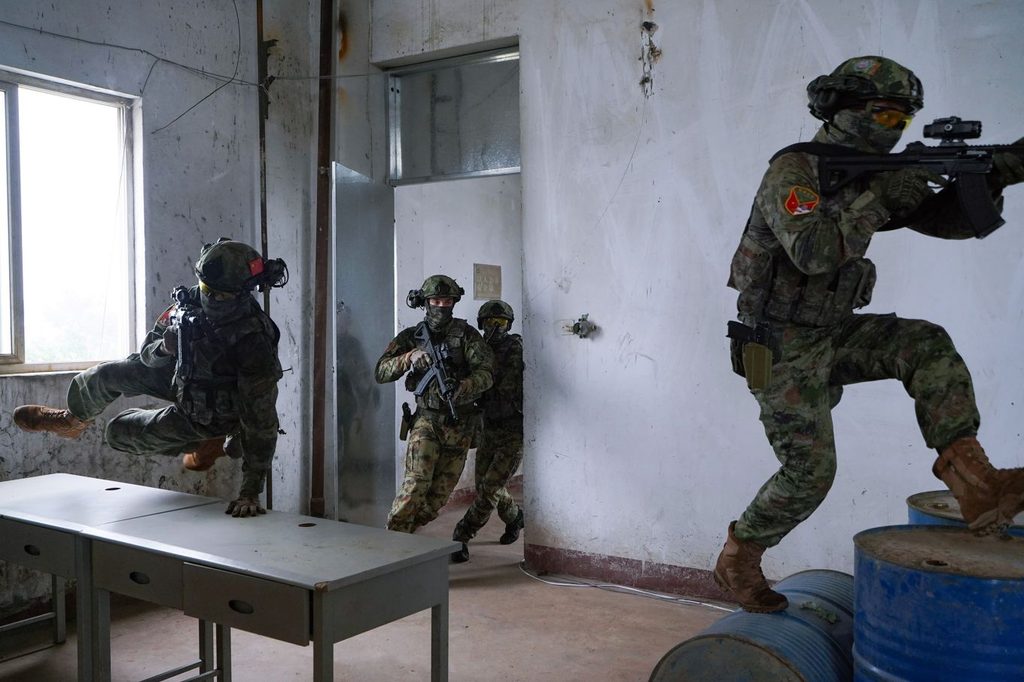
The supplied infantry transcript shows that the PLA is studying these lessons at several levels.
Chinese soldiers are practising evasive manoeuvres against FPV drones. Units are training with handheld jammers, net launchers and shotguns. Trench exercises incorporate anti-drone netting, concealed entrances and measures intended to reduce thermal visibility. The training also includes trench clearing, dispersed assault formations and drone support.
These are practical developments. A soldier who has rehearsed how to react to an approaching drone has a better chance of surviving than one who has never trained for the threat.
The PLA is also exploring the integration of drone operators directly into infantry assault units. This could offer frontline squads immediate reconnaissance and tactical support without waiting for a separate drone unit to respond.
There are trade-offs. A drone operator wearing goggles is less aware of the surrounding environment and becomes an obvious priority target. The squad also has to carry drones, batteries, controllers and replacement equipment. The approach may increase the unit’s tactical independence while exposing valuable specialists to greater danger.
The transcript also identifies potential weaknesses in some Chinese exercises. Certain mechanised assault demonstrations appear to use older dismounting concepts, with infantry leaving armoured vehicles far from the objective. The footage may be a training scenario rather than an accurate representation of current doctrine, but it is fair to question whether the PLA’s exercises reflect the rapidly evolving battlefield in Ukraine.
The three-man fire-team concept and the trench drills are interesting. However, individual training videos cannot establish that an entire army has adopted the same techniques, or that the techniques work against an experienced opponent.
China’s learning system is genuinely impressive
A particularly useful October 2026 CSIS study, Learning Without Bleeding, examined more than 90 Chinese-language military and industrial sources covering the Ukraine war.
The researchers found that Chinese analysts identified new battlefield techniques within an average of four months of their appearance. Turning those observations into hardware, training and force-structure changes took a year or longer.
The process involves military research institutes, defence manufacturers, military academies and procurement organisations. Each part of the system studies lessons relevant to its own responsibilities.
That is a serious institutional effort. China is attempting to learn from another country’s war without paying the same human and material cost. It is examining offensive drone tactics, counter-drone measures, electronic warfare, attacks against airfields and naval infrastructure, and the industrial capacity required for prolonged conflict.
However, the authors also identify a major limitation: learning from observed combat cannot reproduce the feedback generated by fighting an actual war. China can analyse battlefield failures, but it has not experienced the same frontline pressure, casualties and organisational disruption.
Is America doing it better?
The United States has also been adapting, and it has an advantage that China cannot fully replicate: direct access to Ukrainian combat experience.
During the 2026 Saber Junction exercises in Germany, Ukrainian military advisers worked alongside American forces to teach drone and electronic-warfare lessons. The US Army deployed approximately 1,900 drones during the exercise. Associated Press reporting described drone contact in roughly half of the engagements involving the 173rd Airborne Brigade.
Yet American commanders were still working out how to organise forces for a battlefield where drones are constantly present. Simply handing drones to existing infantry units is not necessarily sufficient. The military needs appropriate training, communications, repair capabilities, doctrine and organisational structures.
China appears unusually systematic in its study of Ukraine. The United States has been building direct relationships with Ukrainian personnel and conducting its own extensive experimentation. Neither has demonstrated that its entire force is fully adapted to a large-scale peer conflict.
The conclusion is straightforward: China deserves credit for its serious learning process, while the US has not yet solved the organisational and procurement challenges of drone warfare. Both have substantial work ahead.
Sources: CSIS – Learning Without Bleeding: China’s Lessons from the Russia-Ukraine Drone War and Associated Press – Ukrainians embed with US forces during drone warfare exercises.
China’s military leadership purge: corruption, loyalty and the problem of readiness
One of the most serious questions about the PLA concerns the stability and competence of its senior leadership.
Xi Jinping has carried out an extensive campaign against corruption and political disloyalty within the armed forces. The scale is significant.
A February 2026 investigation by the CSIS China Power Project identified 36 generals and lieutenant generals officially purged since 2022, with another 65 missing or potentially purged. The combined figure of 101 therefore includes both confirmed removals and officers whose status is uncertain.
The investigations have reached several key military organisations, including the Rocket Force, which controls China’s conventional and nuclear missile arsenal. Senior officials responsible for military procurement have also been caught up in the process.
The leadership situation became even more dramatic with the removal of Zhang Youxia and Liu Zhenli. By September 2026, Reuters reported that five of the seven seats on the Central Military Commission remained vacant.
This is an extraordinary level of disruption at the top of the military command structure.
The consequences are difficult to measure. Removing corrupt officials could improve military procurement and discipline over the long term. However, a sustained campaign that removes senior commanders and disrupts established leadership networks can also damage institutional experience, decision-making and trust.
Zhang Youxia was particularly significant because he was the most senior Chinese military commander with actual combat experience, gained during the 1979 conflict with Vietnam. China has not fought a major war since then.
A military that spends decades preparing for a war it has never experienced faces an unavoidable uncertainty. Its exercises may be impressive, its equipment may be advanced, and its planning may be sophisticated. But it has not demonstrated how well its command structure performs under the stress of major combat.
The purges are not proof that the PLA is incapable of fighting. They are evidence of serious institutional problems that cannot simply be dismissed as routine personnel changes.
It is also worth asking what these investigations reveal about the procurement system. If corruption was sufficiently widespread to affect major military organisations, then advertised equipment quality and procurement performance deserve additional scrutiny. A delivered missile, aircraft or radar system should not automatically be assumed to meet every advertised specification.
Sources: CSIS – The Purges Within China’s Military Are Even Deeper Than You Think and Reuters – China’s purges of top military commanders spur questions about war-waging ability.
China’s military spectacle and the November 2026 naval surge
Another useful example of the gap between military activity and media interpretation emerged in November 2026.
Reports of more than 100 Chinese military and government vessels operating around Taiwan, Japan and the wider Western Pacific generated headlines suggesting an unprecedented coordinated naval exercise.
A recent CSIS assessment found that the deployments involved multiple overlapping operations, many following established patterns, rather than one clearly coordinated, unprecedented exercise. Chinese task forces from different theatre commands did operate in relatively close proximity in the Philippine Sea, which is a significant demonstration of regional presence.
However, CSIS found no publicly available evidence that the task forces conducted complex maritime operations together.
That distinction matters. Deploying multiple ships simultaneously demonstrates the ability to move and position forces. Coordinating them in sophisticated operations, maintaining communications, managing supply ships, exchanging information and responding to unexpected threats are more demanding capabilities.
The same analysis also addressed a widely circulated claim that a Chinese submarine had launched an intercontinental ballistic missile in the Yellow Sea. The claim originated with a Taiwanese official and was repeated by several news outlets. However, the report found little evidence to corroborate it and assessed that the launch likely did not occur.
This is a useful example of how sensational military claims can spread before the underlying evidence has been established. The scrutiny should apply to Chinese state media, Taiwanese officials, American military advocates and Western reporting alike.
Sources: CSIS – What China’s Recent Military Surge Was and Wasn’t.
The F-35: a problematic aircraft that at least became operational
The American F-35 programme is an important comparison because it demonstrates that the United States is also capable of spending extraordinary amounts of money on systems that fail to meet their advertised performance goals.
The F-35 has suffered years of delays, cost overruns, software problems and maintenance difficulties. Its sustainment costs have become a major problem for the Pentagon.
A June 2026 Government Accountability Office report found that the fleetwide mission-capable rate declined from 67 percent in fiscal year 2021 to 44 percent in fiscal year 2025. Its full mission-capable rate fell from 38 percent to just 25 percent.
These figures need to be interpreted correctly. Mission-capable means an aircraft can perform at least one of its assigned missions, while full mission-capable means it can perform all assigned missions. A 44 percent mission-capable rate does not mean the remaining aircraft are permanently useless.
Still, the trend is terrible for a programme of this size and cost. The Pentagon is planning to spend an additional $13.7 billion through 2031 on its sustainment strategy, with spare-parts shortages and reliance on contractors remaining important problems.
The F-35 programme has also been operating for years with an enormous international customer base. The US Marine Corps conducted its first F-35B combat strike in Afghanistan in September 2018, and the US Air Force conducted its first F-35A combat mission in Iraq in April 2019.
It is a troubled programme, but it produced a functioning aircraft that has been manufactured in large numbers, integrated into multiple air forces and employed operationally.
China’s J-35A has not yet accumulated comparable public evidence of operational maturity.
This distinction is important when comparing the two programmes. The F-35’s maintenance and cost problems are documented failures. The J-35A’s advertised performance remains difficult to verify. Both deserve scrutiny, but the evidence is not equivalent.
Sources: US Government Accountability Office – F-35 Sustainment, US Navy – F-35B conducts first combat strike and US Central Command – F-35A conducts first combat mission.
America’s defence spending: how much of the China threat is genuine and how much is budget advocacy?
The American military budget is enormous. SIPRI estimated US military spending at $954 billion in 2025, compared with an estimated $336 billion for China.
The United States spent roughly 2.8 times as much as China in nominal dollar terms. China has nevertheless increased its military spending for 31 consecutive years, according to SIPRI’s database, and its industrial capacity gives it significant advantages in manufacturing ships, missiles and other equipment.
The comparison is not completely straightforward. US spending supports a global military network, overseas bases, nuclear forces, alliances and the ability to sustain operations far from home. China concentrates much more of its military effort on its own region. Labour costs, procurement practices and accounting differences also affect the figures, and China’s actual military spending is particularly difficult to establish.
Still, the American defence budget raises a legitimate question: why does the United States need to spend so much more while continually warning that it is falling behind?
Some American defence advocacy organisations use a two-war planning standard. The Heritage Foundation, for example, evaluates US military strength partly according to the ability to fight two major regional conflicts simultaneously.
That is a strategic requirement, not a universal law of military planning. It assumes that the United States must retain the capacity to fight major wars in multiple theatres at once. Other analysts challenge whether that level of capability is necessary or financially sustainable.
Institutions such as the Quincy Institute and Cato Institute have argued that the United States already spends too much, maintains excessive global commitments and could achieve greater security through a more restrained approach.
There is a genuine debate here. Defence contractors benefit from large procurement programmes, and threat assessments can be used to justify spending decisions. But a critical assessment should examine the actual evidence, funding relationships and strategic assumptions rather than automatically dismissing every defence analyst as corrupt.
China is a serious military competitor. That fact does not establish that every proposed American weapons programme is necessary, or that every increase in military spending will improve US security.
The US needs to be able to deter China, but it also needs to demonstrate that its enormous military budget produces reliable weapons, adequate ammunition stocks, maintainable aircraft and operational forces.
Sources: SIPRI – Trends in World Military Expenditure, 2025, Heritage Foundation – 2026 Index of US Military Strength, Quincy Institute – The proposed $1.5 trillion defence budget and Cato Institute – Are We Spending Too Much on the US Military?.
So how effective is China’s military compared with the United States?
The United States remains the more experienced global military power. Its advantages include decades of carrier operations, undersea warfare, overseas bases, military alliances and the ability to conduct complex operations across several regions.
China has developed a very different military profile. Its missile forces, modern fighters, air-defence networks, naval expansion and industrial capacity make it an increasingly formidable regional opponent. It benefits from operating close to its own mainland, with supporting airfields, missile bases, sensors and logistics infrastructure.
A conflict around Taiwan would therefore be a very different proposition from comparing the two countries’ total military budgets. American forces would have to cross enormous distances and rely on regional bases and supply routes. Chinese forces would be operating much closer to their principal infrastructure, with a substantial concentration of land-based missiles and aircraft.
The United States cannot assume that its global military superiority translates into effortless dominance in the Western Pacific. China cannot assume that its regional advantages guarantee victory against a coalition of highly capable opponents.
The evidence reveals several Chinese strengths:
- A rapidly expanding fleet of modern fighters and long-range air-to-air missiles.
- A strong industrial base capable of producing large quantities of military equipment.
- An increasingly sophisticated missile and regional air-defence network.
- A systematic effort to absorb lessons from Ukraine.
- A growing ability to deploy naval forces beyond its immediate coastal waters.
It also reveals serious uncertainties:
- The full performance and reliability of its newest fighter engines and stealth aircraft remain difficult to verify.
- Its carrier aviation experience is still developing.
- Its robotic warfare demonstrations do not establish autonomous combat effectiveness.
- Its leadership purges raise questions about command stability and procurement integrity.
- Its lack of recent major-war experience leaves a significant gap between exercises and proven performance.
The American military has its own problems: expensive procurement programmes, poor F-35 availability, unresolved Ford-class testing issues and questions about ammunition production and sustainment during a prolonged conflict.
The difference is that America has a much longer record of operating complex forces overseas and employing modern aircraft, ships and weapons in combat. China has a larger regional challenge to America’s military than at any time in recent decades, but its ability to translate that capability into a sustained major war remains unproven.
The conclusion: China is formidable, but its military publicity should not be mistaken for combat effectiveness
China’s military development is real. Its aircraft, missiles, naval construction and industrial capacity deserve serious attention. Pakistan’s May 2025 air engagements showed that Chinese-origin systems can be dangerous in the hands of a capable operator. The PLA’s efforts to study Ukraine also demonstrate an impressive institutional willingness to adapt.
But the gap between advertised technology and independently demonstrated capability remains significant.
The J-35A’s engine and performance are still difficult to evaluate. Fujian is an important carrier milestone, but it has not yet demonstrated the full operational maturity of the American carrier fleet. Robot dogs with rifles are demonstrations, not proof of autonomous warfare. China’s extensive leadership purges expose problems within the military’s procurement and command structures.
American claims deserve exactly the same treatment. The F-35 has serious readiness problems, the Ford-class carrier has not met all of its testing goals, and American military spending is so large that demands for further increases should face rigorous scrutiny.
The public should not be frightened into believing that China possesses an unstoppable military machine. Equally, it should not be reassured that Chinese weapons are harmless or that the PLA would collapse at the first sign of serious combat.
China military power is substantial and growing, but its actual war-fighting capability is less certain than its propaganda suggests. The United States remains the more experienced global military, while China has only demonstrated maneuvers around Taiwan, ramming fishing vessels off the coast of the Philippines, hand to hand combat against India and bombing fish in the strait towards Taiwan.
Sources:
- Reuters – China can build kung fu-fighting robots. But it can’t get them to do factory work (August 27, 2026) — the most useful source for the government subsidies, teleoperation, factory productivity and Zeekr deployment.
- Unitree’s official XR Teleoperate repository — direct evidence that human-operated control is an established part of its humanoid ecosystem.
- Boston Dynamics – Flipping the Script with Atlas — its own explanation of perception, movement libraries and adaptive control.
- US-China Economic and Security Review Commission, 2024 Annual Report — details the C919’s foreign supplier dependencies and previous export-related vulnerabilities.
- Rhodium Group – Was Made in China 2025 Successful? (May 2025) — the supplier composition analysis.
- US Department of Justice – Operation Gatekeeper (December 8, 2025) — the Nvidia H100/H200 smuggling investigation.