
Elon Musk’s vision of a self-sustaining civilization on Mars has survived years of redesigns, revised schedules and increasingly ambitious promises. In his May 29, 2025 Starship update, the destination remained the same: mass-produce spacecraft, refly them within hours, refuel them in orbit, and eventually move millions of people to another planet.
The presentation offered impressive factory footage, new engine designs and familiar renderings of a future Martian city. What it lacked was an engineering roadmap connecting those images to a working interplanetary transport system.
Mass production is not mission readiness
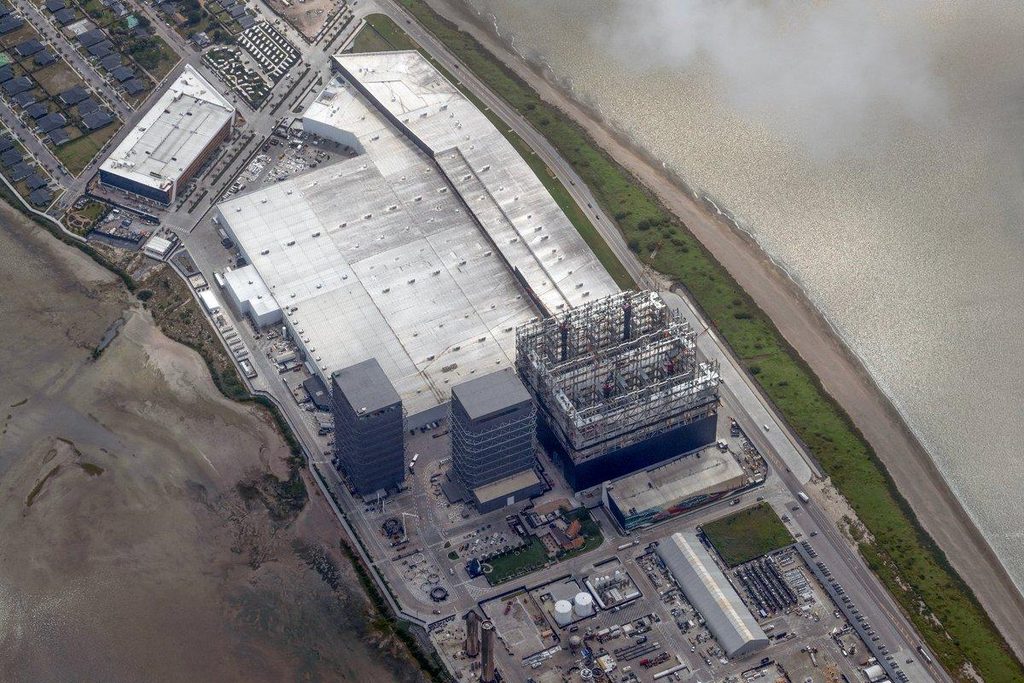
At Starbase, Musk described a production rate of one Starship every two or three weeks, with a long-term target of 1,000 ships a year. A second massive factory was planned for Florida.
The comparison was automotive manufacturing. If Tesla could produce cars at enormous scale, SpaceX could apply the same industrial logic to rockets.
But a spacecraft is not finished when its hull leaves the factory. Engines, avionics, plumbing, thermal protection, payload systems and every other critical component must work together. The vehicle must then survive flight, return safely, undergo inspection and fly again.
The scale comparisons also deserve scrutiny. Musk described the planned Gigabay as potentially the world’s largest structure, without supplying the dimensions needed to establish that claim. Boeing’s Everett assembly plant, by comparison, encloses about 472 million cubic feet. Likewise, the Airbus A380 provides a useful benchmark for comparing Starship’s dimensions and usable interior volume with an established commercial aircraft.
Production targets mean little without demonstrated reliability, practical inspection procedures and a clear definition of what counts as a completed spacecraft.
A rocket catch is not rapid reuse
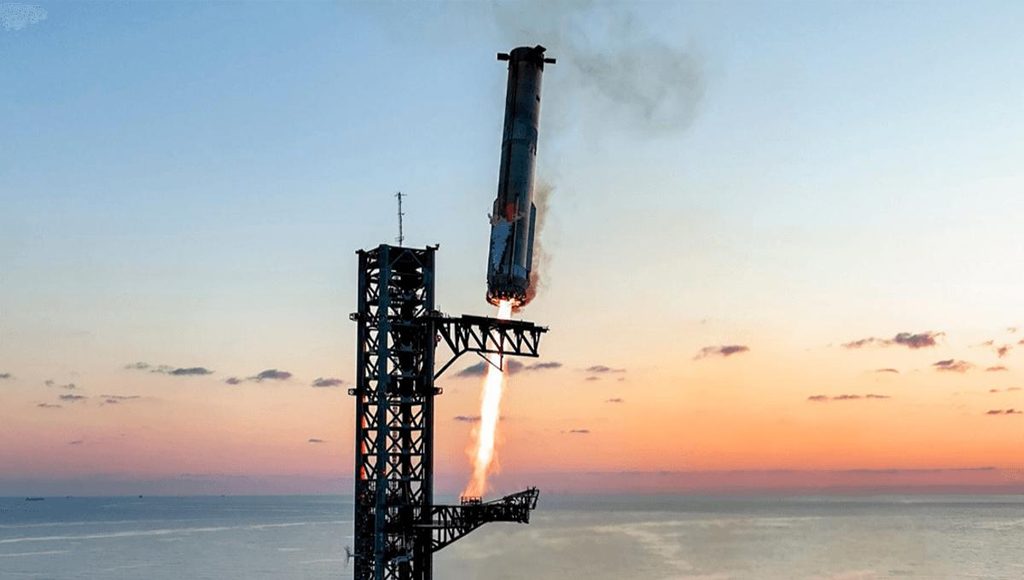
Catching the Super Heavy booster with the launch tower’s mechanical arms was a significant engineering achievement. Musk then extended that milestone into a vision of reflying the booster within an hour, with Starship itself eventually flying several times a day.
Those are different accomplishments.
A successful catch does not establish that a booster can be inspected, repaired, refuelled and certified for another flight within an hour. Engine condition, structural stress, thermal damage and countless other potential failure points have to be addressed before reuse becomes routine.
The upper stage presents another challenge. Its return trajectory and recovery introduce problems distinct from those involved in catching the booster. The complete system must demonstrate repeatable launches, recoveries and turnarounds, not merely successful individual manoeuvres.
The same distinction applies to Raptor 3. A cleaner engine design and claimed improvements in reliability are promising, but design claims cannot substitute for flight-proven performance.
Refuelling remains the critical link
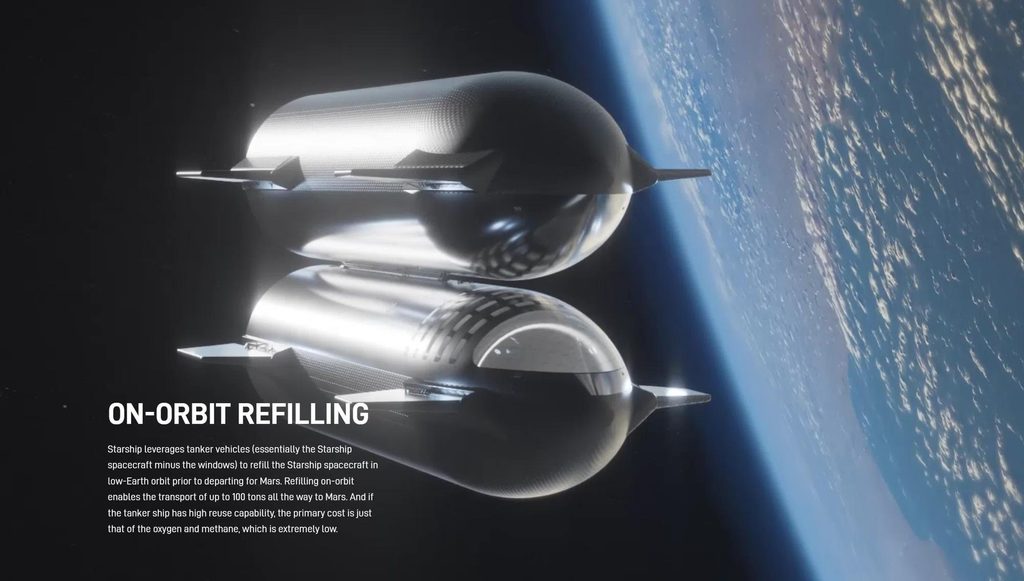
Mars missions depend on orbital propellant transfer. Starship cannot leave Earth carrying enough propellant for the entire journey while also delivering a substantial payload. The proposed solution involves multiple tanker launches, transferring cryogenic propellants in orbit and accumulating enough fuel for departure.
That requires much more than two spacecraft connecting in an animation. Vehicles must rendezvous, maintain precise control, transfer extremely cold liquids and manage the fluid and thermal behaviour of their tanks. The wider architecture also depends on tanker operations and an orbital depot.
NASA’s research on in-space cryogenic propellant transfer documents the technical problems involved, including liquid settling, pressure control and two-phase flow. These are mission-critical systems, not details that can be left until after the rocket is built.
Without dependable, repeatable refuelling at the required scale, the Mars transport architecture remains incomplete.
The people and the planet are missing from the plan
Musk has repeatedly described Starship carrying 100 people per journey, eventually transporting hundreds of thousands or millions of colonists. Yet the presentation still left basic questions about the human spacecraft unanswered.
A habitable vehicle needs life support, food, water, waste processing, power, medical provisions, radiation shielding and living space. These systems add mass, consume resources and require maintenance. NASA’s human spaceflight hazard research sets out the physiological and environmental risks, including deep-space radiation and the need to recycle oxygen, water and waste.
Nor does arrival solve the problem. Mars has a thin, mostly carbon-dioxide atmosphere, extreme temperature swings and no readily available surface environment for human habitation. NASA’s Mars fact sheet describes some of the conditions that make the planet hostile to unprotected life.
A permanent settlement would need reliable energy, water extraction, oxygen production, food production, shelter, manufacturing and repairs. It would also need landing infrastructure capable of receiving heavy cargo safely and repeatedly.
The presentation showed a future city, families looking through glass domes and fleets of ships departing Earth together. It did not provide a detailed sequence for building those structures, producing the necessary materials or making the settlement independent of Earth.
Saying that anyone who wishes to go to Mars can do so also overlooks the physical and psychological demands of prolonged spaceflight. A dangerous journey lasting months, followed by life in a hostile environment, is not a conventional passenger trip.
The numbers expose the scale of the problem
Musk’s stated ambition was eventually to ship one million tonnes of material to Mars during every transfer window, roughly every 26 months.
Using a payload of 200 tonnes per ship, that requires 5,000 cargo deliveries. Add the tanker flights needed to refuel them, and the launch cadence becomes extraordinary: the calculation presented in the analysis reaches roughly 105,000 launches, or 135 launches a day, across a 780-day period.
That means a launch about every 11 minutes, around the clock, for more than two years. It assumes the necessary fleet, factories, launch facilities, refuelling systems and ground infrastructure can all operate at the required pace.
The cost calculation is equally stark. Using International Space Station systems as comparables to estimate the cost of outfitting a ship for 100 people and two years of supplies, the analysis arrived at $36.29 billion per ship. At 5,000 ships, that would total about $182 trillion, before tanker hardware and launch costs.
These figures describe the scale implied by the proposal. They are not a publicly established SpaceX programme budget.
A destination is not a roadmap
The 2025 presentation returned to the same pattern seen in earlier versions of Musk’s Mars plans: larger vehicles, higher production targets, promised improvements in reuse, and renderings of a civilization waiting at the other end.
The missing work is measurable. Starship needs dependable full-stack flight operations, repeatable recovery and refurbishment, large-scale orbital refuelling, human-rated life support, reliable landing systems and a credible plan for building a settlement that can sustain itself.
Those pieces must fit together into a tested, costed system. A reusable rocket could be a major step towards that goal, but it cannot substitute for everything that must happen after launch.
Five years of presentations have made the vision familiar. They have not, by themselves, made the vision an operational plan.