

On the 25th anniversary of the September 11 attacks, Defense Secretary Pete Hegseth stated that Iran is “an Islamic theocracy that has wished us death for nearly half a century, that cheered on 9/11.” The claim fits a familiar narrative. The historical record from September 2001 does not.
What Actually Happened in Iran
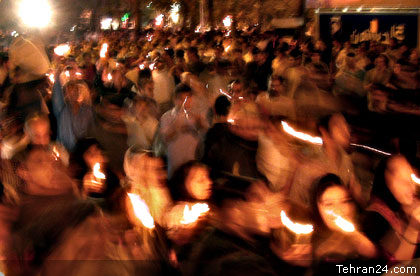
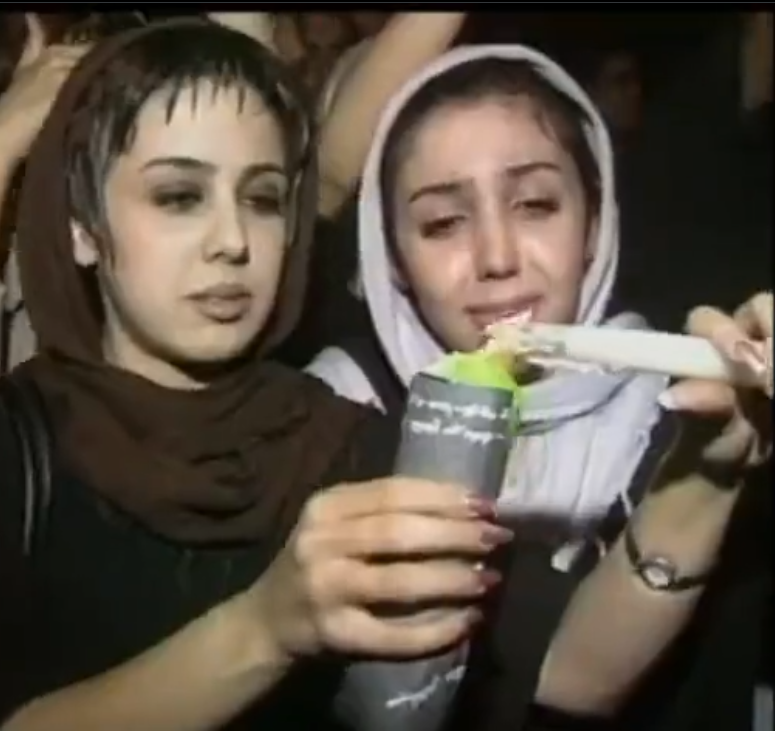
Within days of the attacks, ordinary Iranians held public candlelight vigils in Tehran. Contemporary reporting from Time, The Washington Post, The New York Times, and others described crowds of hundreds to several thousand people, many young and middle-class, gathering in places such as Mohseni Square and Mirdamad Street. They held candles, some carried roses, and they chanted “Marg bar terrorist” — “Death to terrorists” — along with “America, condolences.”
At a World Cup qualifying match between Iran and Bahrain, roughly 50,000–60,000 spectators observed a minute of silence for the victims. Iranian state television and radio, normally hostile to the United States, carried unusually sympathetic coverage. President Mohammad Khatami condemned the attacks the same day as “terrorist operations” that killed defenseless people. Supreme Leader Ayatollah Ali Khamenei also denounced the massacre of civilians. The customary “Death to America” chants were notably absent from Friday prayers that week.
These were not the actions of a population or government celebrating the deaths of nearly 3,000 people. They were public expressions of sympathy and rejection of the terrorism, offered despite decades of official enmity between Tehran and Washington.
The Parallel Hegseth Prefer Not to Draw
While Hegseth highlights an alleged Iranian celebration that the contemporary evidence does not support, the documented reactions from Israeli political leadership and a group of Israeli nationals in New Jersey receive different treatment in many official narratives.
On September 12, 2001, Benjamin Netanyahu, then a former prime minister, was asked by The New York Times what the attacks meant for U.S.-Israel relations. He replied, “It’s very good.” He then clarified: “Well, not very good, but it will generate immediate sympathy” and strengthen the bond between the two peoples because Israelis had experienced terrorism. In 2008 he went further, telling an audience at Bar-Ilan University that Israel was “benefiting from one thing, and that is the attack on the Twin Towers and Pentagon, and the American struggle in Iraq,” which “swung American public opinion in our favor.”
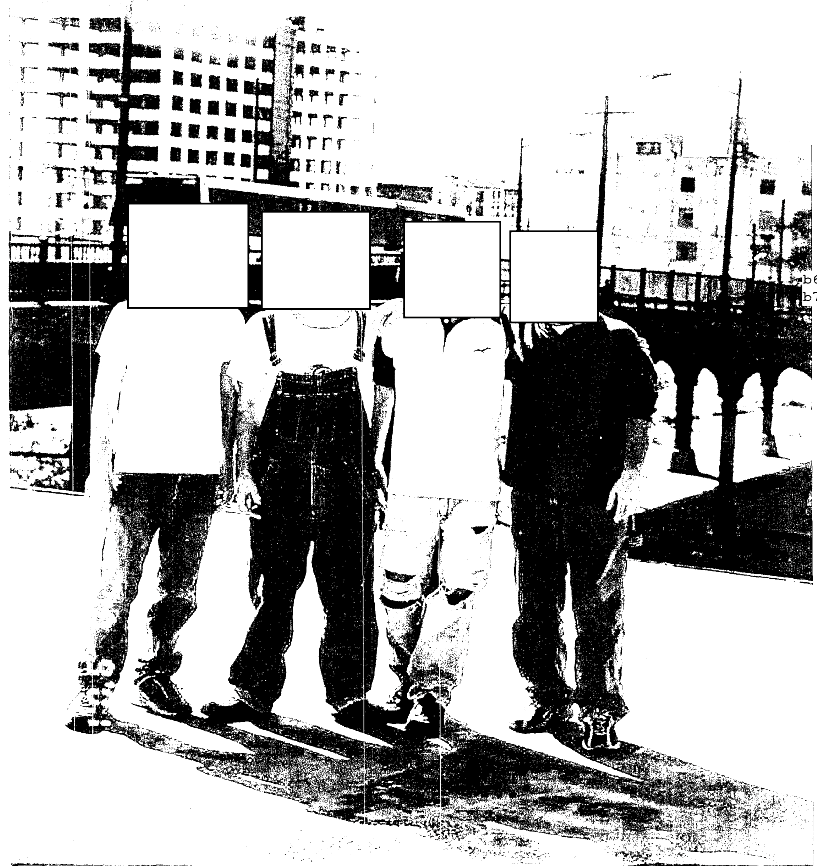
Separately, five Israeli nationals working for a New Jersey moving company were observed on the morning of September 11 in a parking lot in Union City with a clear view of the World Trade Center. A witness reported them photographing the burning towers, smiling, hugging, and giving high-fives — behavior described as jovial rather than shocked. They were arrested, held for weeks, and thoroughly investigated by the FBI. The Bureau concluded they had no prior knowledge of the attacks and were not engaged in clandestine intelligence activities related to 9/11. They were deported for immigration violations. The company owner left for Israel. This is reminiscing of the FBI’s treatment of Israelis caught committing pdf acts on children in the US – they get sent back with no charges. You can chose to trust or not the FBI
These facts are public. Netanyahu’s statements are on the record. The five men’s detention and the FBI’s findings are documented. Yet the framing differs sharply from the treatment of Iranian reactions. One set of responses is amplified into a claim of national cheering; the other is often minimized, contextualized as realpolitik, or dismissed when raised.
Selective Outrage and Narrative Convenience
There is no serious dispute that some people in parts of the Arab and Muslim world celebrated the attacks. Video and reporting from certain Palestinian areas and elsewhere captured that. Iran, however, is not interchangeable with those scenes. The government condemned the attacks. Large numbers of ordinary Iranians publicly mourned the victims and denounced the terrorists. That is what the newspapers and footage from September 2001 show.
Drawing attention to Netanyahu’s comments and the New Jersey episode is not an assertion that Israel carried out the attacks. It is an observation about consistency. If expressions of satisfaction, strategic benefit, or apparently celebratory behavior are disqualifying when attributed (inaccurately) to Iranians, they should not be waved away when they come from an Israeli leader on the record or from Israeli nationals observed acting in ways witnesses found jarring.
Hegseth’s line about Iran cheering 9/11 recycles a claim that does not survive contact with the reporting of the time. A more accurate accounting would note the Iranian vigils and condemnations, place Netanyahu’s realpolitik remarks in full context, and treat the documented behavior of the five men in New Jersey as the investigative matter it was — investigated, and cleared of involvement in the plot. Selective memory serves political narratives. It does not serve the historical record.
 EN
EN  FR
FR