
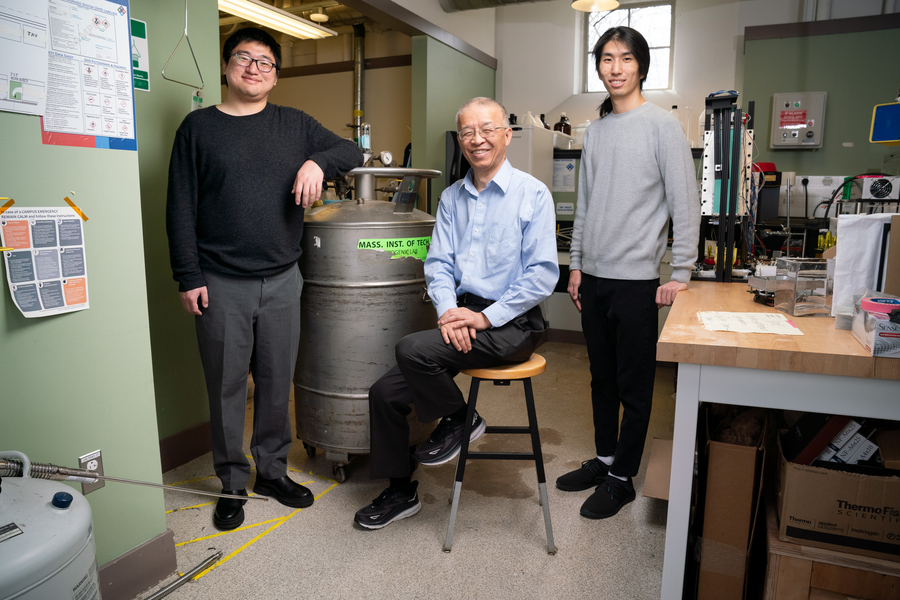
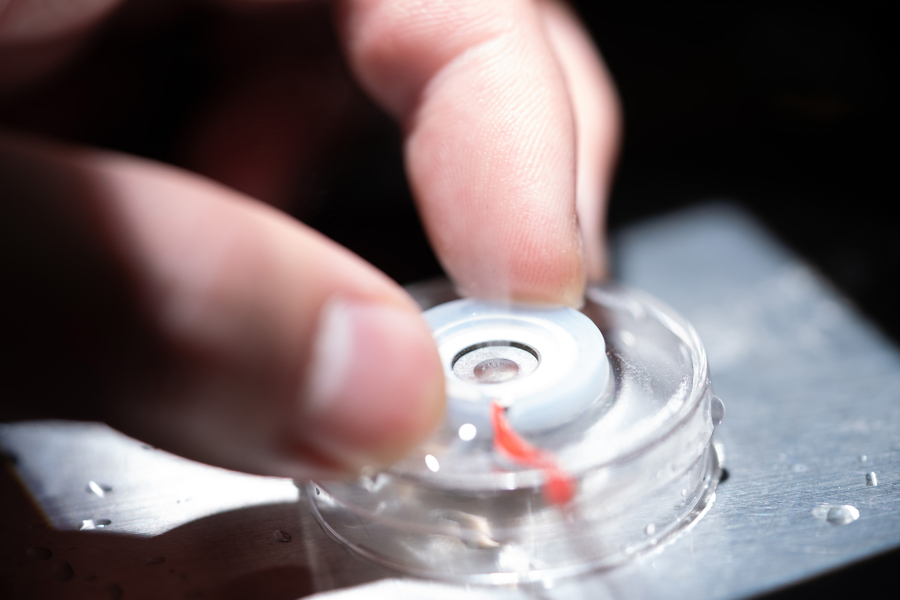
In late 2023 and 2024, MIT researchers reported that visible light—especially green wavelengths—can drive water evaporation at rates exceeding the thermal limit, without heating the bulk liquid. They called it the photomolecular effect: photons supposedly cleave entire clusters of water molecules from the air-water interface.
YouTuber Ricky of Two Bit da Vinci seized on the story. He framed it as a civilization-scale breakthrough. Desalination plants running on light instead of heat. Industrial dryers that slash the 20% of energy now spent on drying. Laundry and dish dryers powered by photons. Even light-based home cooling systems. The pitch landed hard; the video racked up millions of views.
Philip E. Mason—better known as Thunderf00t, a British chemist with a PhD from the University of Birmingham who works at the Institute of Organic Chemistry and Biochemistry of the Czech Academy of Sciences—took the claims apart in a detailed video on his channel.
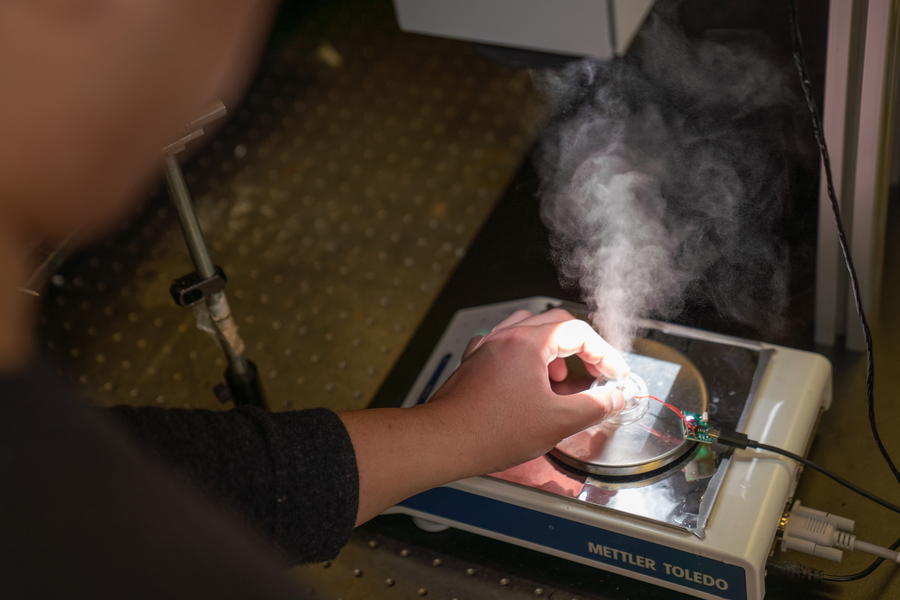
Mason starts from first principles. Water molecules at the surface are held by hydrogen bonds. Evaporation requires breaking those bonds. The rate depends almost entirely on temperature and surface area. A cheap ultrasonic mister increases the evaporating surface by orders of magnitude and produces cooling far faster than any claimed light-driven process. Nebulizing water turns a glass of still liquid into a rapid evaporative cooler in seconds.
Molecular-dynamics simulations show evaporation events are rare and almost always involve single molecules with coordination numbers of one or two. Electrostatic or van der Waals collisions supply the energy. There is no established pathway for a ~2 eV green photon—energy that water does not absorb in the bulk—to eject a whole cluster. Water is transparent in the visible range precisely because it lacks electronic transitions at those energies. Any absorbed energy would still have to redistribute across many molecules, which is not what the photomolecular picture claims.
Mason notes the experimental signature is modest and that ordinary dust particles, roughly the size of the wavelength of green light, can create intense local heating under focused illumination. That mundane explanation fits the data without inventing a new interaction between photons and water clusters.
He places the episode in a longer pattern of over-hyped results: arsenic-based life, phosphine on Venus, and the cold-fusion claims of Pons and Fleischmann. In each case, the desire for a paradigm-shifting discovery outran the evidence. The MIT team has published careful measurements in PNAS; the interpretation remains contested.
Even if the effect is real at the laboratory scale, the practical applications collapse under basic efficiency arithmetic. Generating intense monochromatic light just to evaporate water is far less effective than simply increasing surface area or applying ordinary heat. A mister bought for fifty dollars already outperforms the claimed light-driven rates by thousands of times.